

Άρθρο: Bedroom Rug Placement: Sizes, Positions and Material Guide
Bedroom Rug Placement: Sizes, Positions and Material Guide
Choosing the right rug for your bedroom is not only about color or pattern. The size, position, and material of the rug play a major role in comfort, balance, and overall room appearance. A well-placed rug can frame the bed, soften flooring, and add warmth underfoot. This Bedroom Rug Placement Sizes, Positions, and Material Guide explains how to make practical and visually pleasing choices that suit different bedroom layouts and needs.
Why Rug Placement Matters in the Bedroom
A bedroom rug helps define the sleeping area while improving comfort. Since the bedroom is one of the first places you step into in the morning, the feel of the rug under your feet matters. Proper placement also prevents the room from looking unfinished or uneven. Rugs that are too small or incorrectly positioned can disrupt visual flow and reduce functionality.
Correct rug placement ensures the following:
-
Balanced proportions between furniture and floor space
-
Comfortable footing around the bed
-
Protection for floors from wear and scratches
Bedroom Rug Sizes: How to Choose the Right One
Selecting the correct rug size depends on bed size, room dimensions, and furniture arrangement. Below are common rug size options and how they work in different bedrooms.
Small Rugs (2x3 or 3x5)
Small rugs are best used as accent pieces rather than main bedroom rugs. They work well beside the bed or near a seating area. These sizes are ideal for compact rooms or when you want minimal coverage.
Medium Rugs (5x7 or 6x9)
Medium-sized rugs are a popular choice for bedrooms. When placed under the bed, they usually extend beyond the sides and foot of the bed, providing enough surface for stepping down comfortably. These sizes suit full and queen beds in average-sized rooms.
Large Rugs (8x10 or 9x12)
Large rugs are suitable for spacious bedrooms or king-size beds. They cover a significant portion of the floor and help anchor the entire furniture layout. A larger rug creates a cohesive look and avoids the need for multiple smaller rugs.

Bedroom Rug Placement Options
The position of the rug influences how the room feels and functions. Below are the most common and effective placement styles.
Under the Bed Placement
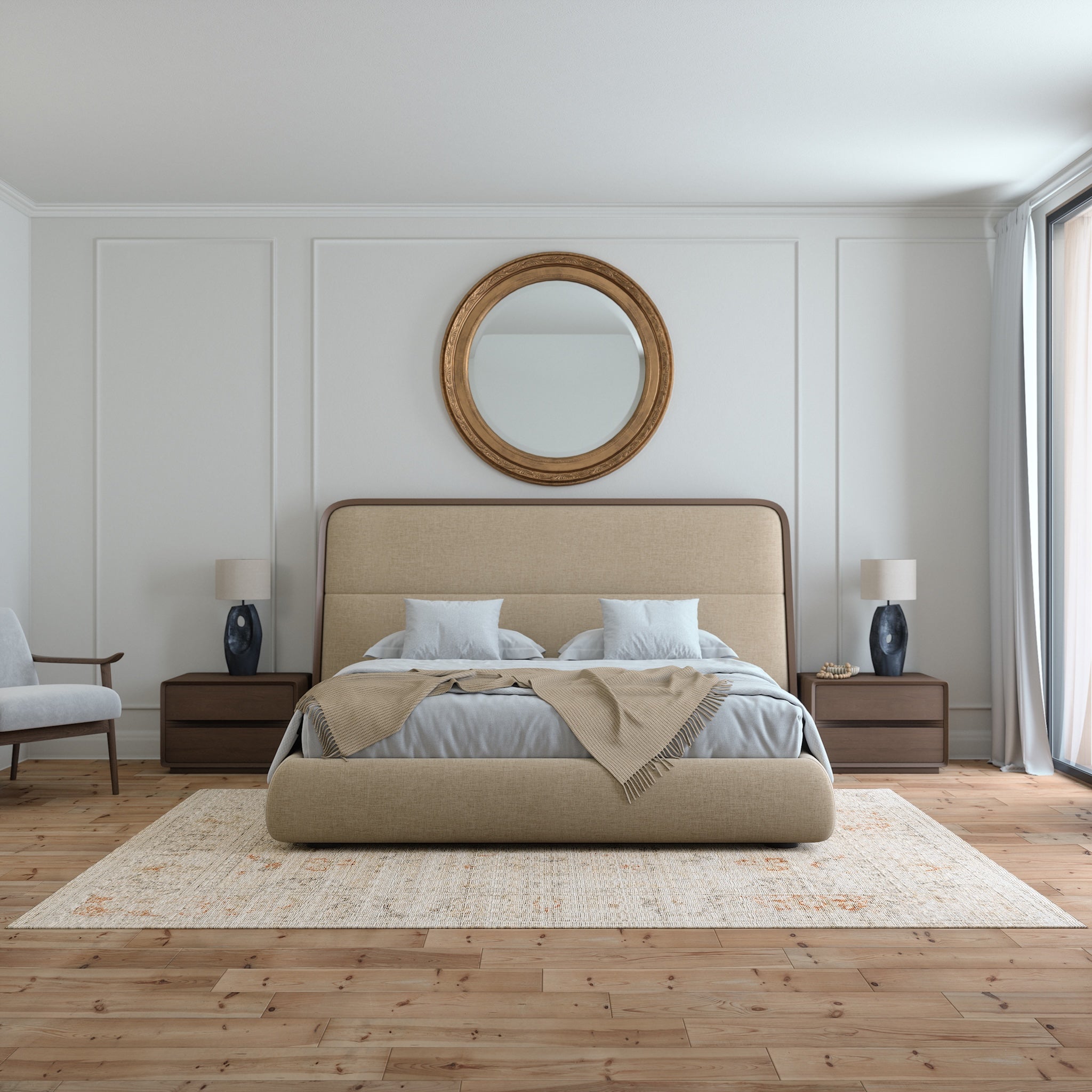
Placing a rug under the bed is the most traditional option. Ideally, the rug should extend at least 18 to 24 inches beyond the sides and foot of the bed. This placement frames the bed and provides softness where you step most often.
Two-Thirds Under the Bed
In this setup, the rug starts under the lower two-thirds of the bed and extends beyond the foot. It is a practical choice when you want visual balance without covering the entire bed area.
Side Runners
Runner rugs placed on either side of the bed work well in narrow rooms. This option is cost-effective and ensures warmth underfoot without moving heavy furniture.
Foot-of-the-Bed Rug
A rug placed at the foot of the bed adds texture and interest. This works best when paired with a larger rug or carpeted flooring to avoid the rug looking disconnected.
Choosing the Right Rug Material for Bedrooms
Material selection affects comfort, durability, and maintenance. Bedrooms benefit from rugs that feel soft and are easy to care for.
Wool Rugs
Wool rugs are durable, naturally insulating, and comfortable. They are well-suited for bedrooms due to their warmth and long lifespan. Wool also resists dirt when maintained properly.
Cotton Rugs
Cotton rugs are lightweight and easy to clean. They are a good choice for casual or minimal bedrooms, though they may wear faster than wool.
Synthetic Rugs
Synthetic materials such as polyester or polypropylene are budget-friendly and low-maintenance. They work well in homes where easy cleaning is a priority.
Natural Fiber Rugs
Jute or sisal rugs offer texture and a natural look. While visually appealing, they are less soft underfoot and may not be ideal if comfort is a top priority.
Rug Placement Based on Bedroom Size
Small Bedrooms
In smaller rooms, avoid oversized rugs that overwhelm the space. A medium rug under the bed or side runners help maintain balance without crowding the room.
Medium Bedrooms
Medium-sized bedrooms allow flexibility. You can use a rug that partially or fully sits under the bed, ensuring enough exposed floor for movement.
Large Bedrooms
Large bedrooms benefit from bigger rugs that connect furniture pieces visually. A single large rug often looks more cohesive than several smaller ones.
Common Bedroom Rug Placement Mistakes to Avoid
-
Choosing a rug that is too small for the bed
-
Placing the rug unevenly under furniture
-
Ignoring material suitability for comfort
-
Using too many rugs, which can clutter the space
Avoiding these mistakes helps maintain a clean and balanced bedroom layout.
Final Thoughts
A thoughtfully chosen and well-placed rug enhances both comfort and visual harmony in the bedroom. By paying attention to size, placement, and material, you can create a space that feels complete and comfortable. This Bedroom Rug Placement: Sizes, Positions and Material Guide offers a practical approach to selecting rugs that suit different room layouts and personal needs. With careful planning, your bedroom rug can become a functional and lasting part of your interior design.