

Άρθρο: Choosing Rugs for Double-Height Living Rooms & Grand Spaces

Choosing Rugs for Double-Height Living Rooms & Grand Spaces
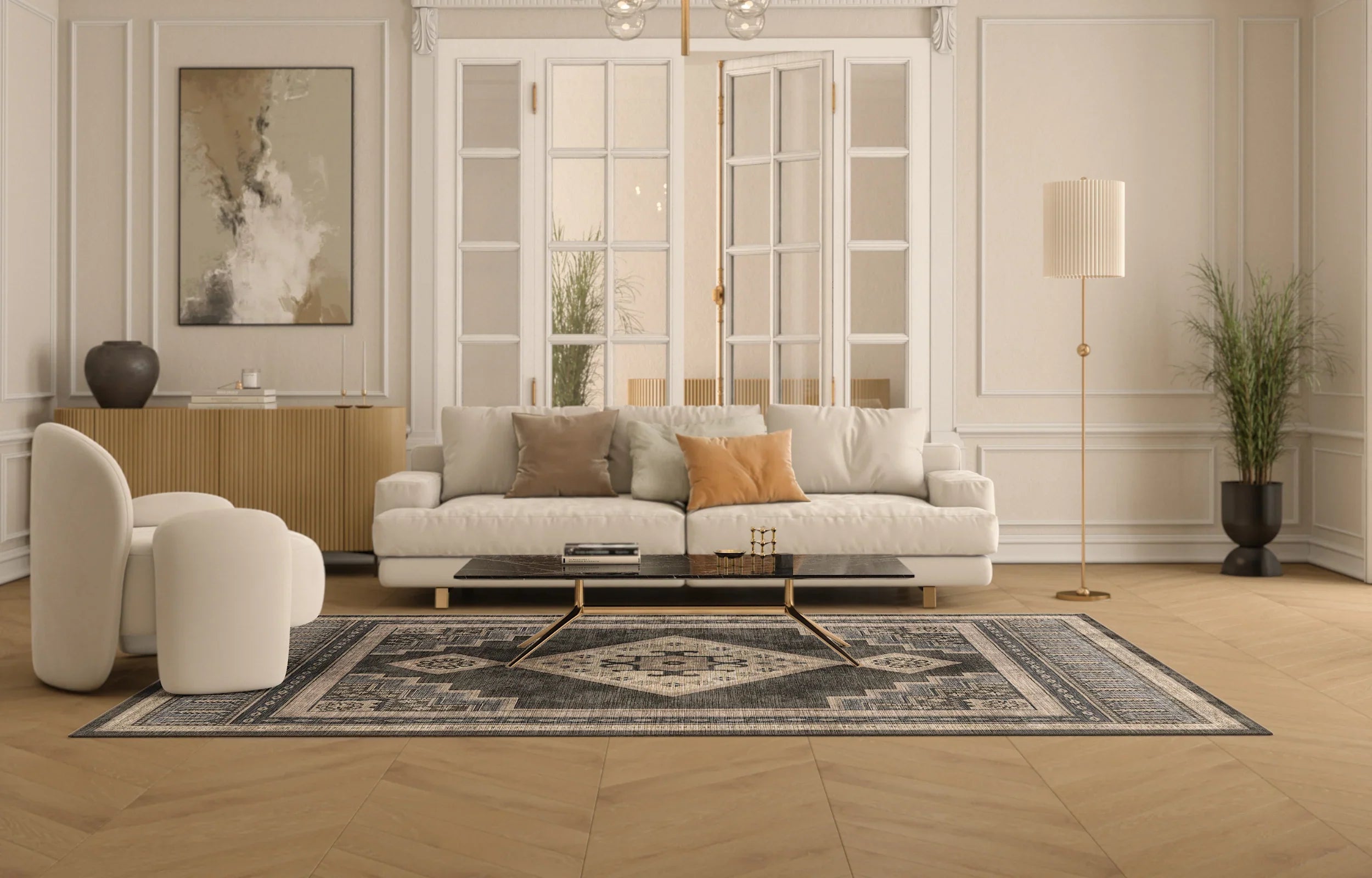
Designing a double-height living room or a grand interior space presents both opportunity and complexity. High ceilings, expansive floor areas, and open layouts can feel impressive, but without the right design anchors, they may also feel incomplete or disconnected. One of the most effective ways to bring balance and structure to such spaces is through thoughtful rug selection.
Why Rugs Matter in Double-Height Living Rooms
In large vertical spaces, furniture alone often fails to define zones clearly. Rugs act as grounding elements, helping to visually anchor seating areas and guide movement through the room.
A well-chosen rug:
-
Establishes scale in large interiors
-
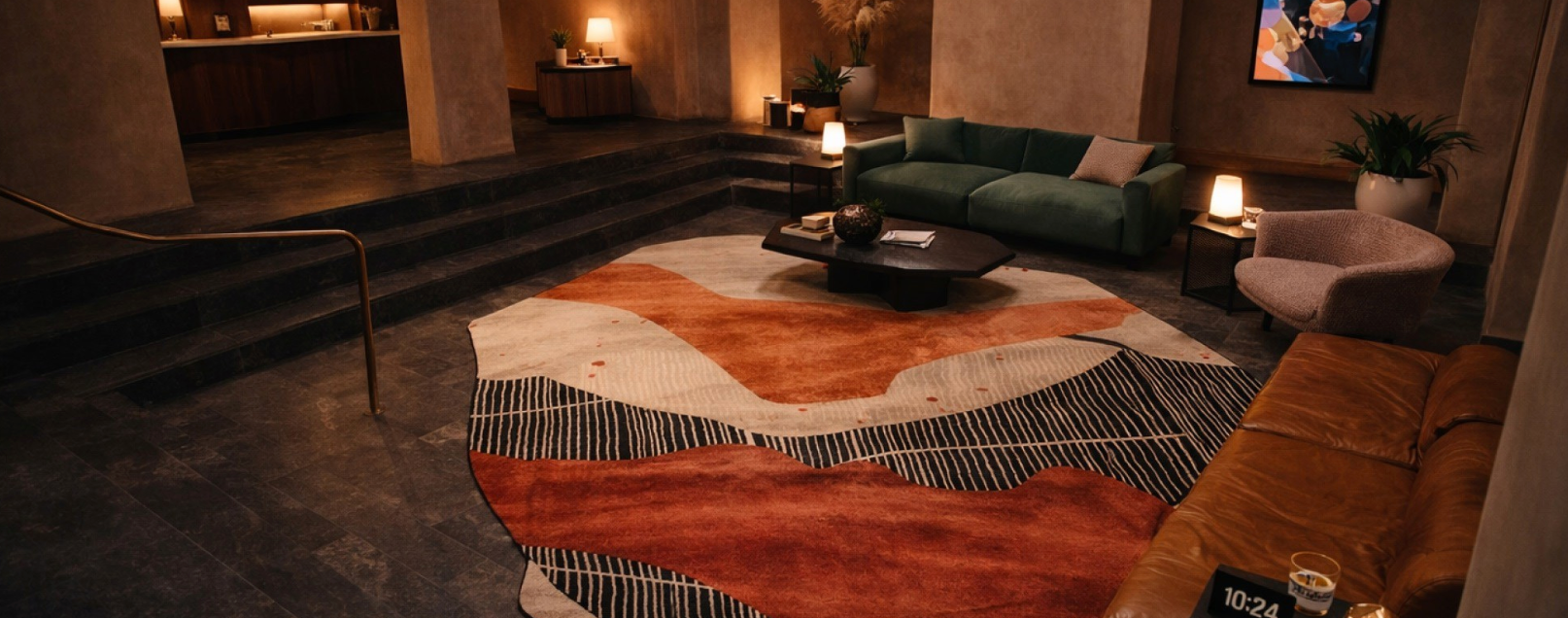
Defines functional zones in open layouts
-
Improves acoustics by reducing sound echo
-
Adds warmth and texture to expansive flooring
Without a rug, even the most well-furnished grand living room can appear unfinished.
Understanding Scale and Proportion
Choosing the Right Rug Size
Scale is the most critical factor when selecting a rug for a double-height living room. Small rugs tend to get visually lost in large spaces and can make furniture placement feel disconnected.
Recommended size guidelines:
-
All major furniture legs should sit on the rug
-
The rug should extend beyond sofas and chairs by at least 8–12 inches
-
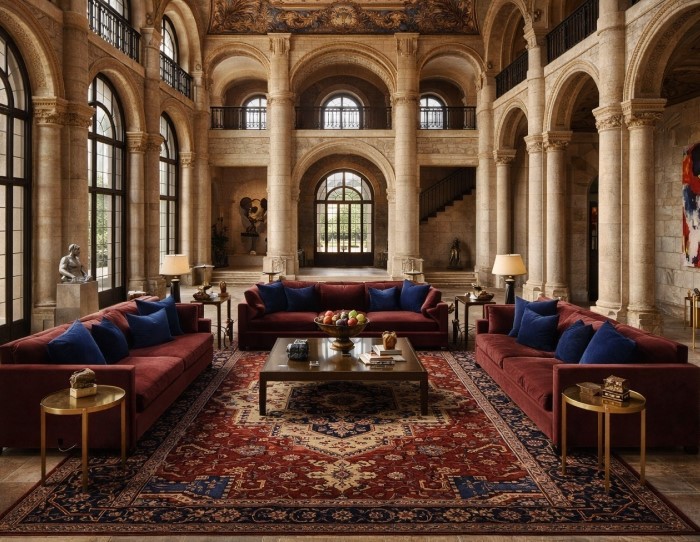
Large rooms typically require rugs sized 9×12 feet or larger
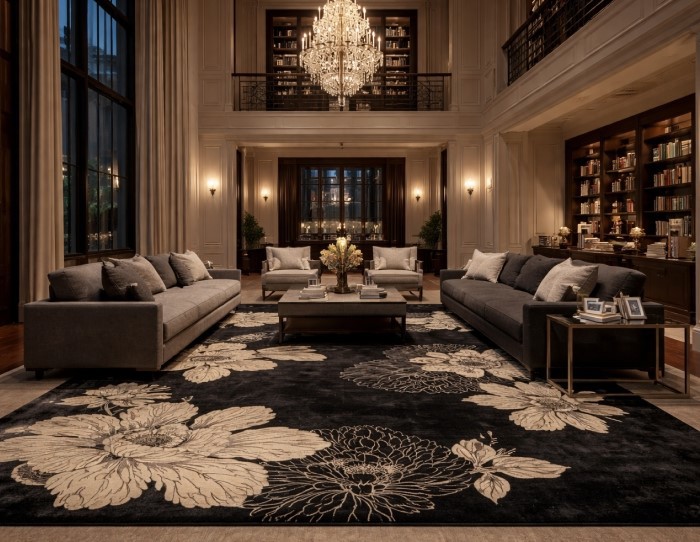
Oversized rugs help visually ground tall walls and expansive ceilings, creating a cohesive composition.
Layering for Visual Depth
In exceptionally large rooms, layering rugs can help break visual monotony. A neutral base rug combined with a smaller textured or patterned rug adds depth without cluttering the space.
Material Selection for Grand Spaces
Durable Materials for High-Traffic Areas
Double-height living rooms often function as central gathering spaces. Durability should be a priority.
Best material options include:
-
Wool for longevity and resilience
-
Wool blends for easier maintenance
-
Flatweave rugs for contemporary interiors
Avoid delicate materials that may wear quickly in frequently used areas.
Texture as a Design Element
Texture becomes more noticeable in large spaces. Rugs with subtle texture help soften hard architectural lines without overwhelming the design.
Color and Pattern Considerations
Using Color to Balance Vertical Space
In tall rooms, rugs can visually lower the perceived height by grounding the design.
-
Darker tones add weight and stability
-
Neutral shades create continuity in minimalist spaces
-
Warm hues make expansive areas feel more inviting
Avoid overly light rugs in large rooms unless balanced with darker furniture.
Patterns That Work in Large Interiors
Patterns can work well in grand spaces when scaled appropriately.
-
Large-scale patterns suit expansive rooms
-
Subtle geometric designs add structure
-
Avoid small, busy patterns that can feel scattered
Patterns should complement the architectural style rather than compete with it.
Defining Zones in Open-Plan Layouts
Creating Visual Boundaries
Double-height living rooms are often part of open-plan designs that include dining or transitional spaces. Rugs help define these zones without the need for physical partitions.
Each functional area should have:
-
Its own rug to mark boundaries
-
Consistent spacing between furniture and rug edges
-
A clear visual connection to surrounding elements
This approach improves flow while maintaining openness.
Coordinating Multiple Rugs
When using more than one rug in a large space, consistency is essential. Stick to a cohesive color palette or material family to avoid visual fragmentation.
Placement Tips for a Polished Look
Centering and Alignment
Rugs should align with key architectural features such as fireplaces, central seating areas, or focal walls. Misaligned rugs can disrupt visual symmetry in large rooms.
Allowing Breathing Space
Avoid placing rugs too close to walls. Leaving visible flooring around the rug perimeter enhances proportion and prevents the space from feeling crowded.
Common Mistakes to Avoid
-
Choosing rugs that are too small for the space
-
Ignoring ceiling height when selecting colors and textures
-
Overusing bold patterns in already dramatic interiors
-
Prioritizing appearance over durability
Being mindful of these issues ensures long-term satisfaction and design coherence.
Final Thoughts
Selecting the right rug for a double-height living room or grand space requires more than aesthetic preference. Proportion, material, placement, and visual balance all play a critical role. When done correctly, rugs transform large interiors into cohesive, functional, and visually grounded spaces.
By focusing on scale and thoughtful design choices, Choosing Rugs for Double-Height Living Rooms & Grand Spaces becomes an intentional process rather than a decorative afterthought one that enhances both comfort and architectural impact.