

Άρθρο: The Best Rug Patterns to Match Your Furniture Style
The Best Rug Patterns to Match Your Furniture Style
The best rug patterns to match your furniture style can help a room look coordinated without making every surface appear identical. A rug links the floor, seating and accessories, while its pattern adds either contrast or quiet structure. Choosing one is easier when you first identify the main furniture style, the room’s colour palette and how much visual detail is already present.
A bold rug can give simple furniture more character, while a restrained pattern can balance ornate pieces. Instead of selecting a design only because it looks attractive on its own, consider how it will sit beside the sofa, table, curtains and wall finishes. The following ideas can help you choose a pattern that suits the room as a whole.
Start With the Furniture’s Main Style
Most rooms combine more than one influence, but one style usually leads. Look at the largest pieces first, such as the sofa, dining table, bed frame or storage unit. Their lines, materials and finishes provide useful clues about which rug patterns will work naturally.
For example, a low-profile sofa with clean arms and metal legs often suits geometric or abstract rugs. A carved wooden table and upholstered chairs may work better with florals, medallions or traditional borders. The aim is not to match every feature exactly, but to create a relationship between the rug and the furniture.
Check Pattern Scale Before Colour
Scale is as important as colour. Large furniture in a spacious room can handle broader shapes and oversized motifs. Smaller rooms generally benefit from finer patterns or low-contrast designs. If the sofa has a strong print, choose a simpler rug. If the furniture is plain, the rug can carry more visual interest.

Rug Patterns for Modern and Minimal Furniture
Modern furniture usually features straight lines, simple silhouettes and a limited palette. Rugs with abstract shapes, soft stripes, tonal grids or subtle geometric patterns work well because they add texture without conflicting with the clean form of the furniture.
Choose muted colours, such as charcoal, cream, taupe, slate blue or olive, when the room is intended to feel calm. A larger-scale geometric pattern can become a focal point in a neutral living room, especially when cushions repeat one of its accent colours.
Useful choices include:
-
Abstract brushstroke patterns for a softer modern look.
-
Fine linear designs for narrow rooms and home offices.
-
Low-contrast geometric rugs for minimalist spaces.
-
Simple striped rugs to make a room feel longer or wider.
Patterns That Suit Traditional Furniture
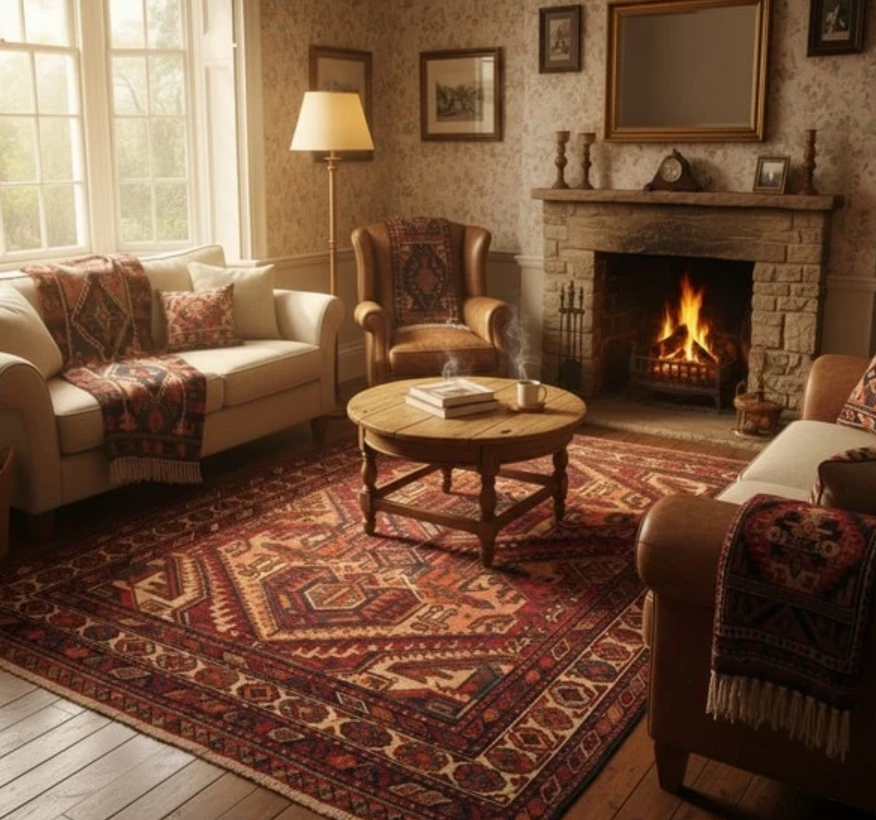
Traditional furniture often includes darker wood, turned legs, detailed upholstery or classic shapes. Persian-inspired rugs, floral patterns and medallion designs usually complement these elements because they share a sense of detail and history.
Pairing Traditional Pieces With Floral Rugs
Floral rugs can work especially well with classic sofas, cane chairs and wooden dining furniture. Look for designs where the background colour relates to the timber or upholstery. A faded floral can soften formal furniture, while a detailed botanical print can give a heritage-style room more depth.
Best Rug Patterns for Rustic and Farmhouse Spaces
Rustic and farmhouse interiors are often built around natural wood, linen, leather and tactile materials. Rugs with simple checks, stripes, faded florals or handwoven-style patterns fit these spaces well. Their imperfect-looking detail can make the room feel relaxed rather than overly arranged.
Use earthy colours such as warm beige, sage, clay, soft blue and charcoal. Flatweave or low-pile rugs are useful in dining rooms, kitchens and entrances because they are easier to clean.
Match Eclectic Furniture With Balanced Patterns
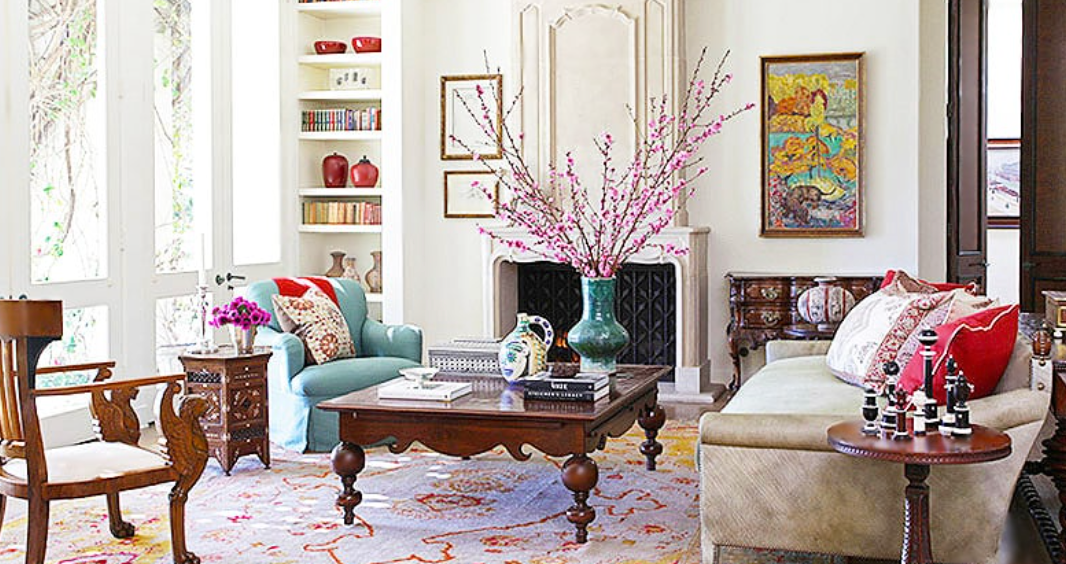
Eclectic rooms often include furniture from different periods, finishes and materials. A rug can be the element that brings these pieces together. Choose a pattern that contains two or three colours already used in the room, then keep the rest of the accessories relatively simple.
Vintage-inspired rugs, global patterns and carefully chosen colourful geometrics can work well here. The key is to avoid adding every pattern at the same strength. If the curtains are bold, use a rug with a quieter background. If the furniture is mostly plain, a more expressive rug can hold the room together.
Quick Selection Checklist
Before making a decision, ask:
-
Does the pattern complement the furniture’s lines and materials?
-
Is the scale suitable for the size of the room?
-
Does the rug repeat at least one existing colour?
-
Will the pattern work with cushions, curtains and artwork already in place?
-
Is the material suitable for the amount of foot traffic?
Conclusion
The best rug patterns to match your furniture style are those that balance the room instead of competing with it. Modern furniture often suits geometric or abstract designs, traditional pieces work well with florals and medallions, and rustic interiors benefit from softer woven patterns. Consider scale, colour and daily use alongside the furniture style, and the rug will help the space feel cohesive and comfortable.