

Άρθρο: What Rug Goes with a Colour-Drenched Room? A Practical Guide

What Rug Goes with a Colour-Drenched Room? A Practical Guide
Colour-drenched interiors use one dominant color or a closely related palette across walls, ceilings, woodwork, and sometimes furniture. This approach creates a unified appearance and gives a room a distinct character. However, choosing a rug for such a space requires careful consideration. The wrong color or pattern can make the room feel crowded, while the right rug introduces contrast, texture, and visual balance.
Understanding What Rug Goes with a Colour-Drenched Room? A Practical Guide begins with examining the room's existing colors, the amount of natural light, and the atmosphere you want to create. Whether your interior features deep green, rich burgundy, soft blue, or warm terracotta, a well-chosen rug can complement the color scheme without competing with it.
1. Choose a Neutral Rug for a Balanced Look
Neutral rugs are a reliable option for colour-drenched rooms, especially when the walls and ceiling feature bold shades. Colours such as cream, beige, ivory, taupe, and warm gray can soften the overall appearance while allowing the main colour to remain the focal point.
For example, an ivory rug can brighten a room with navy-blue walls, while a beige rug can bring warmth to a space decorated in forest green. In a burgundy room, a soft taupe or cream rug can provide a gentle contrast.
Consider Warm and Cool Undertones
The undertones of a neutral rug matter as much as its general color. Warm neutrals work well with terracotta, mustard, and earthy reds, while cooler grays and soft whites can complement blue and green interiors.
Before selecting a rug, compare its color with the wall paint and flooring under different lighting conditions. This helps ensure the shades work together throughout the day.
2. Use Contrasting Colors to Create Visual Interest
A contrasting rug can introduce energy into a room dominated by one color. Rather than matching every surface, choose a shade that creates a deliberate difference.
A rust-colored rug can complement deep blue walls, while a muted pink rug can soften a room painted in dark green. Mustard and ochre rugs can also work well with navy or charcoal interiors.
The key is to maintain a connection between the rug and the rest of the room. Repeat the rug's accent color in cushions, artwork, lampshades, or decorative objects to create a consistent appearance.
Avoid Too Many Competing Colors
A color-drenched room already contains a strong visual statement. Introducing several unrelated colors through rugs and accessories can make the space feel disorganized.
Choose one or two accent shades and use them thoughtfully. This approach creates contrast without overwhelming the existing design.
3. Decide Whether a Patterned Rug Is Appropriate
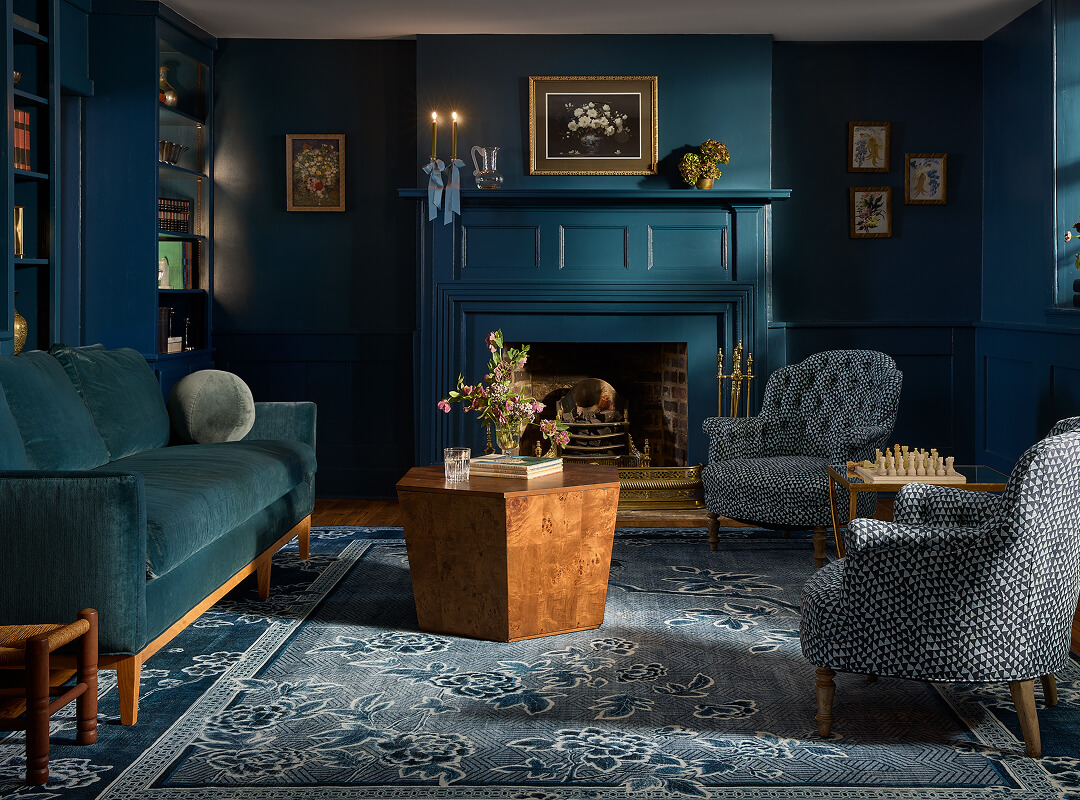
Patterned rugs can add depth and detail to color-drenched interiors. They are particularly useful when a room has plain walls, minimal decoration, and solid-colored furniture.
Geometric designs, traditional motifs, abstract patterns, and subtle stripes can all work, depending on the room's style. A patterned rug containing the wall color alongside cream, rust, or gold can connect different elements without appearing disconnected from the overall palette.
Match Pattern Scale to the Room
Large patterns often suit spacious rooms because they remain visible across a broad floor area. Smaller, intricate patterns can work well in compact spaces, although overly detailed designs may make a small room feel busy.
If your room already includes patterned curtains, upholstered furniture, or decorative wallpaper, consider a rug with a simpler design. When the surrounding surfaces are solid, a more detailed rug can become the room's main decorative feature.
4. Consider Texture as Well as Color
Texture is an important part of designing a color-drenched interior. When walls, ceilings, and furniture share similar shades, differences in surface texture help prevent the room from looking flat.
Wool rugs provide a comfortable feel and a substantial appearance. Cotton rugs offer a lighter texture, while natural-fiber options such as jute and sisal introduce an earthy quality. Shag rugs add softness, whereas low-pile rugs create a cleaner, more structured look.
For a dark green or brown room, a textured wool rug can add warmth. In a pale blue or blush-pink interior, a soft, low-pile rug can maintain a light and refined atmosphere.
Choose materials according to how the room is used. High-traffic areas generally benefit from durable, easy-to-maintain rugs, while bedrooms may allow for softer, more luxurious textures.
5. Select the Right Rug Size and Placement
Even a rug with the perfect color can look out of place if its dimensions are incorrect. A rug should relate to the furniture arrangement and the room's proportions.
In living rooms, choose a size that allows at least the front legs of the main seating pieces to rest on the rug. A larger rug can help unify a sofa, armchairs, and coffee table into one defined area.
In bedrooms, place the rug beneath the bed so that it extends beyond the sides and foot. Smaller rugs can also be positioned beside the bed for comfort.
Keep the Room's Proportions in Mind
Avoid choosing a rug that is too small for the furniture grouping. A small rug floating in the center of a large seating area can make the arrangement feel disconnected. Measure the available floor space before purchasing, and use painter's tape to outline the proposed dimensions if necessary.
6. Coordinate the Rug with Lighting and Flooring
Natural and artificial lighting can change how rug colors appear. Deep shades may look almost black in a dim room, while pale rugs can reflect light and make a space feel more open.
Flooring also influences the final result. Light wood floors provide contrast against dark, colour-drenched interiors, while dark wood floors may benefit from a lighter rug. Stone and tile flooring can be balanced with textured rugs in warm or neutral shades.
Whenever possible, view a rug sample inside the room before making a final decision.
Conclusion
Choosing the right rug for a colour-drenched room involves balancing color, pattern, texture, size, and practicality. Neutral rugs create a calm foundation, contrasting shades introduce interest, and patterned designs add detail. Texture and appropriate placement further improve the overall appearance.
When deciding what rug goes with a colour-drenched room, consider the existing palette first and choose a rug that supports the intended atmosphere. A thoughtful selection can bring the room together, highlight its strongest features, and create an interior that feels cohesive and comfortable.


