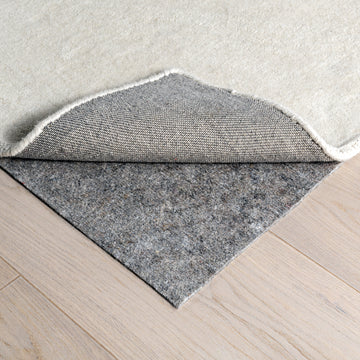


Artikel: How to Flatten a Washable Rug After Unboxing | Step-by-Step Guide | Rug Editorial
How to Flatten a Washable Rug After Unboxing | Step-by-Step Guide | Rug Editorial
How to Flatten a Washable Rug After Unboxing
To flatten a new washable rug after unboxing, unroll it the right way up, reverse-roll it loosely against its packing curl for a few minutes, then lay it flat in the room where it will live and let warmth, foot traffic, and time do the rest. If a stubborn crease still shows after a day or two, finish it with a low-heat iron or a handheld steamer — both are approved by the brand, with the emphasis on low.
Most creases in a new rug come from how the rug was folded or rolled for shipping, not from a problem with the rug itself. A large rectangular textile has to be folded down to a manageable box size for transit, and those folds leave visible lines for the first day or two once the rug is back on the floor. The fibers want to relax — they just need the right conditions to do it. Pulling out a hairdryer and pointing it at one stubborn ridge usually makes things worse, not better.
Below is the full method we recommend for flattening a new Rug Editorial rug, plus the common mistakes that turn a one-afternoon job into a week-long one.
Step-by-step: flattening a new washable rug
These steps assume a rug from a washable-rug brand that's designed to be machine washed and ironed on low heat. Rug Editorial rugs fall into that category. Older traditional rugs follow different rules; this guide is not for those.
1. Unbox the rug in the room where it will live
The single biggest variable in how fast a new rug flattens is room temperature. A warm room speeds it up; a cold hallway slows it down. Cut the box open on its narrow end, slide the rug out, and unroll it on the floor it's going to occupy. If you can, give it a few hours of normal room warmth before deciding whether you have a creasing problem at all. Many "creases" on day one have disappeared by day two without any intervention.
A quick note before you unroll: check the orientation. Every Rug Editorial rug has a built-in non-slip backing on the underside, so the textile side faces up and the rubbery, grippier side faces the floor. Unrolling it the wrong way round and then flipping it later wastes a fold-relaxation cycle.
2. Reverse-roll the rug loosely
For a freshly unboxed rug that shows a pronounced curl at one or both ends, the fastest mechanical fix is a brief reverse-roll. Roll the rug back up the other way — against the direction of its packing curl — for five to ten minutes. Don't roll it tight: a loose reverse-roll is enough to relax the fibers without putting new stress on the backing. Then unroll it and lay it flat again. Most "end curl" disappears within one or two reverse-rolls.
This is the gentlest method available, and it should be the first thing you try. It costs nothing, it doesn't introduce heat or moisture, and it works on both lines we offer — the flat weave collection at 2 mm and the faux wool collection at 5 mm.
3. Weight down the creases overnight
If after a few hours of room-temperature settling there are still visible fold lines running across the rug, place heavy, flat objects along those lines and leave them for a night. Stacks of books, a flat box of porcelain plates, or the front legs of a sofa work well. Avoid sharp-cornered objects that could leave their own marks on the weave.
Aim for even weight along the whole length of the crease, not a single heavy point in the middle. The objective is to encourage the fibers to lie down evenly, not to flatten one spot while the rest of the line stays raised.
For most fold lines, an overnight session under weight is enough. Walk on the rug in the morning, give it another half-day, and reassess.
4. Use heat carefully — and only if you need to
If steps 1–3 have left a single stubborn line, this is where heat helps. Rug Editorial's care guidance allows low heat only for ironing or steaming to remove creases. That is a specific permission, with a specific limit: low heat. Not medium, not high, not a hot dry iron parked on the rug while you fetch coffee.
Two reliable approaches:
- Low-heat iron with a damp cloth. Set your iron to its lowest heat setting that produces any steam — usually labeled "silk," "synthetic," or a single dot. Lay a clean, lightly damp cotton tea-towel or pillowcase over the crease. Press the iron onto the cloth for a few seconds at a time, moving it along the line rather than parking it. The cloth protects the surface fibers from direct heat, and the moisture in the cloth lets the steam relax the weave from above.
- Handheld garment steamer. Hold the steamer nozzle a few centimetres above the rug — not touching it — and pass it slowly along the crease, then press the area down with a clean hand or a folded towel as it cools. Steamers introduce moisture at a controlled temperature, which is closer to what the rug experiences in a normal wash than a dry iron is.
Whichever method you use, work in short passes and check the result between passes. The goal is to relax the fold, not to bake the textile.
5. Walk on it
The least glamorous part of the process is also the most effective. Once the obvious creases are out, ordinary foot traffic and a few days of normal life will finish the job. Walk the rug in. Move the coffee table back and forth across it a couple of times. By the end of a week of normal use, even a rug that arrived with strong fold lines should sit flat in the room.
When the rug is on underfloor heating
European homes with newer-build heating layouts often have underfloor heating under the rooms a rug will live in. That works in your favour for flattening: a gently warmed floor is a gently warmed rug, which is a faster-relaxing rug.
Rug Editorial rugs are compatible with underfloor heating and are designed to let heat pass through efficiently, per the brand FAQ. You don't need to do anything special — just lay the rug out as normal and let the warmth from below help. There's no need to crank the floor temperature higher than you normally would. Steady, gentle warmth over a day is more effective than a brief burst of high heat.
When washing the rug is the answer
Most new-rug creases come out without ever putting the rug in a washing machine. But occasionally — a rug that's been in storage for a long time, a rug that arrived with both fold lines and visible packing marks, a rug that's now also dusty from a renovation — the cleanest reset is a wash followed by a careful flat dry.
For a Rug Editorial rug, the wash routine is the same regardless of the reason: delicate cycle, cold water, mild detergent, no bleach. Air dry flat or hang to dry. The drying step is the one that matters most for flattening — laying the rug flat on a drying rack, on two parallel chairs, or on any well-ventilated surface lets the fibers settle into a flat plane while they're still soft from the wash.
Two practical points before you choose this route:
- Match the rug to the drum. A 245 × 330 cm rug needs a 14 kg machine; a 90 × 150 cm rug fits a 6 kg machine; the runners and the 150 × 215 cm rug need a 10 kg drum; the 185 × 275 cm rug needs a 12 kg drum. The complete size-to-drum table sits on the washing machine guide, and we wrote the full walkthrough in how to wash a large rug in a European washing machine if you want the detailed version.
- Hang or rack-dry — never tumble. A tumble dryer is the fastest way to undo all the careful flattening work you've just done, because heat plus tumbling stresses the built-in non-slip backing. The two approved drying methods are air dry flat and hang to dry.
If you have to hang a freshly washed rug to dry, drape it over a wide rod, a bannister, or two parallel surfaces rather than a thin clothesline. A thin line creates a new sharp crease right where it sits.
Drying and care mistakes to avoid
A few patterns to watch out for. Each of these turns "rug looks fine in two days" into "rug still has a line down the middle a fortnight later."
Using a high-heat iron. The most common cause of permanently visible marks on a new washable rug is a hot dry iron pressed directly onto the surface. Low heat only, always over a damp cloth, never parked.
Pointing a hairdryer at one spot. It feels logical: heat will relax the fold. In practice the heat is concentrated, uneven, and dry. A handheld steamer is the right tool if you want a directed-heat option.
Walking the rug while it's still damp. If you've washed the rug to reset it, let it finish drying on the rack or rail before putting it back into service. Damp fibers compress under foot traffic and can pick up dirt that's hard to remove later. The brand doesn't publish a fixed drying time — it depends on profile, humidity, and airflow — so check the underside as well as the surface before declaring the rug dry.
Folding a stubborn crease in the opposite direction by hand. This feels like reverse-rolling but isn't: it puts a sharp new fold into the same line. Work with a loose roll, not a sharp counter-fold.
Putting heavy furniture on the rug before the creases are out. A sofa pressed onto a folded edge can preserve a crease rather than flatten it. Lay the rug out, deal with the creases, then bring the furniture back in.
Treating the wash as a flattening step on its own. Washing resets the fibers, but the drying posture is what determines whether the rug ends up flat. Flat or evenly hung is the rule.
When a smaller or lower-profile rug is the easier answer
If you're choosing a rug for a room where it will need to be washed often, picking a rug that's easier to flatten and dry is a legitimate criterion. Two practical paths:
- Lower profile, faster recovery. Our flat weave collection sits at 2 mm, against the faux wool collection at 5 mm. The thinner profile relaxes faster after shipping creases and dries more quickly after a wash.
- Sized to the drum you own. Smaller rugs are easier to flatten and easier to wash. The 90 × 150 cm and 150 × 215 cm sizes are common starting points for first-time washable-rug buyers, and the size guide helps you decide which one fits your room.
Related guides and collections
A few useful next steps depending on what brought you here:
- Want the full wash routine? How to wash a large rug in a European washing machine covers drum sizes, cycle settings, and the same flat-dry / hang-dry rules that matter so much for flattening.
- Quick care refresher? How to clean a washable rug covers the day-to-day routine: cold water, delicate cycle, mild detergent, no bleach, air dry flat or hang to dry.
- Choosing the right size for the room? The size guide and choosing the right rug size walk through measuring, table clearances, and room-by-room logic.
- Buying for a living room? Best washable rugs for living rooms covers size relative to the seating group, profile, and washing-machine fit.
- Ready to browse? The full washable-rug collection is filterable by size, colour, and style — useful once you know which size suits your room and your machine.
FAQs
How long does it take a new washable rug to lie flat? Most rugs settle within 24 to 72 hours of being unrolled in a warm room, especially after a brief reverse-roll and an overnight session under even weight. A stubborn line might need an extra day plus a low-heat iron or steamer pass. After a week of normal use, the rug should look as it will from there.
Can I iron a washable rug to remove creases? Yes — on low heat only, ideally with a clean damp cloth between the iron and the rug. The brand's care guidance permits low-heat ironing or steaming to remove creases. Do not use a high-heat setting, do not iron without a protective cloth, and do not park the iron in one spot.
Can I steam a new rug instead of ironing it? Yes. A handheld garment steamer is one of the most reliable ways to relax stubborn fold lines. Keep the nozzle a few centimetres above the rug rather than in contact with it, pass it slowly along the line, and press the area down by hand as it cools.
Should I wash a new rug before using it? Not necessarily. New rugs ship clean and don't need a pre-wash. If the rug has been in storage for a long time or arrived dusty for any reason, a delicate-cycle cold wash followed by a flat dry is a fine reset — and the flat-drying step often takes the last fold lines out as a bonus. Use cold water, mild detergent, no bleach.
Will the creases damage the non-slip backing if I leave them? No. The backing is built into the rug, so it doesn't peel or detach the way an add-on rug pad might. The creases are in the textile, not the backing, and they relax with time, warmth, and gentle methods. If you want extra cushion underfoot on a hard floor, Rug Editorial sells an optional 4 mm felt rug pad as an add-on — but a separate rug pad is not required for the rug to lie flat or stay put.
My rug arrived with a line I can't get out. Can I return it? Yes — Rug Editorial accepts returns within 30 days of delivery in new and unused condition with the original packaging, with a prepaid FedEx return label. If you have tried the methods above and a manufacturing-related fold mark is still visible, contact customer service for a return authorisation. Free shipping applies across the European countries the brand ships to, so checking a rug at home is low-risk.
A washable rug should be the rug in your home that asks the least of you. Once the first creases are out and the rug is part of the room, the rest of its life is straightforward: vacuum without a beater bar, spot-clean as needed, and run a full delicate-cycle wash when it really needs one. Browse the full washable-rug collection when you're ready to choose your next one.