


How to Layer Rugs Like a Professional Interior Designer
Layering rugs is a practical way to bring warmth, texture and definition to a room. It lets you combine materials, introduce colour without changing permanent finishes, and make a seating or sleeping area feel more intentional. The result does not need to look formal or overly styled. When the proportions, placement and materials work together, layered rugs can suit both traditional and contemporary homes.
Professional interior designers usually begin with function rather than pattern. They consider where people walk, where furniture sits and what the room needs visually. A well-chosen base rug creates structure, while the top rug adds personality. This guide explains how to layer rugs like a professional interior designer in a way that feels balanced and easy to live with.
Start With the Right Base Rug
The base rug should be the larger and quieter element in the arrangement. Natural-fibre rugs, such as jute, sisal or wool, are popular choices because their neutral texture supports a smaller patterned or coloured rug. A flat weave also works well when you want a low-profile foundation.
Choose a size that anchors the main furniture grouping. In a living room, the base rug should ideally sit under the front legs of the sofa and chairs. In a bedroom, it should extend beyond both sides and the foot of the bed. A base rug that is too small can make the entire room look disconnected, even when the top rug is attractive.

How to Layer Rugs Like a Professional Interior Designer With a Top Layer
The top rug is where you can introduce colour, a stronger print or a softer material. It should support the existing palette rather than compete with every item in the room. Pick up one or two colours already used in cushions, artwork, curtains or furniture upholstery.
In most layouts, the top rug should be noticeably smaller than the base rug. Leaving a visible border around it makes the layering deliberate. A border of roughly 20 to 45 centimetres is a useful starting point, although the right amount depends on room size and the shape of both rugs.
Use Colour and Pattern With Purpose
Use the upper rug to introduce colour, pattern or softness. For a cohesive result, choose a design that shares at least one feature with the room, such as a colour from the cushions or a shape seen in the artwork. Keep one rug visually quieter than the other.
-
Pair a plain woven base with a patterned wool or cotton rug.
-
Use a subtle striped or geometric rug when the room already has patterned upholstery.
-
Leave enough of the base rug visible to make the two layers distinct.
Use Placement to Define the Space
Rug placement affects how the room is read. In a living room, centre the top rug beneath the coffee table or align it with the main seating area. It does not always need to sit exactly in the middle of the base rug; a slight offset can look natural if it follows the furniture layout.
In a bedroom, position the top rug under the lower two-thirds of the bed or place a smaller rug at one side for softness underfoot. A layered runner can also work along the side of a bed, particularly in a narrow room.
For everyday use, keep these practical checks in mind:
-
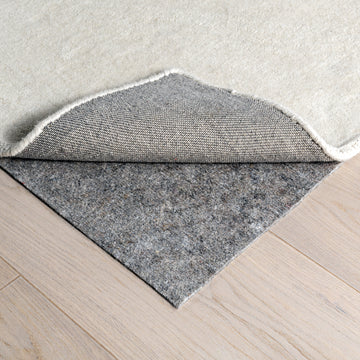
Ensure both rugs are secured with a suitable non-slip underlay.
-
Avoid thick layers where doors need to open freely.
-
Keep the top rug clear of high-traffic routes where it may shift.
Balance Scale, Shape and Colour
Rectangular rugs are the simplest option, but a round rug over a rectangular base can soften a square seating area. Repeat one colour from the top rug in cushions or artwork so it connects with the wider scheme.
Keep the Layered Look Practical
Good rug layering should work for daily life. Vacuum both layers regularly, following the material care instructions. Rotate the top rug occasionally if one side receives more sunlight or foot traffic. Use rug tape or a quality underlay where corners lift, and check that doors can open without catching.
When furniture is moved, reassess the layout. Even a small change in sofa position can alter the visual balance of the rugs. A considered arrangement will feel comfortable, protect the floor and add depth without becoming difficult to maintain.
Conclusion
To layer rugs like a professional interior designer, start with proportion and function. Use a larger, understated base rug, then add a smaller layer with colour, pattern or softness. Keep a visible border, coordinate materials and colours, and place the rugs according to how the room is used. With these principles, layered rugs can make a room feel more comfortable, complete and personal.