

Dining Room Rug Size Guide: Expert Tips for the Perfect Fit
A dining room rug can enhance the appearance of your dining area while protecting flooring and adding comfort underfoot. However, choosing the wrong size can make the room feel unbalanced and create practical issues when chairs are moved. Understanding proper rug sizing is essential for achieving a functional and visually appealing dining space.
This Dining Room Rug Size Guide: Expert Tips for the Perfect Fit explains how to select the appropriate rug dimensions, measure your room, and avoid common sizing mistakes.
Why Rug Size Matters in a Dining Room
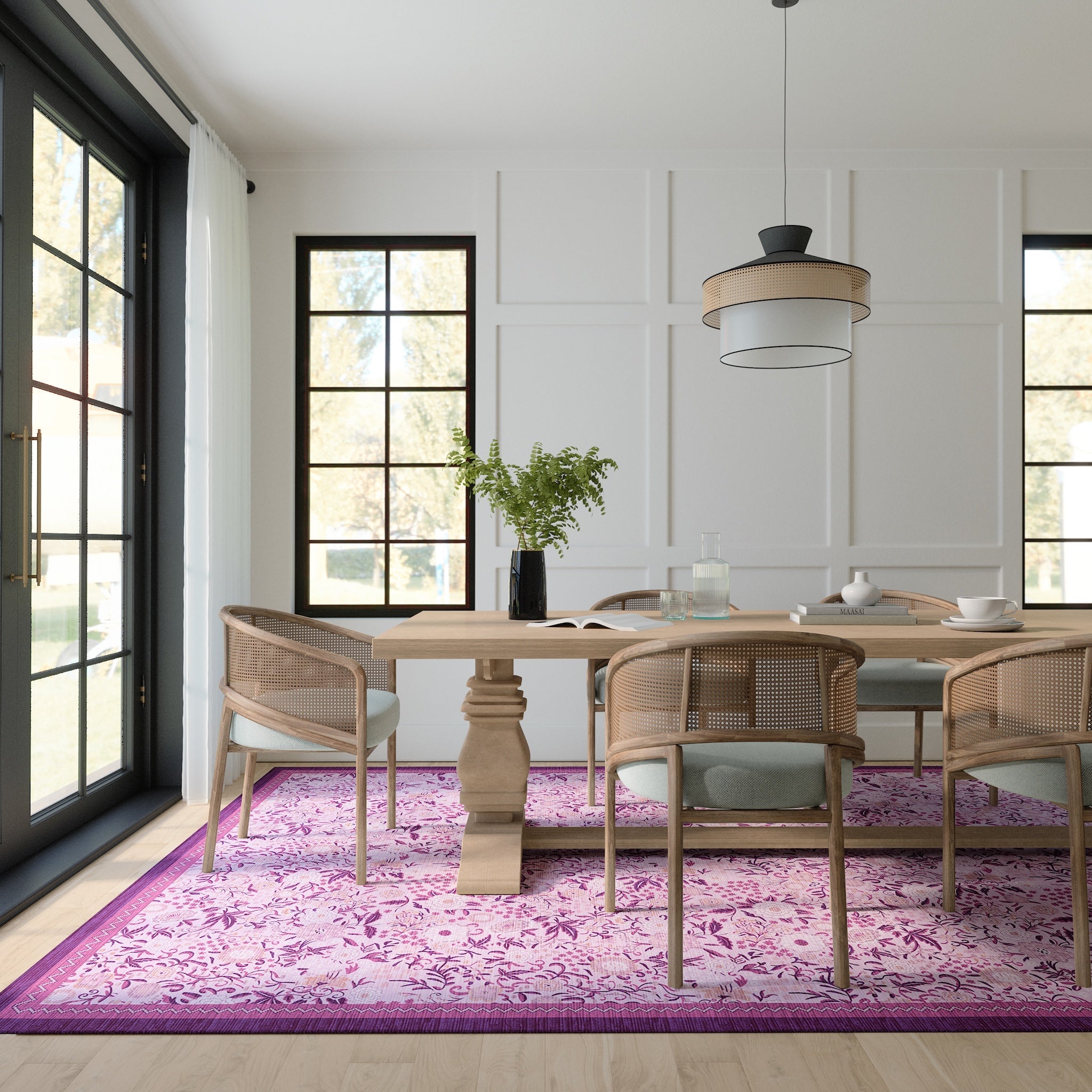
Unlike rugs used in living rooms or bedrooms, dining room rugs must accommodate both the table and chairs. When guests pull their chairs out, the chair legs should remain on the rug. A rug that is too small can cause chairs to catch on the edges, making dining uncomfortable.
A properly sized rug creates a defined dining area, improves room proportions, and helps tie together furniture and décor elements.

The General Rule for Dining Room Rug Sizing
A widely accepted guideline is to leave at least 24 inches of rug extending beyond all sides of the dining table. This allows chairs to remain on the rug even when pulled out for seating.
For larger dining chairs with arms, extending the rug by 30 inches beyond the table edge may provide better functionality.
Example Measurements
|
Dining Table Size |
Recommended Rug Size |
|
4-Seat Table |
6' x 8' Rug |
|
6-Seat Table |
8' x 10' Rug |
|
8-Seat Table |
9' x 12' Rug |
|
Large 10-12 Seat Table |
10' x 14' Rug |
These recommendations may vary depending on chair dimensions and room layout.
How to Measure Your Dining Room
Before purchasing a rug, measure both your dining table and the available floor space.
Follow these steps:
-
Measure the length and width of your dining table.
-
Add 48 to 60 inches to both dimensions.
-
Compare the result with standard rug sizes.
-
Ensure sufficient clearance between the rug and surrounding walls.
Using painter's tape on the floor can help visualize the rug's placement before making a purchase.
Consider Room Proportions
The rug should complement the room rather than dominate it. Ideally, leave between 12 and 24 inches of visible flooring between the rug edge and the walls. This creates a balanced appearance and prevents the room from feeling crowded.
Choosing a Rug Shape for Your Dining Table
The shape of the rug should generally match the shape of the dining table.
Rectangular Tables
Rectangular tables work best with rectangular rugs. This pairing maintains symmetry and provides even coverage around the table.
Round Tables
Round dining tables are often complemented by round rugs. This combination creates a cohesive look and emphasizes the table as the focal point.
Square Tables
Square tables typically pair well with square rugs. However, a larger rectangular rug may also work in some room layouts.
Oval Tables
Oval tables can be paired with either oval or rectangular rugs depending on room dimensions and personal preference.
Common Dining Room Rug Mistakes
Selecting the wrong rug size is one of the most common decorating errors. Here are several mistakes to avoid:
Choosing a Rug That Is Too Small
A small rug may fit beneath the table but fail to support the chairs when they are moved. This creates instability and reduces comfort.
Ignoring Chair Movement
Always test how far chairs extend when occupied. The rug should accommodate normal chair movement without exposing chair legs to the floor.
Forgetting Room Dimensions
Even if a rug fits the table correctly, it should also fit proportionally within the room. Oversized rugs may overwhelm smaller spaces.
Selecting the Wrong Shape
Mismatched rug and table shapes can make the dining area appear disconnected and less organized.

Material Considerations for Dining Room Rugs
Dining rooms experience frequent foot traffic and occasional spills. Choosing a durable material can help maintain the rug's appearance over time.
Popular options include:
-
Wool rugs for durability and comfort
-
Synthetic fibers for stain resistance
-
Washable rugs for easy maintenance
-
Low-pile rugs for smoother chair movement
Avoid high-pile rugs in dining spaces, as they can make chair movement more difficult.
Rug Placement Tips for Better Results
Proper placement is just as important as selecting the correct size.
For the best appearance:
-
Center the rug beneath the dining table.
-
Ensure equal rug exposure on all sides.
-
Maintain consistent spacing between walls and rug edges.
-
Check chair clearance before final placement.
These small adjustments can significantly improve the overall look and functionality of the dining area.
Conclusion
Selecting the right rug size can improve both the appearance and usability of your dining room. The key is ensuring the rug extends beyond the table far enough to support chairs when they are pulled out. By measuring carefully, choosing an appropriate shape, and considering room proportions, homeowners can create a balanced and practical dining environment.
Following this Dining Room Rug Size Guide: Expert Tips for the Perfect Fit can help you choose a rug that complements your dining table, enhances comfort, and contributes to a well-designed space for everyday meals and special gatherings.