

Artikel: Pet-Friendly Rugs: What Should Be Kept in Mind?
Pet-Friendly Rugs: What Should Be Kept in Mind?
Rugs can make a home more comfortable, add warmth to hard floors, and define different areas within a room. For households with pets, however, choosing a rug requires a little more consideration. Dogs and cats can bring muddy paws, loose fur, scratches, spills, and occasional accidents, all of which can affect how a rug looks and performs over time.
When considering pet-friendly rugs What should be kept in mind?, it is useful to look beyond appearance. Material, pile height, construction, colour, cleaning requirements, and placement can all influence whether a rug is practical for a home shared with pets.
Choose a Practical Rug Material
Material is one of the first things to consider when selecting a pet-friendly rug. Some fibres are easier to clean and maintain than others, while certain materials may be more vulnerable to moisture, stains, or scratching.
Synthetic fibres are often considered for homes with pets because many are relatively easy to maintain. Depending on the specific rug, materials such as polypropylene or polyester may offer resistance to everyday stains and moisture.
Natural fibres can also be suitable, but their care requirements vary. Always review the manufacturer's cleaning and maintenance instructions before choosing a rug.
Consider Everyday Cleaning Needs
Pets can bring dirt, dust, and outdoor debris into the home. Even indoor pets shed hair and may leave small marks on rugs.
A practical rug should be easy to vacuum regularly and allow minor spills to be addressed promptly. If the rug requires specialist cleaning for every small stain, it may be less convenient for a busy pet household.
Pay Attention to Pile Height
Pile refers to the length and density of fibres on the rug's surface.
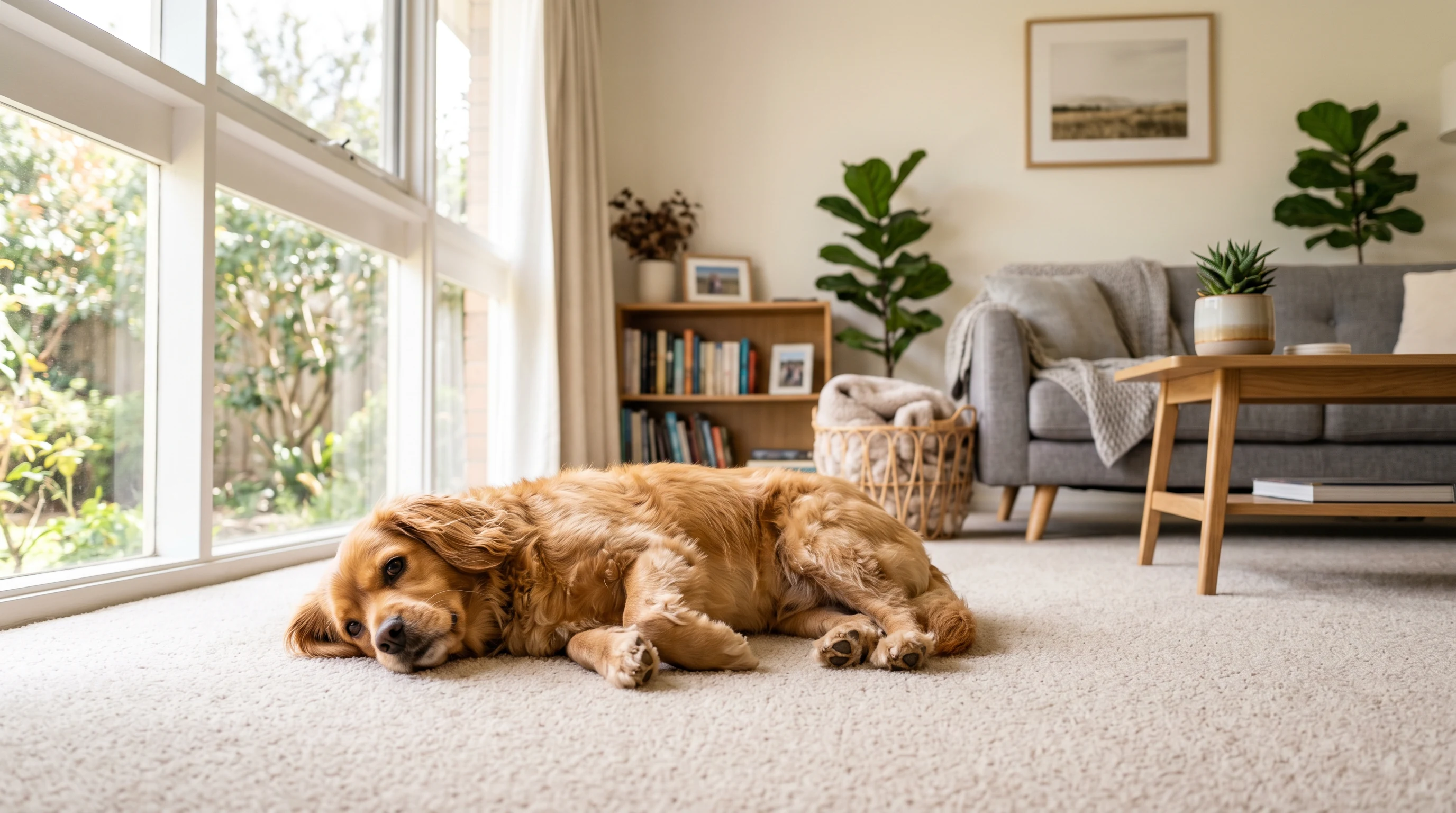
Low-pile rugs are often easier to maintain in homes with pets because hair and dirt have fewer places to become trapped. Their flatter surface can also make vacuuming more straightforward.
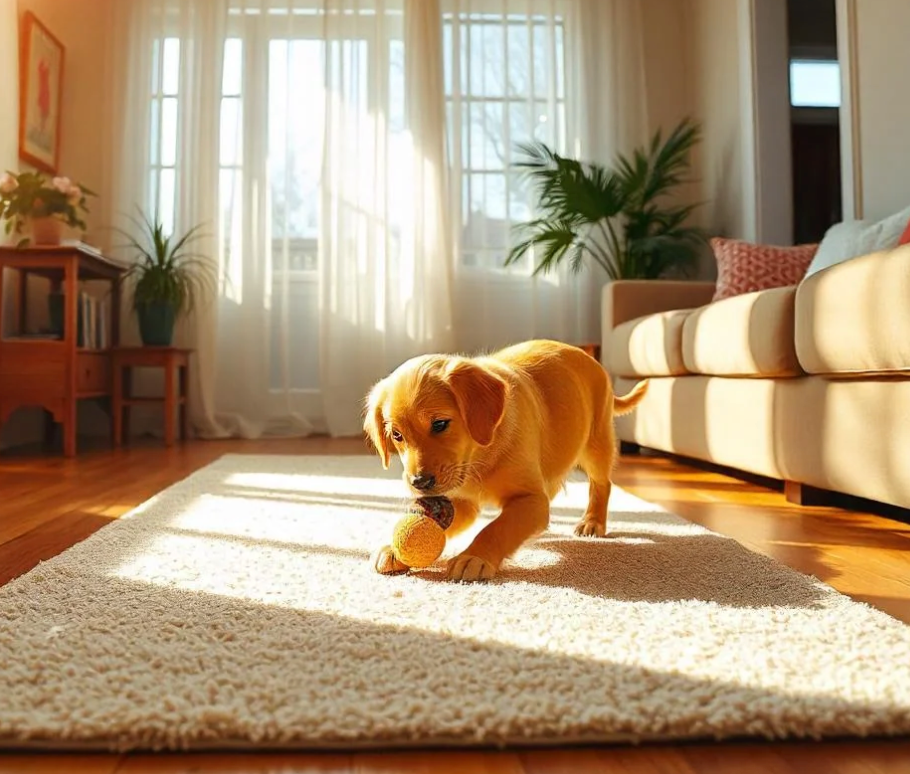
High-pile and shag rugs can provide a soft surface, but they may collect more fur, crumbs, and debris. Pet claws may also catch in longer or loosely constructed fibres.
Think About Your Pet's Habits
Every pet behaves differently.
A calm older dog may have little impact on a rug, while an energetic puppy may run, scratch, chew, or have occasional accidents. Cats may also scratch certain textures or catch their claws in loose fibres.
Consider your pet's normal behaviour before deciding which construction and pile height are appropriate.
Look for Strong Rug Construction
Durability matters in areas where pets frequently walk, play, or rest.
Closely woven rugs generally provide a more compact surface, while rugs with loose loops may be easier for claws to catch. Inspect the weave, edges, and backing when comparing options.
The rug should also be suitable for the level of foot traffic in the room. Entryways, living rooms, and hallways typically require more practical materials than areas used less frequently.
Select Colours and Patterns Carefully
Colour can influence how visible pet hair and everyday marks appear.
Very dark rugs may make light-coloured pet hair noticeable, while very pale rugs can show muddy footprints and stains more clearly. A mid-tone colour may make routine maintenance easier in some households.
Patterned rugs can also help make small amounts of fur, dust, or minor marks less noticeable between cleaning sessions.
Consider Your Pet's Coat Colour
Your pet's coat can provide a useful reference when choosing a rug.
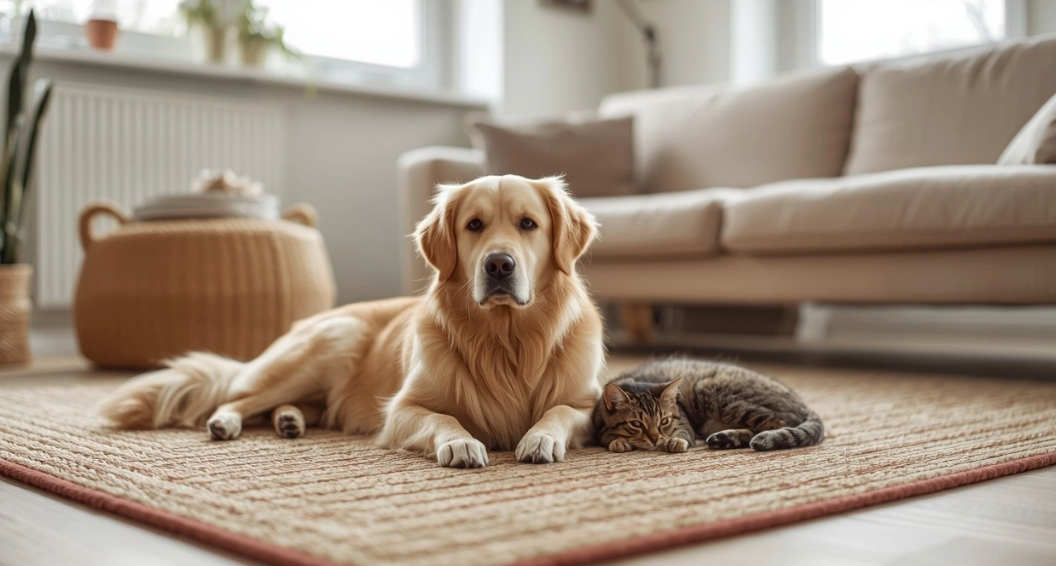
If shedding is a frequent concern, selecting a rug with tones reasonably close to the pet's fur can reduce the visual contrast. This does not replace regular cleaning, but it can help the room maintain a tidier appearance between vacuuming sessions.
Make Cleaning and Stain Management a Priority
Accidents can happen even with well-trained pets.
When a spill or accident occurs, dealing with it quickly can help prevent stains and lingering odours. Blot liquids rather than rubbing them further into the fibres, and follow the rug manufacturer's recommended cleaning method.
Before using a cleaning product across a visible area, test it on a small, inconspicuous section. Some cleaning solutions can affect colour or fibre texture.
Use a Suitable Rug Pad
A rug that moves across the floor can create problems for both people and pets.
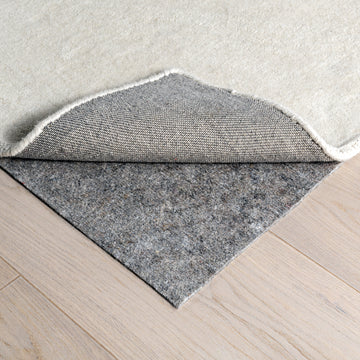
Running dogs or active cats may cause an unsecured rug to slide or bunch. A suitable rug pad can help reduce movement while providing additional cushioning.
Choose a pad that is compatible with both the rug and the flooring underneath. Different flooring materials may require different types of rug pads.
Consider Where the Rug Will Be Placed
Placement can be just as important as material.
A rug positioned near an exterior door may receive muddy paw prints more frequently. Rugs placed near food and water bowls can be exposed to spills, while those in living areas may collect more fur if pets regularly sleep there.
Match the Rug to the Room
Consider the demands of each area separately rather than using the same rug type throughout the home.
For example, a practical low-pile rug may suit a busy hallway, while a softer rug could work in a bedroom where the pet spends less time. Choosing according to location can simplify long-term maintenance.
Check the Rug Regularly
Pet-friendly decorating does not end once the rug has been placed.
Check the rug periodically for loose threads, damaged edges, stains, and signs of chewing or scratching. Addressing minor damage early may prevent it from becoming more noticeable.
Regular vacuuming can also reduce accumulated pet hair, dirt, and debris. Cleaning frequency will depend on the number of pets, their shedding habits, and how frequently the room is used.
Final Thoughts
When asking Pet-friendly rugs What should be kept in mind? Focus on how the rug will function in everyday life as well as how it looks. Material, construction, pile height, colour, cleaning requirements, placement, and stability all deserve consideration.
A rug that suits both the room and the habits of your pet can be easier to maintain over time. By considering practical factors before choosing a design, you can create a comfortable living space without making rug care unnecessarily difficult.