

Artykuł: Luxurious Large Carpets to Transform Your Living Room
Luxurious Large Carpets to Transform Your Living Room
A large carpet can change the way a living room looks and feels. It can define the seating area, introduce texture, soften hard flooring, and help different pieces of furniture feel more connected. In larger rooms, carpets also help prevent the space from appearing empty or visually disconnected.
Choosing the right carpet involves more than selecting a pattern or colour. Size, material, placement, pile, maintenance, and the existing décor all influence how well the carpet works within the room.
For homeowners looking for luxurious large carpets to transform their living room, the most effective approach is to focus on proportion, comfort, durability, and design compatibility rather than selecting a carpet based on appearance alone.
Why Large Carpets Work Well in Living Rooms
Large carpets help establish a clear visual foundation for the furniture placed above them. In an open or spacious living room, furniture can sometimes appear scattered when there is no common element connecting the seating arrangement.
A properly sized carpet creates a defined zone for sofas, chairs, coffee tables, and side tables. This can make the entire arrangement feel more organised.
Large carpets can also improve comfort underfoot and reduce the hard appearance of flooring materials such as marble, wood, tile, or concrete.
Creating a More Connected Seating Area
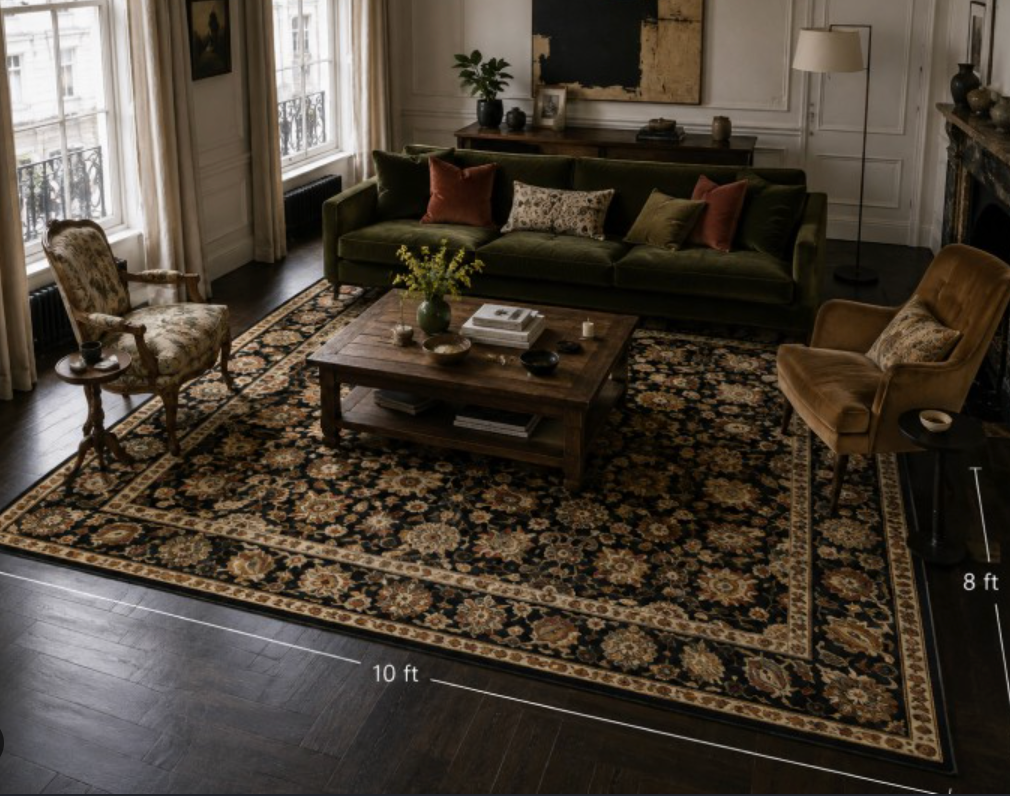
A carpet can visually connect separate furniture pieces into one arrangement. Ideally, at least the front legs of major seating pieces should sit on the carpet.
In larger spaces, placing the entire sofa and chairs on the carpet can create an even stronger sense of proportion. The exact approach depends on room dimensions and furniture placement.
Select the Right Carpet Size
Size is one of the most important factors when choosing a carpet for a living room. A carpet that is too small can make furniture look disconnected and may reduce the visual scale of the room.
Before buying, measure the seating area rather than the entire room. Consider the width of the sofa, placement of armchairs, and distance between furniture pieces.
Large carpets should extend beyond the coffee table and ideally reach underneath at least part of the surrounding seating.
Leave Enough Flooring Around the Carpet
Even when using a large carpet, some visible flooring around the edges can help create balance.
The amount of exposed floor depends on the size of the room. Consistent spacing between the carpet and walls generally produces a cleaner appearance than uneven gaps.
Using masking tape to mark the proposed carpet dimensions on the floor can help you understand how the size will look before purchasing.

Choose a Material Based on Daily Use
A luxurious carpet should not only look suitable for the room but also perform well under regular use.
Wool is commonly selected for living rooms because it offers softness, insulation, and durability. It can work particularly well in spaces that require both comfort and long-term performance.
Cotton carpets are generally lighter and easier to handle, although they may not offer the same density as wool.
Synthetic fibres can provide durability and easier maintenance, making them useful in homes where the living room receives frequent foot traffic.
Consider the Carpet Pile
Pile refers to the height and density of the carpet fibres. It can significantly affect appearance, comfort, and maintenance.
High-pile carpets provide a soft and comfortable surface, but they may require more frequent cleaning. They can also make it slightly harder to move lightweight furniture.
Low-pile carpets are generally easier to maintain and can suit living rooms where chairs, tables, and other furniture are frequently moved.
Medium-pile options offer a balance between softness and practicality.
Match the Carpet With the Existing Colour Palette
A large carpet occupies a significant amount of visible floor space, so its colour can influence the overall appearance of the room.
Neutral shades such as beige, cream, grey, taupe, and brown can create a calm foundation and work with a wide range of furniture styles.
Deeper colours such as navy, burgundy, forest green, or charcoal can add contrast and help anchor large living rooms.
The carpet does not need to match the sofa exactly. Instead, look for colours that relate to the upholstery, curtains, cushions, wall paint, or artwork.
Use Pattern Carefully
Patterns can add character, but the scale of the design should suit the room.
Large patterns tend to work well in spacious living rooms because there is enough floor area for the design to be visible. Smaller patterns may create a more detailed appearance and can work well when the furniture is relatively simple.
If the room already contains patterned curtains, cushions, or upholstery, consider a quieter carpet design to maintain balance.
Use Texture to Add Depth
Texture is particularly important in rooms with a neutral colour scheme.
A textured carpet can introduce variation without requiring strong colours or elaborate patterns. Handwoven surfaces, looped fibres, subtle raised designs, and mixed textures can help create visual depth.
Textured carpets can also complement furniture materials such as leather, velvet, linen, wood, and metal.
The aim is to create contrast between surfaces without making the room appear overly decorated.
Consider Furniture Placement Before Buying
Carpet placement should be planned alongside the furniture arrangement.
In a compact living room, positioning the front legs of the sofa and chairs on the carpet is often sufficient. In larger rooms, all furniture legs can be positioned on the carpet to create a clearly defined seating zone.
A carpet can also help separate the living area from a dining area in an open-plan layout.
In such spaces, using carpets with different textures or patterns can visually distinguish one functional zone from another.
Think About Maintenance and Cleaning
Large carpets require regular care to maintain their appearance.
Vacuuming helps remove dust, crumbs, and surface dirt. Rotating the carpet occasionally can also help prevent uneven wear caused by repeated foot traffic or sunlight.
Spills should be treated according to the carpet material and manufacturer's care instructions. Some carpets may require professional cleaning, particularly those made from delicate fibres.
Before purchasing, consider whether the maintenance requirements are suitable for your household.
Make the Carpet Part of the Overall Interior
A large carpet should support the room rather than dominate every other design element.
Consider how it interacts with the sofa, chairs, curtains, lighting, wall finishes, cushions, and decorative accessories. A detailed carpet may work best with simpler furnishings, while a plain carpet can provide a foundation for patterned upholstery and decorative accents.
Repeating one or two carpet colours elsewhere in the room can also create visual consistency.
Conclusion
Choosing Luxurious Large Carpets to transform your living room requires careful attention to size, material, texture, colour, pattern, and furniture placement. A well-proportioned carpet can define the seating area, improve comfort, connect furniture pieces, and create a more balanced interior.
Before making a final choice, measure the room carefully, consider how the space is used, and compare carpet samples with the existing furniture and flooring. By focusing on both appearance and practicality, you can select a large carpet that complements the living room and remains suitable for everyday use.