

Carpet Size Guide for Every Room
Choosing the right carpet size can affect how balanced, comfortable, and well-proportioned a room feels. A carpet that is too small may make furniture look disconnected, while an oversized carpet can make a compact room feel crowded. The correct dimensions depend on the size of the room, furniture placement, and how much flooring you want to leave visible.
This Carpet Size Guide for Every Room explains how to select suitable carpet dimensions for living rooms, bedrooms, dining rooms, entryways, and other areas of the home. Rather than relying only on standard sizes, it is useful to consider how the carpet will relate to the furniture and layout of each space.
Why Carpet Size Matters
Carpets do more than cover part of the floor. They can help define seating areas, create visual boundaries, improve comfort, and connect furniture within a room.
A properly sized carpet should support the layout rather than appear separate from it. For example, a carpet in a living room should usually connect the sofa and surrounding chairs, while a dining room carpet should extend far enough to accommodate chairs even when they are pulled away from the table.
Before choosing a carpet, measure both the room and the furniture arrangement.
Measure Before You Buy
Use a measuring tape to record the length and width of the area where the carpet will be placed. It can also help to mark the proposed carpet edges with painter's tape.
This provides a clearer idea of how much flooring will remain visible and whether the chosen dimensions suit the furniture placement.
Carpet Size for the Living Room
The living room is one of the most important areas to consider because carpets often help define the main seating arrangement.
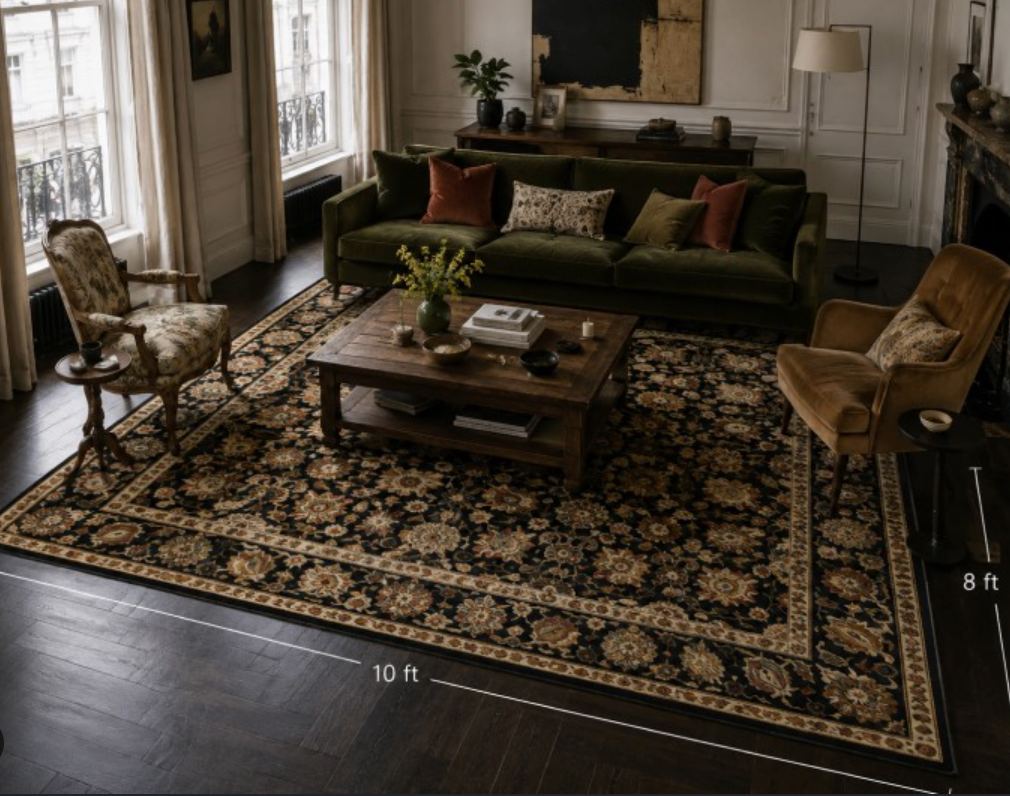
In a compact living room, a smaller carpet can be positioned beneath the coffee table while remaining close to the sofa and chairs. However, this arrangement should still feel connected rather than leaving large gaps between the carpet and furniture.
For medium and large living rooms, placing the front legs of the sofa and chairs on the carpet can create a more unified appearance. In spacious rooms, a larger carpet that sits beneath all major seating furniture may be more appropriate.
Common Living Room Carpet Sizes
Typical options include approximately:
-
5 x 8 feet for smaller seating areas
-
6 x 9 feet for medium-sized living rooms
-
8 x 10 feet for larger layouts
-
9 x 12 feet for spacious seating arrangements
These sizes are only a reference. The actual furniture layout should guide the final decision.
Carpet Size for the Bedroom
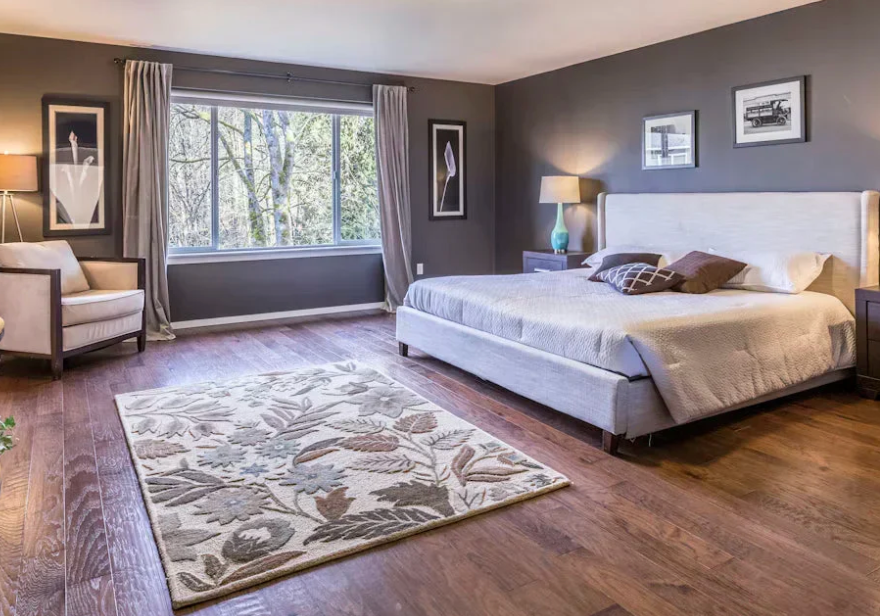
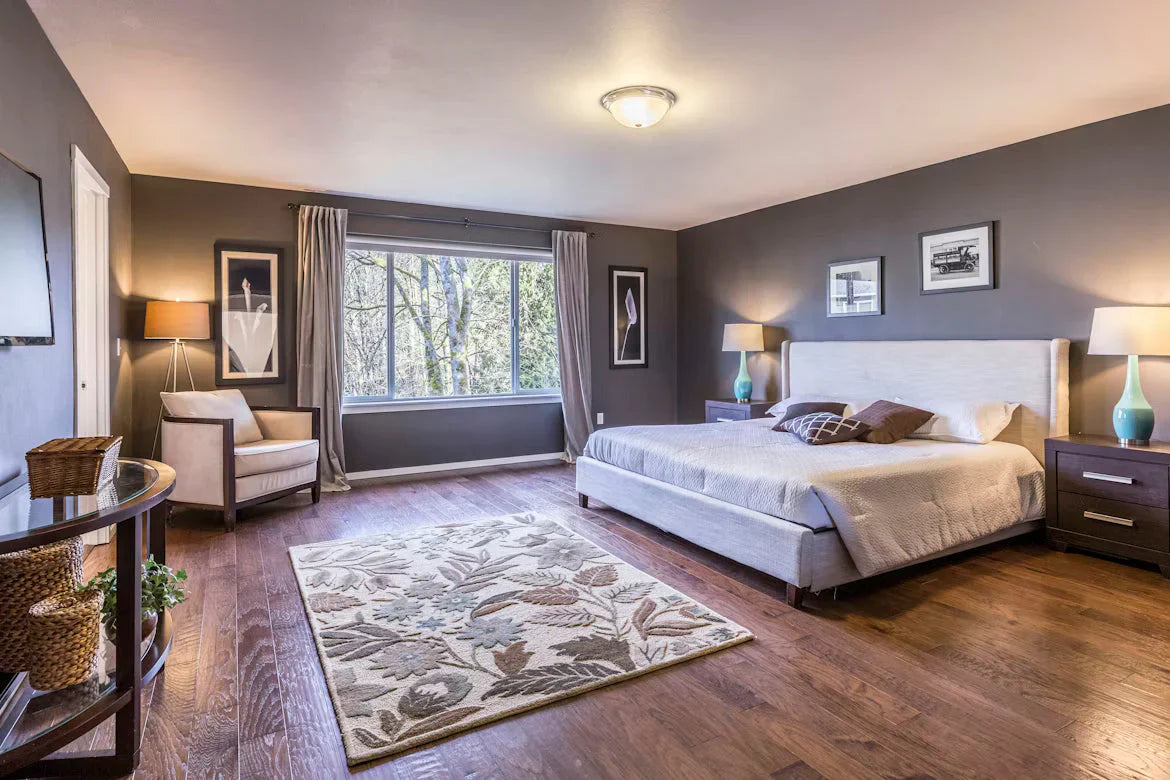
Bedroom carpets are commonly positioned beneath the bed, where they add softness and help frame the sleeping area.
For a queen-size bed, a carpet measuring around 8 x 10 feet may provide enough coverage under the bed while extending beyond the sides. A king-size bed may require a 9 x 12-foot carpet or a similar larger size.
If a full carpet beneath the bed is not preferred, two runners can be placed on either side of the bed.
How Far Should the Carpet Extend Beyond the Bed?
Ideally, the carpet should extend beyond the sides and foot of the bed enough to provide a comfortable surface when stepping out of bed.
Around 18 to 24 inches of visible carpet on the sides can work well in many bedrooms, although the exact amount depends on room size and bedside furniture.
Carpet Size for the Dining Room
Dining room carpet sizing requires additional consideration because the chairs move regularly.
The carpet should extend beyond the table far enough that the chair legs remain on the carpet when the chairs are pulled out. A common guideline is to allow approximately 24 inches of additional carpet around all sides of the dining table.
For example, a six-seat dining table may suit an 8 x 10-foot carpet, while a larger eight-seat table may require a 9 x 12-foot option.
Match the Carpet Shape to the Table
A rectangular carpet usually works well with a rectangular table, while a round carpet can complement a round dining table.
However, room shape should also be considered. The carpet should feel proportional to both the dining furniture and the available floor area.
Carpet Size for Hallways and Entryways
Runners are generally suitable for hallways because they provide coverage without hiding the entire floor.
The carpet should leave a visible border on each side so that the hallway does not appear narrower than it is. Measure the full length and width before selecting a runner.
In an entryway, the carpet should fit comfortably within the available floor area without interfering with door movement.
Carpet Size for the Home Office
A home office carpet should accommodate both the desk and chair.
If an office chair moves frequently, choose a carpet large enough for the chair to remain on the surface even when it is pulled back. Smaller carpets may cause the chair wheels or legs to repeatedly move on and off the carpet.
An appropriately sized carpet can also help define the work area, especially in a bedroom, living room, or shared space.
Carpet Size for Open-Plan Spaces
Open-plan interiors often contain several functional areas within one large room. Carpets can help visually separate these zones.
For example, one carpet may define the seating area while another identifies the dining space. The carpets do not need to match exactly, but their dimensions should suit the furniture arrangements they support.
Avoid using carpets that are so large that separate zones begin to merge visually.
Consider the Amount of Visible Flooring
Leaving some flooring visible around the carpet can make the room feel balanced.
In many rooms, a border of approximately 12 to 24 inches between the carpet and walls works well. Smaller rooms may need a narrower border, while larger rooms can accommodate more visible floor space.
Wall-to-wall carpeting follows different sizing considerations because the material is cut according to the full dimensions of the room.
Common Carpet Sizing Mistakes to Avoid
One common mistake is choosing a carpet based only on appearance without considering furniture dimensions. Another is selecting a size that fits the room but not the furniture arrangement.
Avoid carpets that appear to float in the middle of a large room with no visual connection to the surrounding furniture.
It is also useful to check whether doors, cabinets, and other movable elements will clear the carpet comfortably.
Conclusion
Using a practical carpet size guide for every room can make it easier to select dimensions that suit both the available space and the furniture layout. Living rooms generally benefit from carpets that connect seating furniture; bedrooms need sufficient coverage around the bed, and dining room carpets should provide extra space for chair movement.
Accurate measurements, careful furniture placement, and suitable proportions are more important than relying only on standard carpet dimensions. By considering how the carpet will function within each room, you can choose a size that supports a balanced and comfortable interior.