


How to Choose the Perfect Rug Color for Your Home
Choosing the right rug color can change the overall look and feel of a room. A rug is not only a floor covering; it also helps define the space, balance the décor, and create visual warmth. Whether you are decorating a living room, bedroom, dining area, or hallway, the color of the rug plays an important role in how the room appears.
Many homeowners focus on rug size, material, and pattern, but color is equally important. The right shade can make a small room feel open, add depth to a plain space, or bring all décor elements together. Understanding How to Choose the Perfect Rug Color for Your Home can help you make a better decision and avoid a rug that feels mismatched after a few weeks.
Why Rug Color Matters in Home Décor
Rug color affects the mood, style, and visual balance of a room. Light-colored rugs can make a space feel larger and brighter, while dark-colored rugs can add comfort and depth. Neutral rugs create a calm base, while bold colors can become a focal point.
A rug also connects furniture, wall colors, curtains, cushions, and other décor elements. When the rug color works well with the rest of the room, the space feels complete. When it clashes, even expensive furniture can look less appealing.

Consider the Room Size Before Choosing a Rug Color
Room size should be one of the first factors to consider when choosing a rug color. The same color can look different depending on the size and layout of the space.
Light Rug Colors for Small Rooms
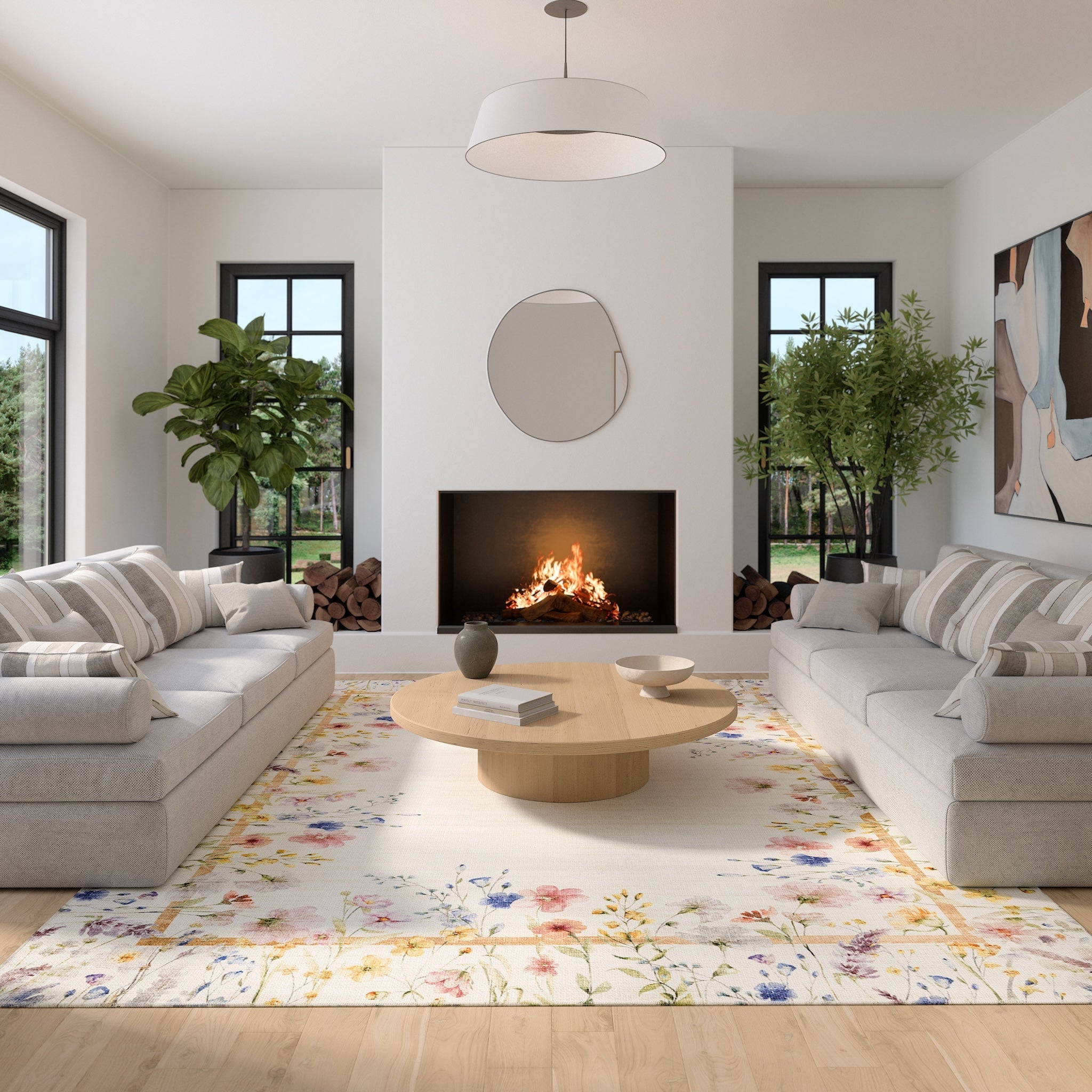
If the room is small, light rug colors such as beige, cream, light grey, ivory, or soft pastels can make it feel more open. These shades reflect light and create a sense of space. They work well in apartments, compact bedrooms, small living rooms, and narrow hallways.
Dark Rug Colors for Large Rooms
Dark rug colors such as charcoal, navy, brown, deep green, or burgundy can make a large room feel warmer and more grounded. They help define seating areas and create a more settled look. Dark rugs are especially useful in spacious living rooms or rooms with high ceilings.
Match the Rug Color with Wall Colors
Wall color has a strong impact on rug selection. Since walls cover a large visual area, the rug should either complement or gently contrast with them.
If the walls are white, cream, or light grey, you have more flexibility. You can choose a neutral rug for a simple look or a colored rug to add interest. For darker walls, a lighter rug can prevent the room from feeling heavy.
If your walls already have a strong color, choose a rug that supports the same color family. For example, soft beige or muted brown rugs work well with warm-toned walls, while grey or blue-toned rugs suit cool-toned interiors.
Coordinate the Rug with Furniture
Furniture color is another important factor. A rug should not compete with the main furniture pieces; instead, it should support the overall look.
Neutral Furniture
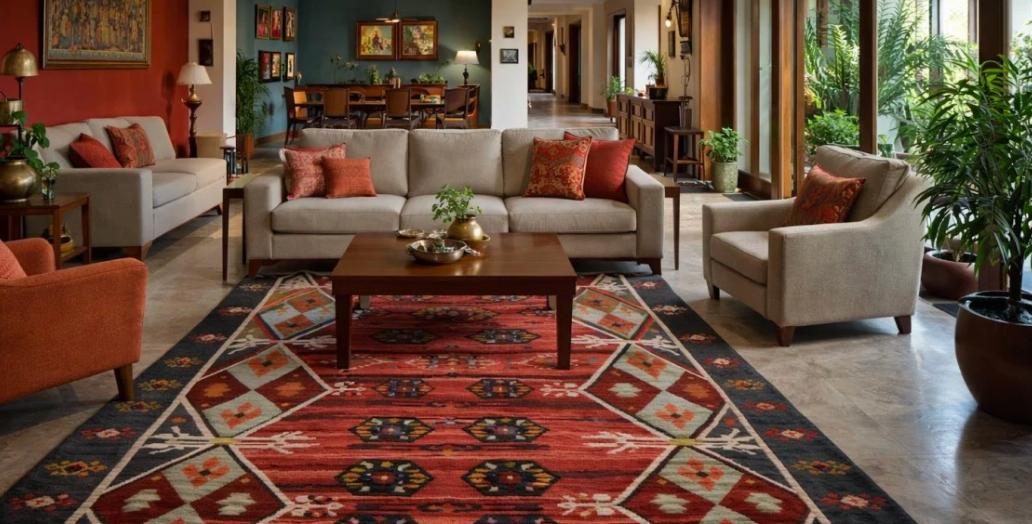
If your sofa, bed, or chairs are neutral, you can choose either a neutral rug for a calm look or a colorful rug for contrast. A beige sofa can pair well with a blue, rust, green, or patterned rug.
Bold Furniture
If your furniture already has strong colors, choose a rug in a softer shade. This prevents the room from looking too busy. For example, a dark green sofa may look better with a cream, beige, or muted grey rug.
Think About Natural and Artificial Lighting
Lighting changes how rug colors appear. A rug that looks warm in a showroom may appear darker or cooler in your home.
Rooms with plenty of natural light can handle deeper or richer rug colors. Sunlight helps balance darker shades and makes them look more attractive. Rooms with limited light may benefit from lighter rugs because they help brighten the area.
Artificial lighting also matters. Warm lights can make beige, brown, rust, and gold tones look richer. Cool white lights can make grey, blue, and green tones look sharper. Before buying, it is helpful to view rug samples in your room at different times of the day.

Choose Rug Colors Based on Room Use
Every room has a different purpose, and rug color should match how the space is used.
Living Room Rugs
The living room is often the most used area in the home. Neutral shades such as beige, grey, taupe, or ivory are safe choices because they work with many décor styles. If the room looks plain, a patterned rug with blue, rust, or green accents can add character.
Bedroom Rugs
Bedrooms should feel calm and comfortable. Soft colors such as cream, light grey, dusty pink, pale blue, or warm beige are suitable options. These colors create a relaxed atmosphere and pair well with bedding and curtains.
Dining Room Rugs
Dining room rugs should be practical as well as stylish. Medium or darker shades can help hide minor stains and spills. Patterns are also useful because they make everyday marks less visible.
Hallway and Entryway Rugs
Hallways and entryways receive more foot traffic. For these areas, avoid very light colors unless the rug is washable. Medium tones, earthy colors, and patterned designs are better for daily use.
Decide Between Neutral and Bold Rug Colors
Neutral rugs are suitable for people who prefer a clean and timeless look. Colors like beige, grey, ivory, taupe, and brown are easy to pair with different furniture and décor items. They are also useful if you change your cushions, curtains, or wall art often.
Bold rug colors are better when you want the rug to stand out. A deep blue, rich red, olive green, or mustard rug can add personality to a simple room. However, bold colors should be used carefully. Make sure the shade appears in at least one or two other décor elements, such as cushions, artwork, or curtains.
Use Patterns to Balance Color
A patterned rug can be a good option when you cannot decide on a single color. Patterns allow multiple shades to work together and can connect different parts of the room.
For example, if your room has a grey sofa, wooden table, and blue cushions, a rug with grey, beige, and blue details can bring everything together. Patterns are also practical for busy homes because they hide dust, stains, and wear better than plain rugs.
Consider Maintenance Before Finalizing the Color
Rug color should also match your lifestyle. If you have children, pets, or high foot traffic, very light rugs may require more cleaning. Dark rugs can hide some stains but may show dust, lint, and pet hair more clearly.
Medium-toned rugs are often the easiest to maintain. Shades such as taupe, muted brown, stone grey, and patterned beige are practical choices for everyday use.
Final Thoughts
Choosing the right rug color requires a balance of style and practicality. Consider room size, wall color, furniture, lighting, usage, and maintenance before making a decision. Light shades can brighten a space, dark colors can add depth, and neutral tones can create a calm foundation.
A rug should support the room’s overall design while also fitting your daily lifestyle. When selected carefully, the right rug color can make your home feel more balanced, comfortable, and well-designed.