


Guidelines To Choosing The Right Rug Size For Your Decor
Selecting the right rug size plays a crucial role in defining a room’s layout, balance, and overall visual harmony. While color and material often receive the most attention, size is what determines whether a rug enhances a space or disrupts it. Understanding Guidelines To Choosing The Right Rug Size For Your Decor helps create well-proportioned interiors that feel intentional rather than accidental.how to choose the correct rug size for different rooms, furniture arrangements, and layout styles, while avoiding common sizing mistakes.
Why Rug Size Matters in Interior Decor
A rug acts as a visual anchor for furniture and architectural elements. When chosen correctly, it brings cohesion to the room, defines functional zones, and improves comfort underfoot. An undersized rug can make furniture appear disconnected, while an oversized rug can overwhelm the space.
Correct sizing ensures:
-
Furniture placement feels structured
-
Walking areas remain comfortable
-
The room appears balanced and complete
:max_bytes(150000):strip_icc()/rug-size-GettyImages-1314299377-6aa8183876254904aeae8f9df591a6e8.jpg)
General Guidelines To Choosing The Right Rug Size For Your Decor
Before focusing on individual rooms, a few universal principles apply to all spaces.
Leave Visible Floor Borders
A rug should not touch the walls. Ideally, leave 8 to 24 inches of exposed flooring around the rug’s edges, depending on room size. This framing effect prevents the room from looking crowded.
Anchor Furniture, Don’t Float It
At least the front legs of major furniture pieces should rest on the rug. Floating furniture around a rug often makes the space feel unfinished.
Measure the Space, Not the Rug
Always measure your seating or furniture arrangement first, then choose a rug size that accommodates it. Buying a rug based solely on standard dimensions often leads to sizing errors.
Choosing the Right Rug Size for the Living Room
The living room typically requires the largest rug in the home, making sizing especially important.
Large Living Rooms
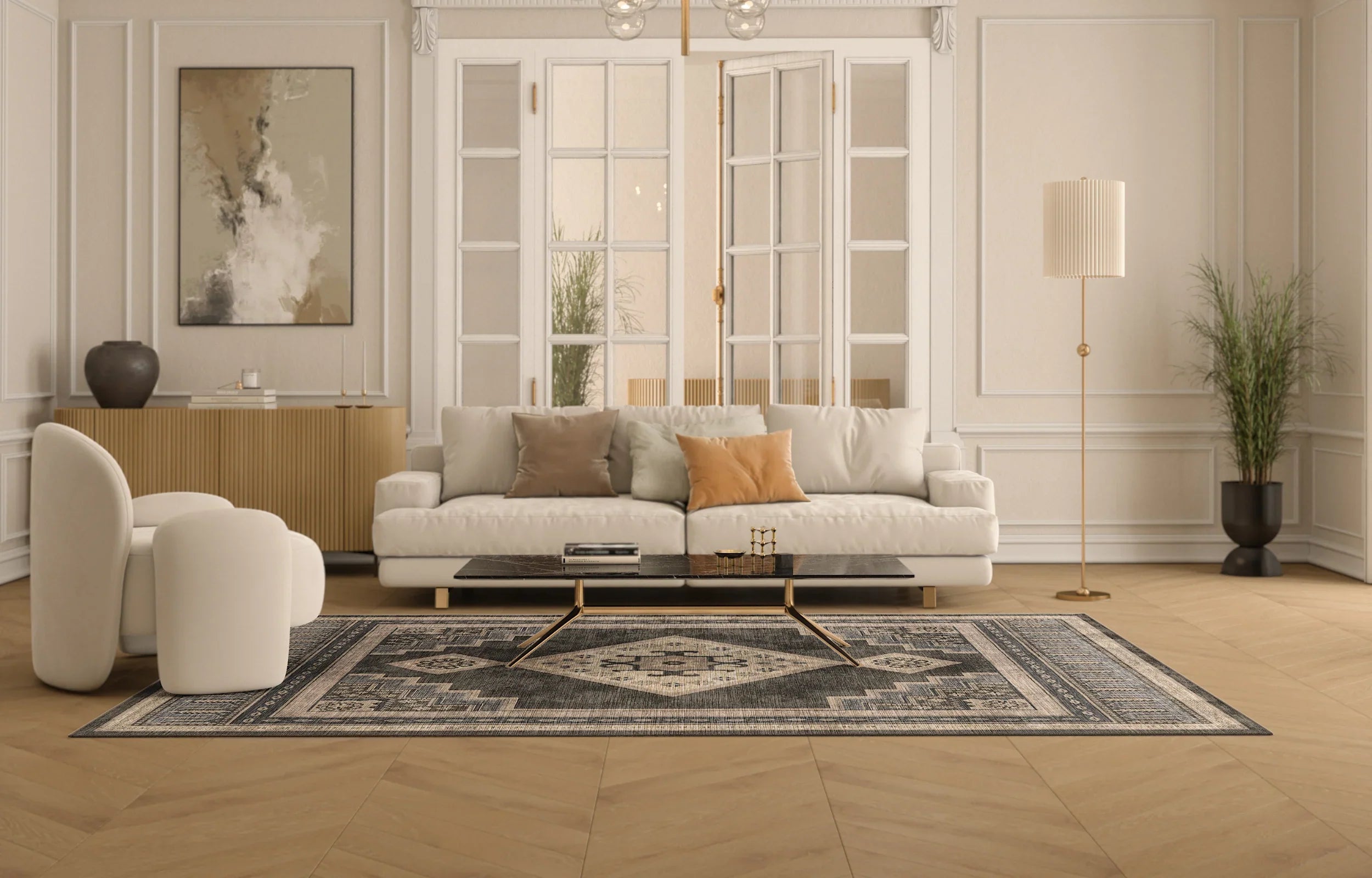
For spacious layouts, the rug should sit under all key furniture, including sofas, chairs, and coffee tables. This creates a unified seating zone and improves visual flow.
Recommended approach:
-
All furniture legs on the rug
-
Rug extends beyond the sofa edges
Medium-Sized Living Rooms
If full coverage is not possible, place only the front legs of sofas and chairs on the rug. The coffee table should sit fully on the rug.
Recommended approach:
-
Front legs on the rug
-
Rear legs off the rug
Small Living Rooms
In compact spaces, a rug should still anchor the seating area without overwhelming the room. Avoid very small rugs that sit only under the coffee table.
Recommended approach:
-
Rug wide enough to extend under seating fronts
-
Avoid narrow runner-style rugs
Bedroom Rug Size Guidelines
Rugs in bedrooms provide warmth and comfort while framing the bed visually.

Rugs Under the Bed
The most balanced look is achieved when the rug extends beyond the sides and foot of the bed.
Recommended sizing:
-
Rug extends at least 18–24 inches on each side
-
Works best when placed under the lower two-thirds of the bed
Side Rugs for Smaller Bedrooms
If space or budget is limited, place runners or smaller rugs on each side of the bed instead of one large rug.
Recommended approach:
-
One rug per side, aligned with the bed edges
-
Ensure enough width for stepping comfort
Dining Room Rug Size Rules
Dining room rugs must accommodate both the table and chairs, even when the chairs are pulled out.
Correct Dining Rug Sizing
The rug should extend beyond the table on all sides to prevent chair legs from catching on the rug edge.
Recommended extension:
-
Minimum of 24 inches beyond the table
-
Preferably 30 inches for added comfort
Shape Considerations
-
Rectangular tables pair best with rectangular rugs
-
Round tables work well with round or square rugs
Rug Sizing for Hallways and Entryways
Rugs in narrow areas serve both functional and decorative purposes.
Hallways
Runners should leave equal floor space on both sides to maintain symmetry.
Recommended approach:
-
Runner centered with 3–5 inches of floor visible on each side
-
Avoid wall-to-wall coverage
Entryways
The rug should fit comfortably within the entry space without blocking doors.
Recommended approach:
-
Door should open fully over the rug
-
Rug wide enough to define the entry zone
Common Rug Size Mistakes to Avoid
Understanding what not to do is just as important as following sizing rules.
Choosing Rugs That Are Too Small
This is the most common mistake. Small rugs make rooms feel disconnected and cluttered.
Ignoring Furniture Placement
Selecting a rug without considering furniture layout leads to poor alignment and awkward spacing.
Overlooking Room Proportions
A rug that works in one room may not suit another with different dimensions or layout.
Final Thoughts on Rug Size Selection
Applying these Guidelines To Choosing The Right Rug Size For Your Decor ensures that each room feels thoughtfully designed and visually balanced. Rug size influences how furniture interacts, how space flows, and how comfortable a room feels in daily use.