

How to Choose the Right Rug Size: The Designer’s Guide for 2026
Selecting the correct rug size is one of the most important decisions in interior design. While color, material, and pattern receive a lot of attention, the size of a rug plays a major role in defining a room’s layout and balance. A rug that is too small can make furniture feel disconnected, while one that is too large can overwhelm the space.
Understanding How to Choose the Right Rug Size: The Designer’s Guide for 2026 helps homeowners create rooms that look intentional and comfortable. This guide explains how rug sizing works in different areas of the home and how designers approach rug placement to improve both function and appearance.
Why Rug Size Matters in Interior Design
Rugs are not simply decorative items. They define zones, anchor furniture, and create visual structure in a room. When a rug fits correctly within the layout, it brings cohesion to the space.
A properly sized rug can:
-
Connect furniture pieces in a seating area
-
Define conversation zones in open layouts
-
Protect flooring in high-traffic areas
-
Add warmth and texture to large rooms
Interior designers typically select rug sizes based on furniture placement rather than the room dimensions alone. This method ensures the rug supports the layout rather than appearing like a separate element.

Standard Rug Sizes Used by Designers
Before learning How to Choose the Right Rug Size: The Designer’s Guide for 2026, it helps to understand common rug dimensions used in homes.
Small Rugs
Small rugs typically measure 3x5 feet or 4x6 feet. They work well for:
-
Entryways
-
Small reading corners
-
Kitchen areas
-
Layering under larger rugs
These rugs add texture but usually do not anchor large furniture arrangements.
Medium Rugs
Medium rugs range between 5x8 feet and 6x9 feet. They are commonly used in:
-
Small living rooms
-
Bedrooms under the lower portion of the bed
-
Home offices
This size is often chosen for apartments or compact layouts.
Large Rugs
Large rugs typically measure 8x10 feet, 9x12 feet, or larger. Designers often prefer these sizes because they allow furniture pieces to sit comfortably within the rug area.
Large rugs are ideal for:
-
Living rooms
-
Dining rooms
-
Master bedrooms
-
Open concept spaces
Rug Size Guidelines for Living Rooms
The living room is where rug sizing has the most visual impact. Designers usually follow one of three placement approaches.
All Furniture on the Rug
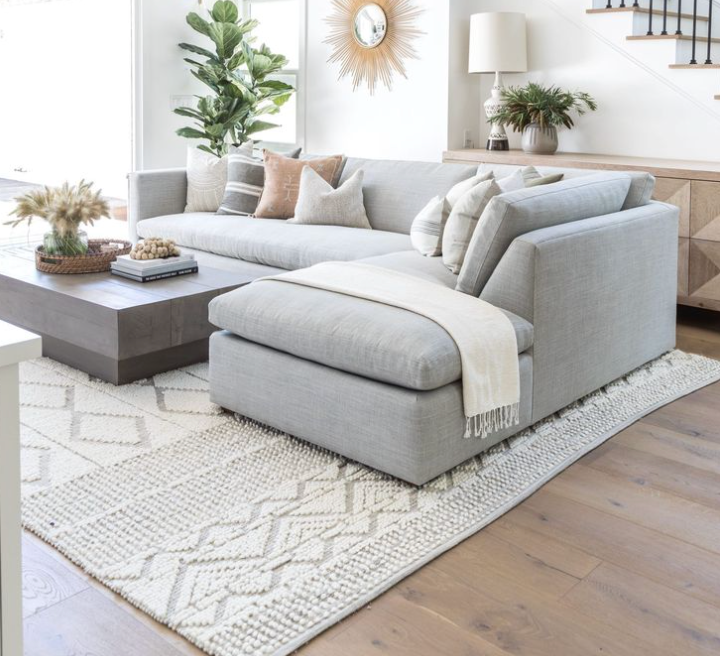
In larger rooms, the rug should be big enough for all seating pieces to sit on top of it. This method creates a cohesive seating zone and works best with rugs sized 9x12 feet or larger.
Front Legs on the Rug
A common interior design technique is placing the front legs of sofas and chairs on the rug while leaving the back legs off. This layout works well with 8x10 rugs in average-sized living rooms.
Coffee Table Only Placement
In smaller spaces, the rug may sit only under the coffee table. However, designers recommend avoiding rugs that are too small, as they can disrupt visual balance.
Choosing the Right Rug Size for Bedrooms
Bedrooms require a different approach because the rug interacts primarily with the bed.
Rug Under the Entire Bed
Large rugs placed under the entire bed and nightstands create a balanced look. Common sizes include 9x12 rugs for king beds and 8x10 rugs for queen beds.
Rug Under the Lower Two-Thirds of the Bed
This method places the rug under the lower portion of the bed, extending beyond the sides and foot of the frame. It works well when using 6x9 or 8x10 rugs.
Runners Beside the Bed
In smaller bedrooms, designers sometimes use two runners on either side of the bed to add warmth without covering the entire floor.
Rug Size Rules for Dining Rooms
Dining rooms require careful rug sizing so chairs remain on the rug even when pulled out.
A general rule used by designers is to choose a rug that extends at least 24 inches beyond the edges of the dining table on all sides.
For example:
-
6x9 rug works well for a small four-seat table
-
8x10 rug fits most six-seat dining tables
-
9x12 rug suits larger eight-seat arrangements
This extra space prevents chair legs from catching on the rug edge when people sit down or stand up.
Rugs for Hallways and Entryways
Hallways and entryways benefit from long, narrow rugs known as runners.
When selecting runners:
-
Leave 3 to 6 inches of floor space on both sides
-
Ensure the runner does not touch the walls
-
Maintain consistent spacing along the corridor
For entryways, rugs should be wide enough to accommodate door movement without obstruction.
Practical Tips for Selecting the Right Rug Size
Interior designers often follow simple planning methods before purchasing rugs.
Measure the Room First
Always measure the furniture layout rather than the empty room. Rug size should correspond to the seating arrangement.
Use Tape to Mark Rug Boundaries
Placing masking tape on the floor helps visualize how the rug will fit within the space.
Avoid Rugs That Are Too Small
Small rugs are one of the most common design mistakes. A slightly larger rug usually improves the overall appearance of a room.
Consider Furniture Spacing
Rugs should support furniture placement rather than interrupt walking paths.
Final Thoughts
Learning How to Choose the Right Rug Size The Designer’s Guide for 2026 helps homeowners create rooms that feel balanced and thoughtfully arranged. Rug size influences how furniture connects, how space flows, and how comfortable a room appears.
Designers generally recommend selecting rugs based on furniture placement, ensuring that seating areas, beds, and dining tables interact naturally with the rug beneath them. By measuring carefully and choosing the correct proportions, it becomes easier to create interiors that feel structured, comfortable, and visually complete.


