

Rug Size Guide for Living Room, Bedroom & Hall with Shapes
Choosing the right rug is not just about color or material. The size and shape of a rug play a crucial role in defining spaces, improving proportions, and enhancing overall room functionality. A rug that is too small can make a room look disconnected, while an oversized rug can overwhelm the layout. This Rug Size Guide for Living Room, Bedroom & Hall with Shapes helps you make informed decisions based on room size, furniture placement, and usage.
Why Rug Size Matters in Home Interiors
Rugs act as visual anchors in a room. They help frame furniture, guide movement, and add structure to open layouts. Incorrect sizing often leads to common issues such as floating furniture, awkward gaps, or cramped spaces. Selecting the right rug size ensures balance, comfort, and practical use without disrupting the room’s flow.
Rug Size Guide for Living Room
Living rooms typically serve multiple purposes, including seating, entertaining, and movement. Rug size selection should support these functions.
Small Living Rooms
For compact living rooms, rugs should connect the main furniture pieces without overcrowding the space.
Recommended sizes:
-
5x8 feet
-
6x9 feet
Placement tip:
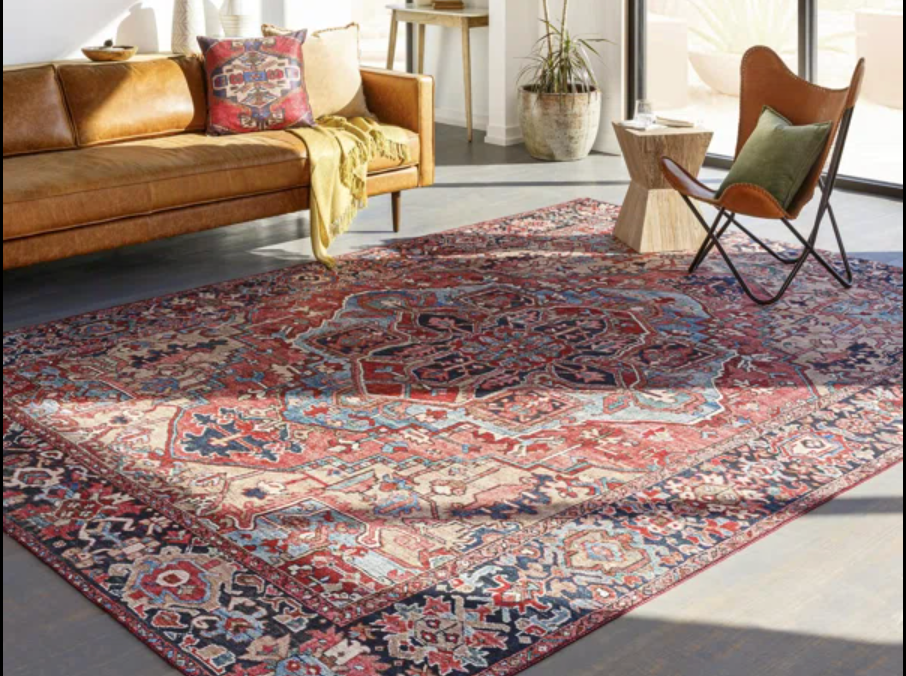
Place the rug under the front legs of sofas and chairs while keeping the back legs off the rug. This creates a cohesive seating area without making the room feel smaller.
:max_bytes(150000):strip_icc()/rug-size-GettyImages-1314299377-6aa8183876254904aeae8f9df591a6e8.jpg)
Medium Living Rooms
Medium-sized living rooms allow for more flexibility in rug placement.
Recommended sizes:
-
8x10 feet
-
9x12 feet
Placement tip:
Ensure all seating furniture has at least the front legs on the rug. This improves visual alignment and seating comfort.
Large Living Rooms
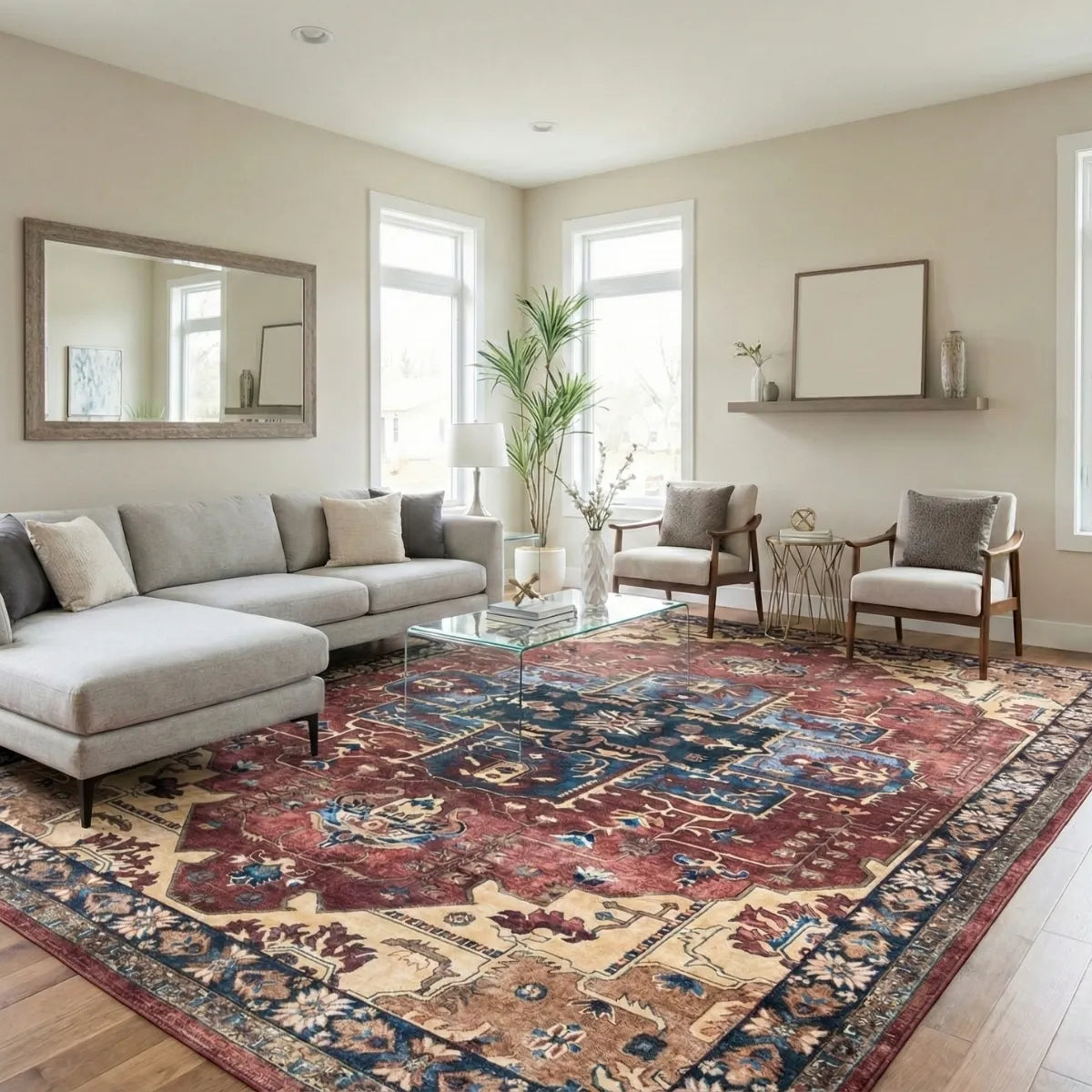
Large living rooms benefit from rugs that fully define the seating arrangement.
Recommended sizes:
-
10x14 feet or larger
Placement tip:
All furniture legs should sit fully on the rug to create a unified and grounded layout.
Rug Size Guide for Bedroom
In bedrooms, rugs add warmth, comfort, and visual balance. The rug should complement the bed size and room layout.
Rug Placement Under the Bed
This is the most common and functional placement option.
Recommended sizes by bed type:
-
Single bed: 5x8 feet
-
Queen bed: 8x10 feet
-
King bed: 9x12 feet
Placement tip:
The rug should extend at least 18–24 inches beyond the sides and foot of the bed to ensure comfortable footing when getting up.
Side Rugs for Bedrooms
For smaller rooms or minimal layouts, side rugs work well.
Recommended sizes:
-
2x6 feet
-
3x5 feet
Placement tip:
Place rugs along both sides of the bed for symmetry and comfort.
Rug Size Guide for Hall and Entry Areas
Halls and entryways require rugs that support movement while maintaining durability.
Hallways
Hallway rugs should align with the length of the space without touching the walls.
Recommended sizes:
-
2x7 feet
-
2x10 feet
-
Custom runners for long halls
Placement tip:
Leave 3–5 inches of space on each side between the rug and the wall for a balanced look.
Entry Halls
Entry rugs should accommodate door clearance and foot traffic.
Recommended sizes:
-
3x5 feet
-
4x6 feet
Placement tip:
Ensure the rug does not obstruct door movement and covers the primary walking area.
Choosing the Right Rug Shape for Each Space
Beyond size, shape plays a significant role in how a rug interacts with the room layout.
Rectangular Rugs
Best suited for:
-
Living rooms
-
Bedrooms
-
Halls
Rectangular rugs align naturally with furniture layouts and room dimensions, making them the most versatile choice.
Round Rugs
Best suited for:
-
Small living areas
-
Bedrooms with accent seating
-
Entry spaces
Round rugs soften sharp angles and work well under round tables or in compact areas.
Square Rugs
Best suited for:
-
Square-shaped rooms
-
Seating clusters
-
Small halls
Square rugs help maintain symmetry in evenly proportioned spaces.
Runner Rugs
Best suited for:
-
Hallways
-
Narrow bedrooms
-
Kitchen corridors
Runners guide movement and add visual continuity without occupying unnecessary space.
Common Rug Sizing Mistakes to Avoid
-
Choosing a rug that is too small for furniture placement
-
Ignoring door clearance in halls and entryways
-
Using the wrong shape for the room layout
-
Placing rugs wall-to-wall instead of leaving margins
Avoiding these mistakes ensures your rug enhances rather than disrupts the room design.
Final Thoughts
Selecting the right rug requires careful consideration of room size, furniture layout, and shape compatibility. This Rug Size Guide for Living Room, Bedroom & Hall with Shapes provides practical guidelines to help you achieve proportion, comfort, and visual balance across different spaces. A well-chosen rug not only improves aesthetics but also enhances everyday usability, making it a foundational element in thoughtful interior planning.