

Room-by-Room Rug Placement Guide: What Interior Designers Always Get Right
Rugs do more than cover floors. They define seating areas, improve comfort, reduce noise and help connect furniture within a room. However, even a well-designed rug can look unsuitable when it is too small, poorly positioned or disconnected from the surrounding furniture.
The Room-by-Room Rug Placement Guide: What Interior Designers Always Get Right focuses on proportion, furniture alignment and practical movement. Interior designers rarely select rug sizes based only on the visible floor area. They also consider the room layout, furniture dimensions, walking paths and the purpose of the space.
The following rug placement guidelines explain how to position rugs correctly across different rooms while maintaining visual balance and everyday usability.
Why Correct Rug Placement Matters
A rug should support the room rather than appear as a separate decorative item. Correct placement creates a clear relationship between the furniture, floor and overall layout.
A properly positioned rug can:
-
Make a small room appear more organised
-
Define open-plan living and dining zones
-
Prevent furniture from looking scattered
-
Add warmth to bedrooms and seating areas
-
Protect flooring in high-traffic locations
-
Improve sound absorption
The rug does not always need to fill most of the room. It should, however, be large enough to connect the main furniture pieces.

Living Room Rug Placement
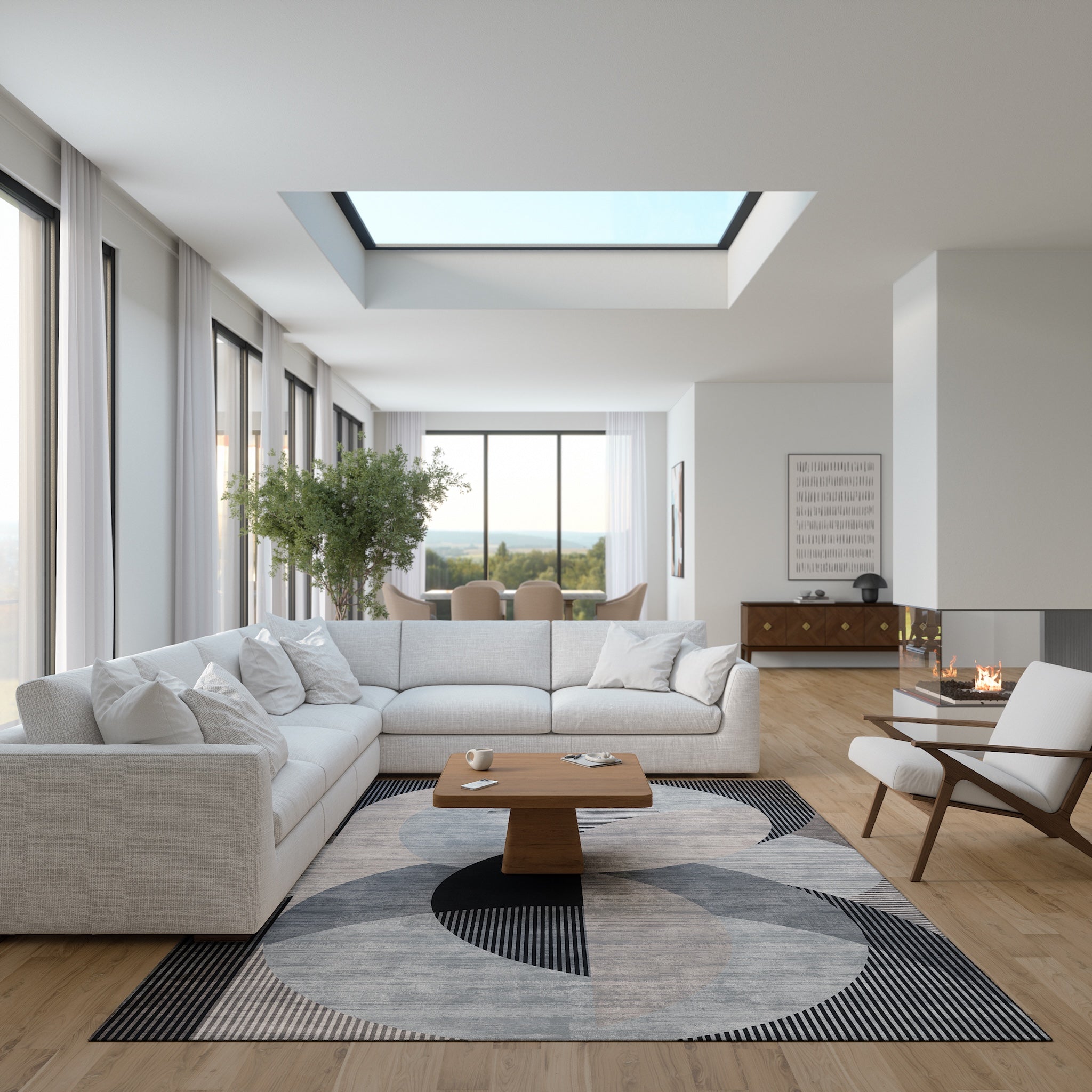
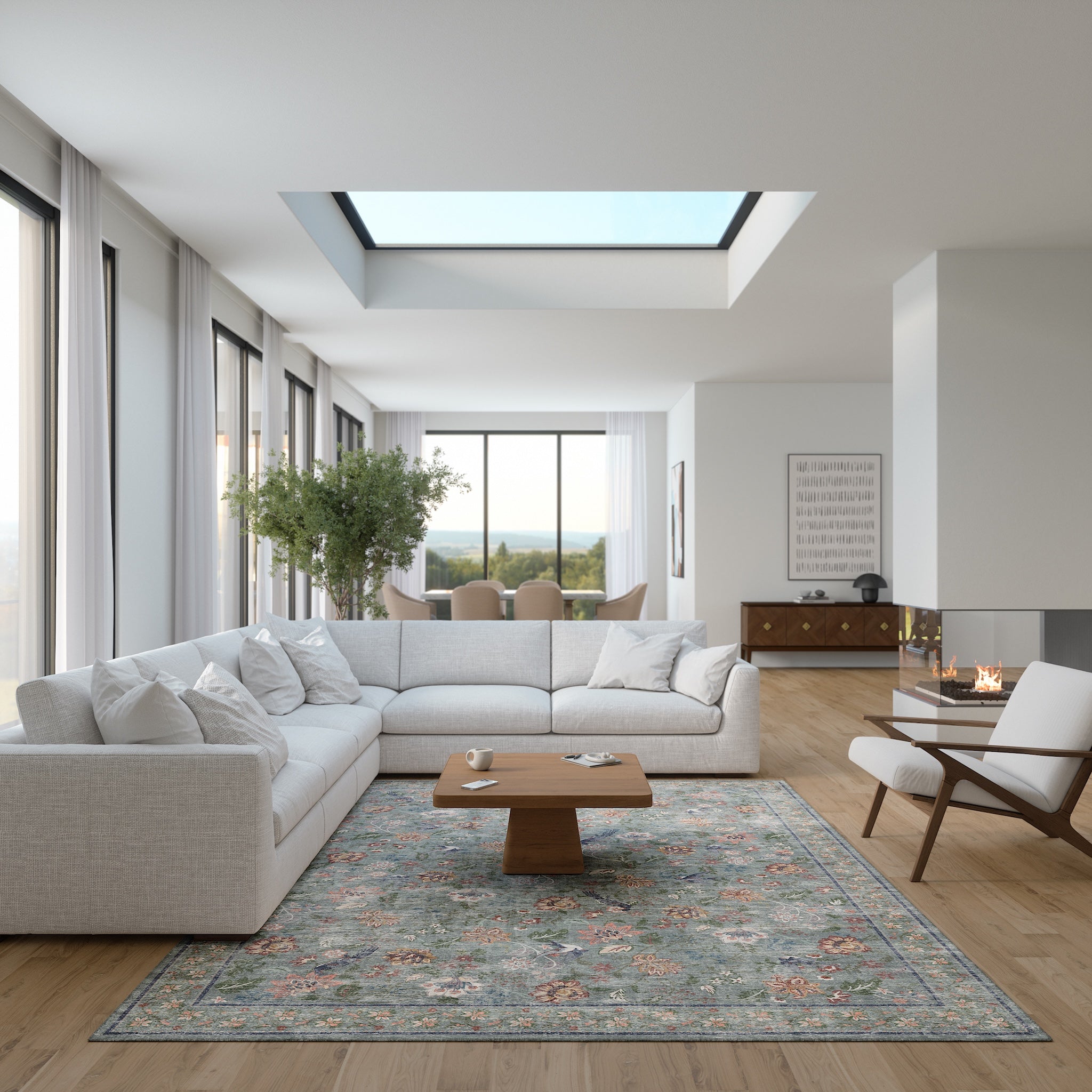
The living room is one of the most important areas for correct rug sizing because several furniture pieces need to feel connected.
Place All Furniture Legs on the Rug
In a large living room, choose a rug that accommodates the sofa, chairs and coffee table. All furniture legs can sit completely on the rug, creating a defined seating area.
This layout works particularly well in open-plan homes because the rug visually separates the living space from nearby dining or kitchen areas.
Leave a consistent border of visible flooring around the rug. A margin of approximately 20 to 45 centimetres often helps the room look balanced, although the exact spacing depends on the room size.
Position Only the Front Legs on the Rug
For medium-sized rooms, placing the front legs of the sofa and chairs on the rug is a practical option. The rear legs remain on the floor, while the rug still connects the main seating pieces.
Avoid selecting a rug that reaches only the coffee table. A small rug positioned in the centre can make the seating arrangement appear disconnected.
Bedroom Rug Placement
Bedroom rugs should provide comfort around the bed while maintaining symmetry.
Place a Large Rug Under the Bed
For a balanced layout, position a large rug beneath the bed so that it extends beyond both sides and the foot. The rug does not necessarily need to reach the wall behind the headboard.
A rug should generally extend far enough for a person to step onto it when getting out of bed. This creates a softer and more comfortable surface without covering unnecessary floor space.
For king-size and queen-size beds, larger rugs are usually more suitable because narrow rugs can appear out of proportion.
Use Runners Beside the Bed
In smaller bedrooms, two matching runners can be placed on either side of the bed. This option provides comfort while keeping more of the original flooring visible.
Ensure the runners are similar in length and aligned with the bed. Uneven placement can make the bedroom layout appear unbalanced.
Dining Room Rug Placement
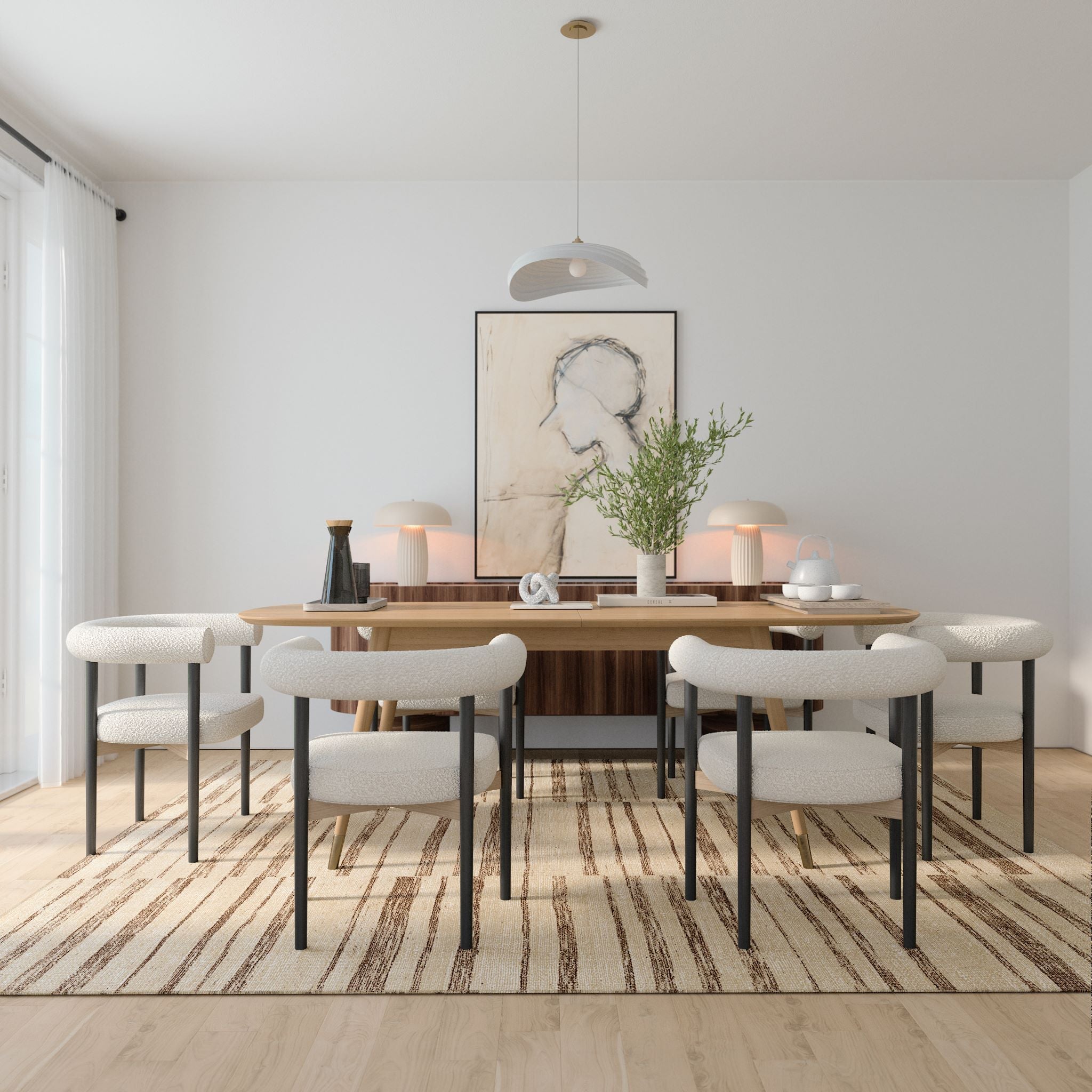
A dining room rug must accommodate both the table and chairs, including when the chairs are pulled out.
Allow Space Behind Dining Chairs
The rug should extend approximately 60 to 75 centimetres beyond each side of the dining table. This allows chairs to remain on the rug while people are seated or moving them backwards.
When chairs move partly onto the bare floor, they may become unstable or catch against the rug edge.
The rug shape should usually follow the table shape. Rectangular rugs suit rectangular tables, while round rugs work well beneath round dining tables. However, the room dimensions should also influence the final selection.
Choose a low-pile rug for dining areas because it is easier to clean and allows chairs to move smoothly.
Hallway and Entryway Rug Placement
Hallway runners should guide movement while leaving a visible border of flooring on both sides.
Keep the Runner Centred
Position the runner in the centre of the hallway rather than placing it directly against one wall. The spacing on each side should be as even as possible.
Avoid placing furniture legs partly on narrow runners. Console tables and storage benches should either remain completely off the rug or sit fully within a wider rug arrangement.
In entryways, check the door clearance before selecting the rug thickness. A high-pile rug may prevent the door from opening properly.
Home Office Rug Placement
A home office rug should support the desk and chair without restricting movement.
Account for Chair Movement
Select a rug large enough for the office chair to remain on it when pulled away from the desk. If the chair repeatedly rolls over the rug edge, the rug may curl or shift.
Low-pile rugs are generally more suitable beneath wheeled chairs. They provide a stable surface and are easier to maintain than thick, soft rugs.

Common Rug Placement Mistakes
One of the most frequent mistakes is purchasing a rug that is too small. A rug may look suitable in isolation but appear undersized once placed beneath furniture.
Other common errors include:
-
Pushing rugs tightly against walls
-
Ignoring door clearance
-
Using thick rugs beneath dining chairs
-
Placing furniture unevenly across rug edges
-
Choosing a rug without measuring the complete furniture layout
-
Using several small rugs in one compact room
Before buying a rug, mark the proposed dimensions on the floor using removable tape. This provides a clearer idea of how the rug will relate to furniture and walking space.
Conclusion
Effective rug placement depends on proportion, alignment and function. Living room rugs should connect seating furniture, bedroom rugs should provide comfort around the bed, and dining room rugs should allow chairs to move without leaving the rug surface.
By measuring the full furniture arrangement rather than only the empty floor, homeowners can select rugs that support the room layout. A correctly sized and positioned rug makes the space feel more organised, comfortable and visually balanced.