

Entryway Runner Rugs: An Editorial Styling Guide for European Homes | Rug Editorial
Entryway Runner Rugs: An Editorial Styling Guide for European Homes
The entryway is the most photographed and least considered room in the European home. It is the first metre your hands and shoes meet when the front door opens, and yet for most apartments it is also the place where styling decisions are made last — usually with whatever rug happens to be left over from another room. Spring 2026 is a good moment to think about it properly. A washable runner, chosen for the corridor it lives in, can do more than soften the floor: it can set the entire tone of the home before the visitor reaches the living room.
This is an editorial guide to styling an entryway with a washable runner — the cues we are watching this season, how to translate them into a runner you can actually live with, and how to size, pattern, and pair the rug with the architecture and palette of European homes.
A quick trend overview
Five threads define how European interior stylists are approaching hallway and entryway rugs this spring:
- Long, narrow, and proportionate — the runner doing the full length of the corridor, not a polite mat at the door.
- Heritage pattern in a modern reading — Persian medallions, Moroccan diamonds, and faded global motifs scaled down for entry use.
- Soft, sun-bleached colour — dusty cream, sand, warm taupe, faded terracotta, soft ochre.
- Layered entry vignettes — runner under a console table, a bench seat, or framed by a stack of art rather than a bare hallway.
- Practical luxury underfoot — washable, non-slip, low-profile rugs that survive coats, boots, school bags, and the dog returning from the park.
The common thread is that the entry is being treated as a small room, not a transit corridor. A rug that suits the space tells the visitor — and you — that the rest of the home has been considered with the same care.
Why entryway runners deserve real attention
Entryways concentrate the punishment a rug receives. Grit from outside shoes, wet umbrellas in winter, a takeaway bag put down in a hurry, the cat treating the runner as a scratch test before bed. Until very recently, the answer was a coarse coir mat for the door and a separate rug-free corridor — practical, but visually inert.
A washable runner changes the maths. A rug designed from the start to go in a domestic washing machine on a delicate cycle absorbs the daily traffic without being precious about it. Cold water, mild detergent, no bleach, air dry flat or hang to dry, and the runner is back in the hall by the next afternoon. The styling no longer has to be sacrificed for the practicalities.
That practical permission is what unlocks the editorial possibilities. Once the runner can be washed, it can be patterned, warm in colour, and considered in proportion — not just a defensive piece of beige.
Trend 1 — Long, narrow, and proportionate
The runner ratio European stylists are returning to is roughly four to one — four units of length for every one of width. In a corridor with a real floor plan, that translates cleanly to two standard runner sizes: 75 × 215 cm for shorter entries and 75 × 305 cm for longer ones. Either disappears under the architecture rather than competing with it.
A common mistake: laying a rectangular living-room-style rug across the hallway like a doormat. It interrupts the eye, it cuts the corridor visually in half, and it makes the entry feel shorter. A runner aligned with the long axis of the hall does the opposite — it draws the eye through the door and toward the room beyond, and it makes the corridor read as longer and more intentional.
Where it works
- Apartment corridors in pre-war European buildings — parquet floors, tall doors, and a runner with faded pattern set against them.
- Long entry halls in family homes — the 305 cm runner carries the full distance from the front door to the kitchen or staircase.
- L-shaped entries — a single runner along the longer leg, with a small landing tile or threshold mat at the door itself.
How to translate it into a washable purchase
The 75 × 215 cm and 75 × 305 cm runner sizes in the flat weave collection are designed for exactly this brief — a 2 mm profile so doors clear, narrow enough to read as architecture rather than furniture, and machine washable when the autumn rain inevitably arrives in the hallway.
If you are uncertain which length suits your corridor, the size guide walks through measuring the hall and the door clearance. A small but useful rule: leave roughly 20 to 30 cm of bare floor at each end of the runner where possible — it lets the runner read as a deliberate composition rather than a strip cut to fit.
Trend 2 — Heritage pattern in a modern reading
The most editorial entry rugs we are seeing this spring are heritage in feeling and modern in construction. Persian medallions softened to a dusty palette, Moroccan diamonds in cream and faded indigo, Anatolian motifs reinterpreted at runner scale, and the faded textile patterns of central Europe woven into low-profile washable form.
For a brand whose home is in the Transylvanian textile tradition, the appeal of these patterns in an entryway is less surprise than homecoming. Heritage pattern in a hallway tells the visitor immediately that the home values texture, story, and craft — without the rug demanding that they stop to look.
Where it works
- Period European apartments with original parquet or stone — heritage pattern looks at home where modern minimalism sometimes feels imposed.
- Minimalist new-builds that need depth — a single heritage runner is the fastest way to add warmth to a corridor short on visual interest.
- Eclectic homes with mixed-period furniture — heritage-pattern runners are unusually good at making a vintage console and a contemporary coat hook agree.
How to translate it into a washable purchase
The Persian, Traditional, Moroccan, Global, and Bohemian style families in the full Rug Editorial collection are the natural entry points. Look for distressed or "vintage" effects baked into the design — soft transitions in colour, slightly imperfect borders, a sense of age in the weave. These patterns wear daily life unusually well, partly because the design itself already incorporates the language of wear.
Heritage-modern runners reward a slightly larger size. If you can fit a 305 cm runner where a 215 cm one would also work, take the longer one — pattern needs room to breathe to read as confident styling rather than busy decoration. Our editorial round-up of spring 2026 European rug trends for modern homes covers the heritage-modern thread in more depth, with a wider lens across living, dining, and bedroom rooms.
Trend 3 — Soft, sun-bleached colour
Hallways have historically been treated as colour-neutral zones — somewhere between the front door and the rooms that "matter." The spring 2026 mood is rejecting that. Entry colour is now being chosen with the same care as a living-room palette, but in a softer register: dusty cream, warm sand, mushroom, faded terracotta, parchment, soft ochre, and washed taupe.
The visual effect is light and warm rather than neutral and cold. The practical effect is a hallway that hides a winter's worth of grit between washes far more graciously than a single flat pale colour would.
Where it works
- North-facing entries in apartments — warm, sun-bleached colour compensates for cooler natural light.
- South-facing halls with full afternoon sun — the soft palette absorbs the brightness without flaring.
- Stone or pale tile floors — a warm-neutral runner adds the temperature the surface lacks.
How to translate it into a washable purchase
Filter the catalogue by beige, cream, taupe, multicolour, pink, or orange to find runners that lean warm without tipping into bold. Multi-tonal weaves — cream threaded with sand, taupe shadowed with grey — read with more depth than a single uniform colour and disguise daily wear more forgivingly. There is a wide range of colours and multicolour combinations across the catalogue, so it is worth browsing by your hallway's existing palette rather than chasing a single trend shade.
One small note on light: a runner sample that reads as "off-white" in a catalogue photo will read as cream-with-warmth in the average European apartment hallway. If you are between two shades, lean a half-step warmer than the room's overall palette — the extra warmth lifts the corridor in the months when natural light is short.
Trend 4 — Layered entry vignettes
The strongest entry images this spring are not "runner alone on a floor." They are runners placed beneath a piece of furniture: a console table with a lamp and a bowl for keys; a long, low bench for putting on shoes; a tall mirror or an art stack leaning casually against a wall. The runner becomes the floor of a small composed scene rather than a stand-alone object.
The styling logic is the same one that works in living and dining rooms: an interior reads as confident when the elements relate to each other. A runner placed under the front edge of a hallway console — with around 10 to 15 cm of rug visible in front of the console — anchors the piece to the floor and turns a flat wall into a vignette.
Where it works
- Halls long enough for a console — usually anything beyond two metres of wall length.
- Apartment entries with a bench — the runner extends from beneath the bench out into the corridor, framing the act of sitting to remove boots.
- Stair-foot entries — the runner stops at the bottom step, with a leafy plant, a lamp, or a tall basket marking the transition.
How to translate it into a washable purchase
The 75 × 305 cm runner length is generally the right choice for a console-and-runner vignette — long enough to extend beyond the furniture on both sides and to read as a continuous floor element rather than a placemat under the console. The 75 × 215 cm length suits a bench-only vignette in a shorter entry.
The runner also has to handle the foot traffic that comes with a furnished entry. A coat falling off a hook, a stack of post landing on the console, a wet dog walking past — all of this is what built-in non-slip backing and machine washability are for. Rug Editorial runners include non-slip backing in the construction itself, so no separate rug pad is required, and a delicate wash followed by a flat dry returns the rug to service the following day.
Trend 5 — Practical luxury underfoot
The fifth thread is less a colour or a pattern than a posture. Across the European homes we have been watching this spring, the implicit brief is the same: the runner should look considered, and it should survive a real household.
In practical terms, three structural features matter more than people expect when choosing an entry runner:
- Low profile. A runner that sits at 2 mm rather than 15 mm clears every interior door in the apartment, lies obediently under a console, and lets a vacuum pass without snagging. The 2 mm flat weave line is the easier choice for entries; the 5 mm faux wool option is reserved for hallways that lead directly into bedrooms or lounges where you want a slightly softer foot underneath.
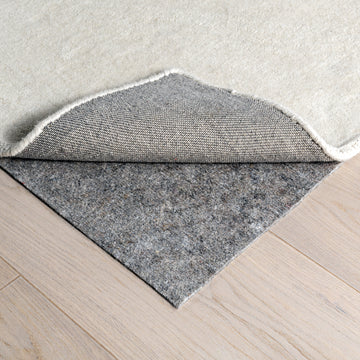
- Built-in non-slip backing. Hallways with a single runner over hard floor are the place where slipping rugs are most disruptive. Built-in backing — rather than an add-on pad that can shift independently of the rug — is the right structural answer.
- Machine-washable by design. The point of an entry rug is to take the brunt of weather, footwear, and the daily cycle of arrival. A rug designed from the start to be machine washed on a cold delicate cycle absorbs all of that gracefully; a rug that requires professional cleaning quietly stops being washed at all.
Rug Editorial runners are designed against exactly this brief. Both the 2 mm flat weave collection and the 5 mm faux wool collection are machine washable in cold water with mild detergent and no bleach, both have non-slip backing built in, and both are OEKO-TEX certified — a useful reassurance in a room where the rug is closest to outdoor footwear and the dust that comes in with it.
Sizing the runner to the corridor
A short reference for translating an entryway floor plan into a runner length:
- Up to ~2.5 m of usable corridor: 75 × 215 cm runner. Leaves clean margins at both ends and clears most door swings.
- 2.5–4 m of corridor: 75 × 305 cm runner. The long flat weave runner reads as architecture rather than placement.
- Wider entry halls (over 110 cm across): consider a small rectangular rug — for example, 90 × 150 cm at the door — instead of a runner, then a separate runner for any deeper corridor beyond.
- L-shaped halls: one runner along the long leg, and a small mat at the door itself; do not try to bend a runner around a corner.
The size guide and the companion piece on choosing the right rug size walk through measurement step by step, including how to handle radiators, skirting boards, and door swings.
How to wash an entryway runner (the part most people get wrong)
Entry runners get dirtier faster than any other rug in the house and, paradoxically, are washed less often than any other rug — usually because the owner has never been told they can be. The Rug Editorial care guidance applies to runners the same way it does to a 245 × 330 cm living-room rug, with one quiet advantage: the runner sizes are among the most flexible to wash at home.
The 75 × 215 cm and 75 × 305 cm runners both fit a 10 kg or larger European washing machine, and the 90 × 150 cm small rectangular rug used in some shorter entries fits as small as a 6 kg drum. The full size-to-drum mapping is published on the washing machine guide, and the step-by-step on how to wash a large rug in a European washing machine covers the cycle settings, folding logic, and drying posture.
A few small notes specific to runners:
- Vacuum more often than you wash. A weekly pass with a vacuum used without a beater bar lifts the grit out before it works into the weave, and stretches the time between full washes considerably.
- Spot-clean salt and slush in winter. Wet, salted boots leave a residue that dries to a pale ring; blot it immediately with a clean cloth and a touch of mild detergent rather than letting it sit until laundry day.
- Dry flat or hang. A washed runner dried flat on a rack returns to the hallway crease-free; a runner dried on a thin clothesline can pick up a new sharp fold along the line. The companion guide on how to flatten a washable rug after unboxing covers the post-wash flattening logic in full, and how to clean a washable rug covers the day-to-day care routine.
A washable runner, washed even three or four times a year, looks markedly fresher than an unwashed one. That is the practical version of "luxury underfoot."
Styling the corridor around the runner
Three small editorial moves that make a hallway rug look intentional rather than placed:
- Pair the runner with a single warm light source. A wall sconce, a hallway pendant on a dimmer, or a low console lamp pulls the colour of the runner forward in evening light. Overhead spots flatten heritage pattern; a warmer point light brings it alive.
- Echo a colour from the runner somewhere else in the entry. A faded terracotta thread picked up by a ceramic bowl on the console, or a soft ochre in the runner repeated in a single piece of framed art. One echo is enough; the runner should not need to be matched.
- Leave space for the door swing. The most common entry-rug mistake is laying the rug too close to the front door, where the leading edge catches every time the door opens. Set the runner to start where the door's furthest swing ends — usually 15 to 25 cm beyond the threshold.
How the trend reads across European homes
A short tour of how the entry-rug brief shifts by typology:
- Pre-war apartment in central Bucharest, Vienna, or Prague: heritage pattern at 305 cm length, set against original parquet and a tall pre-war door. A warm cream and faded indigo Persian-inspired weave reads as if it has always been there.
- Modern Scandinavian apartment in Copenhagen, Stockholm, or Helsinki: quiet warm-neutral runner at 215 cm or 305 cm, against oak floors. A multi-tonal cream-and-sand weave keeps the calm but adds the warmth a long Nordic winter wants.
- Family home in the Netherlands, Germany, or Belgium: heritage-modern runner at 305 cm, taking the corridor from the front door past the coat cupboard to the kitchen. Pattern hides daily grit; the runner washes in the family's 10 kg machine.
- Mediterranean apartment in Lisbon, Barcelona, or Athens: sun-bleached terracotta, ochre, and soft cream Moroccan or global pattern, against stone or pale tile. The runner adds the temperature the floor lacks.
- Country house in rural France, Italy, or Romania: rustic or transitional pattern, warm and lived-in; the runner takes the entry from the boot porch to the main hall and earns its washing-machine permission roughly once a month.
Browsing entry points
If you are starting from the runner search rather than from a full collection browse, three useful places to begin:
- The flat weave collection — the 2 mm low-profile line, and the natural home for entryway and corridor runners. Easy to clear under doors, fast to wash, and stylistically the cleanest match for heritage and Scandi entries alike.
- The faux wool collection — the 5 mm slightly plusher line. Reserved for entries that lead directly into a soft-floored bedroom or lounge where a touch more underfoot matters.
- The full washable rug collection — filterable by size, colour, and style. Start here once you know your runner length and want to browse pattern and palette freely.
Free shipping is available across the European countries Rug Editorial delivers to, and a 30-day return window with a prepaid FedEx return label means you can audition a runner in your own hallway light before committing. Auditioning a colour at the door is more useful than any catalogue swatch.
Closing note from the design desk
The entryway is the room a visitor reads first and a household reads most often. A washable runner — sized to the corridor, patterned for daily life, low-profile enough to live under doors and consoles — turns it from a transit space into a small room with intent. The trends of spring 2026 are quietly making the entry an editorial priority for the first time in a decade. A runner chosen well today will still feel right under foot in spring 2027.
When you are ready to choose, the flat weave collection is the natural starting point. Match the length to your corridor, lean a half-step warmer in colour than instinct suggests, and let the runner do the rest.