

Room-by-Room Rug Placement Guide: What Designers Get Right
Rugs do more than cover a floor. The right rug can define a seating area, balance furniture, improve comfort, and make a room feel more complete. The challenge is that rug placement varies depending on the size, layout, and purpose of each space.
A rug that works well in a bedroom may look awkward in a dining room, while a small rug in a large living area can make the furniture appear disconnected. This Room-by-Room Rug Placement Guide: What Designers Get Right explains practical placement principles that help create balanced, comfortable, and visually organised interiors.
Why Rug Placement Matters in Interior Design
Rug placement influences how people perceive the proportions of a room. When the rug is properly positioned, furniture appears connected and the space feels intentional. Incorrect placement can make even well-selected furniture look out of scale.
Designers usually consider three main factors before positioning a rug: room dimensions, furniture arrangement, and walking space. The goal is not simply to fit a rug into an empty section of flooring. Instead, the rug should support the layout of the room.
Another important factor is consistency. Furniture should either sit fully on the rug or follow a clear placement pattern. Randomly placing some furniture legs on the rug and others outside it can create an uneven appearance.

Living Room Rug Placement
Living rooms often require the most careful rug planning because they contain several pieces of furniture within one seating arrangement.
Place Furniture in Relation to the Rug
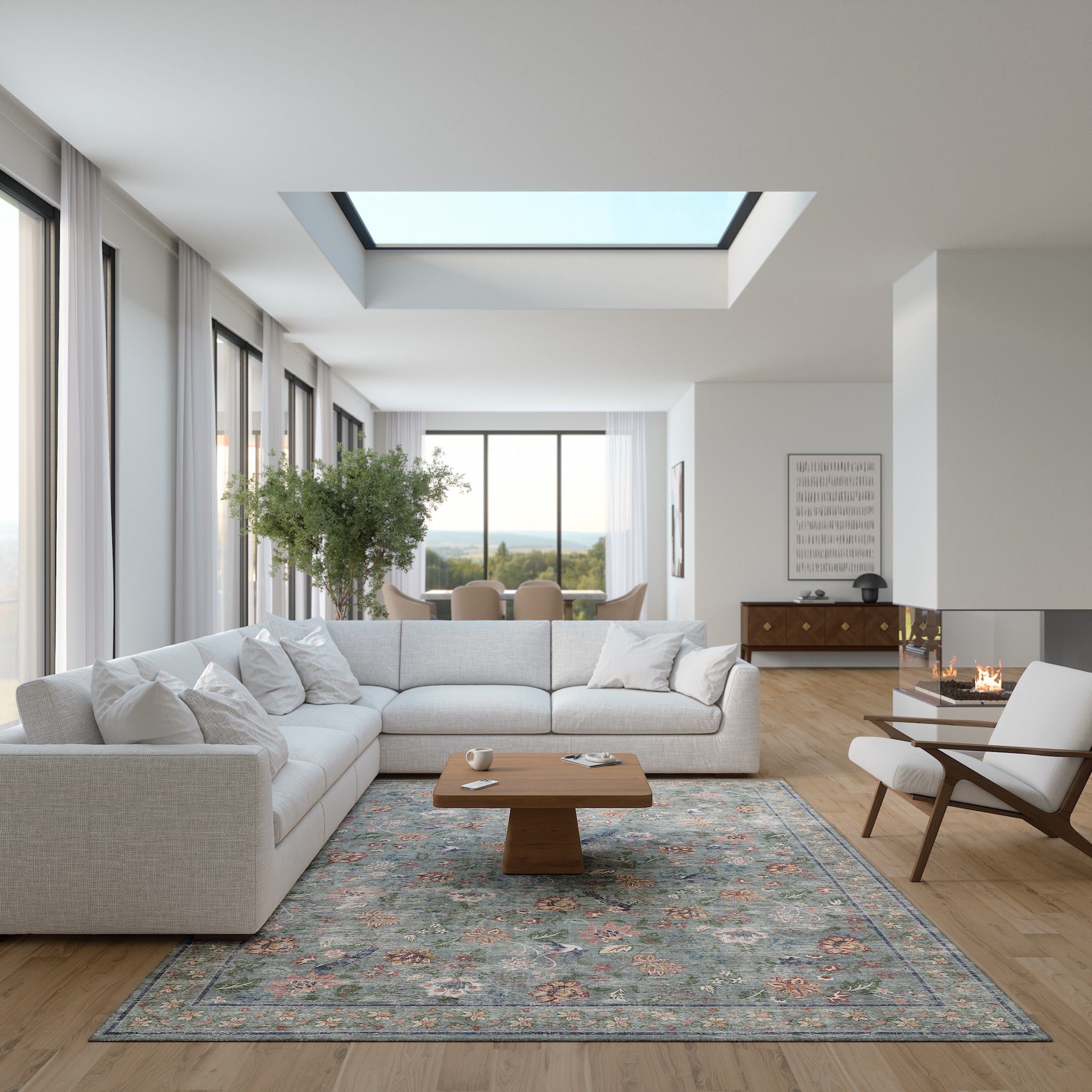
In larger living rooms, designers commonly use a rug large enough to accommodate the sofa, chairs, and coffee table. Placing all major furniture pieces on the rug creates a defined conversation area.
For medium-sized rooms, placing only the front legs of sofas and chairs on the rug is a practical alternative. This technique visually connects the furniture while allowing more of the surrounding flooring to remain visible.
Avoid using a rug that only fits beneath the coffee table. A rug that is too small can make the seating arrangement appear fragmented.
Ideally, leave a reasonably consistent border of exposed flooring around the rug. This helps frame the seating area and maintains visual balance.
Bedroom Rug Placement
Bedroom rugs should provide comfort while supporting the position of the bed, which is usually the dominant piece of furniture.
Position the Rug Under the Bed
For a balanced bedroom layout, a large rug can be placed beneath the bed so that it extends beyond both sides and the foot of the bed. This arrangement provides a comfortable surface when getting in and out of bed.
The rug does not necessarily need to extend beneath the bedside tables. Positioning it from approximately the lower two-thirds of the bed is often sufficient.
In smaller bedrooms, runners or smaller rugs placed along each side of the bed can provide a similar level of comfort without requiring a large area rug.
The width of the rug should generally extend beyond the bed rather than ending directly at its edges. A wider rug gives the furniture greater visual stability.
Dining Room Rug Placement
Dining room rugs need additional clearance because chairs move regularly.
Allow Space for Dining Chairs
A dining rug should extend well beyond the edges of the table. When someone pulls out a chair, all chair legs should ideally remain on the rug.
If the rug is too small, the rear legs of the chairs may repeatedly catch on its edge. Apart from being inconvenient, this can cause unnecessary wear.
The shape of the rug can also follow the dining table. Rectangular rugs work naturally beneath rectangular tables, while round rugs can complement round dining tables.
However, dimensions are more important than matching shapes exactly. Always prioritise sufficient chair clearance.

Entryway and Hallway Rug Placement
Entryways and hallways usually benefit from runners or narrow rugs that follow the proportions of the space.
Keep Rugs Centred Within Walkways
Hallway runners generally look better when centred with visible flooring on both sides. The rug should not be so wide that it touches the walls.
For long corridors, choose a runner that covers much of the walking path while leaving some flooring visible at both ends.
In entryways, the rug should be positioned where people naturally step after entering the home. Consider door clearance carefully so the door can open without catching on the rug.
Because these areas receive frequent foot traffic, durability and ease of cleaning should also influence rug selection.
Home Office Rug Placement
A rug in a home office can help define the workspace while improving comfort and reducing noise.
Account for Desk Chair Movement
If a desk chair has wheels, the rug should be large enough to accommodate the chair both when it is positioned at the desk and when it is pulled backwards.
A rug that ends directly behind the chair may cause the wheels to catch on the edge.
For larger offices, the desk and chair can sit completely on the rug. In smaller spaces, position the rug so that the main working area remains comfortably supported.
Low-pile rugs are often more practical for rolling chairs than thick rugs because they allow easier movement.
Kitchen Rug Placement
Kitchen rugs are usually functional as well as decorative.
Position Rugs Near Main Work Areas
Runners work particularly well in galley kitchens and between kitchen islands and counters. In larger kitchens, smaller rugs can be placed near the sink or preparation area.
Avoid placing rugs where they interfere with cabinet or appliance doors.
Since kitchens are exposed to spills, choose rugs that are easy to clean and suitable for frequent use.

Rug Placement Mistakes to Avoid
One of the most common mistakes is choosing a rug based only on the available empty floor space. Rugs should relate directly to the furniture arrangement rather than simply occupying an open area.
Another issue is selecting a rug that is too small. In many rooms, a slightly larger rug creates better proportions and makes furniture feel more connected.
Uneven spacing around rugs can also affect visual balance. Where possible, maintain consistent gaps between the rug and surrounding walls or furniture.
Conclusion
Successful rug placement depends on proportion, furniture layout, and how people use each room. Living room rugs should connect seating areas, bedroom rugs should extend comfortably around the bed, and dining room rugs need enough space for moving chairs.
The same principle applies throughout the home: the rug should support the function and structure of the space rather than appear as an isolated decorative element. By considering furniture dimensions, walking paths, and room proportions before choosing a rug, homeowners can create interiors that feel balanced, comfortable, and thoughtfully arranged.