

Choosing the Right Rug Size for Dining Room: A Complete Guide
Choosing the right rug size for dining room spaces is more than a decorative decision. The rug plays a functional role by anchoring the dining table, protecting flooring, and defining the dining area within an open layout. An incorrectly sized rug can disrupt visual balance and create daily usability issues, especially when chairs are pulled in and out.explains how to select the correct rug size for different dining room layouts, table shapes, and room dimensions, ensuring both comfort and proportion.
Why Rug Size Matters in a Dining Room
A dining room rug must support daily movement while maintaining visual harmony. Unlike rugs used in living rooms or bedrooms, dining rugs need to accommodate chairs even when they are pulled away from the table.
A rug that is too small causes chair legs to catch on edges, leading to instability and floor damage. A rug that is too large can overwhelm the space or interfere with nearby furniture. Choosing the right rug size for dining room use ensures practical comfort and a balanced layout.
Standard Rule for Dining Room Rug Sizing
The most reliable guideline is simple:
Allow at Least 24 Inches Beyond the Table on All Sides
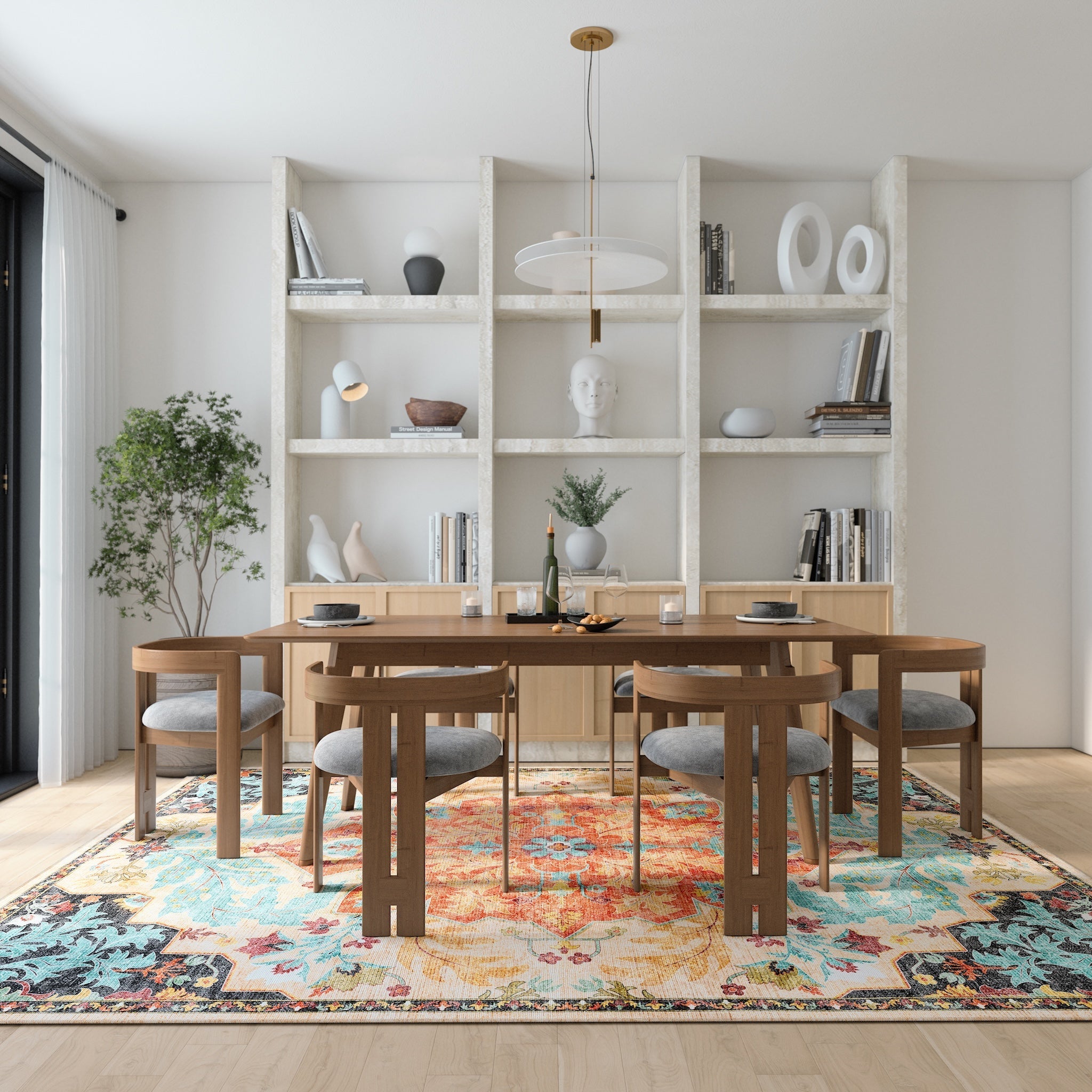
This extra space ensures that dining chairs remain fully on the rug, even when pulled back. In some layouts, extending up to 30 inches provides additional comfort, especially for larger chairs.
For example:
-
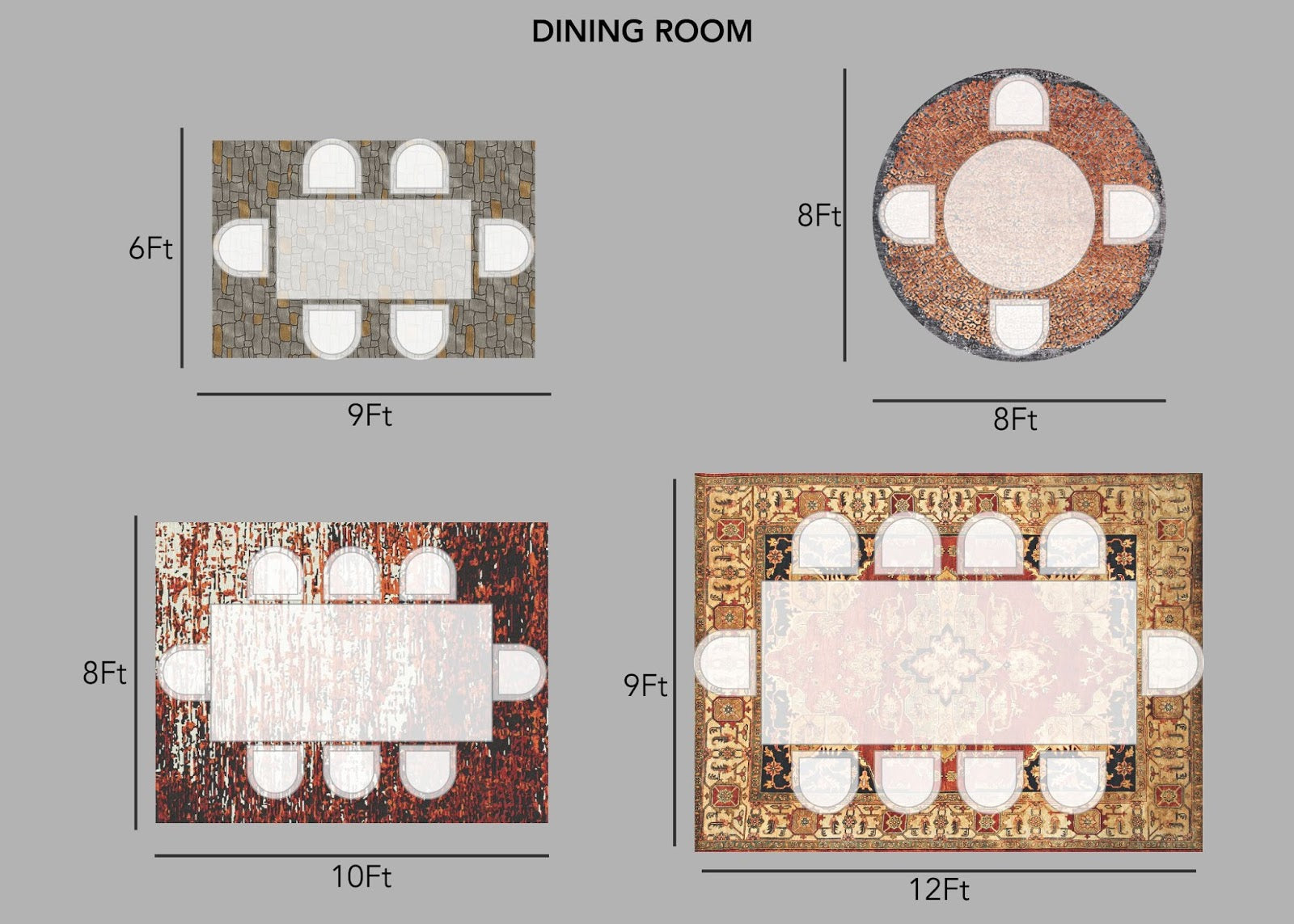
A 6-seater table measuring 36 × 72 inches requires a rug of at least 8 × 10 feet.
-
An 8-seater table measuring 40 × 96 inches works best with a 9 × 12-foot rug.
This rule applies regardless of table shape and is central to choosing the right rug size for dining room setups.
Rug Size Based on Dining Table Shape
Rectangular Dining Tables
Rectangular tables are the most common and require proportional rug dimensions.
Recommended sizes:
-
Small rectangular table (4–6 seats): 8 × 10 ft
-
Large rectangular table (6–8 seats): 9 × 12 ft
The rug should align with the table’s long edges to maintain symmetry.
Round Dining Tables
Round tables need square or round rugs to maintain visual balance.
Recommended sizes:
-
4-seater round table: 8 × 8 ft rug
-
6-seater round table: 9 × 9 ft rug
Avoid rectangular rugs under round tables, as they disrupt proportion and visual flow.
Square Dining Tables
Square tables pair best with square rugs of matching scale.
Recommended sizes:
-
4-seater square table: 8 × 8 ft
-
Larger square tables: 9 × 9 ft or larger
Equal extension on all sides keeps the layout consistent.
Choosing Rug Size Based on Room Dimensions
Small Dining Rooms
In compact dining rooms, ensure the rug does not touch walls or cabinets. Leave at least 6–12 inches of visible flooring around the rug edges to prevent crowding.
If space is limited, prioritize chair movement over decorative scale.

Large or Open-Plan Dining Areas
In open layouts, the rug helps define the dining zone. Larger rugs work better here, especially when the dining area shares space with a living room or kitchen.
Choosing the right rug size for dining room zones in open plans improves spatial clarity and furniture alignment.
Common Rug Size Mistakes to Avoid
Using a Rug That Is Too Small
This is the most frequent mistake. If dining chairs slip off the rug when pulled back, the rug is undersized.
Ignoring Chair Dimensions
Wide or upholstered chairs require more clearance. Always factor chair depth, not just table size.
Wall-to-Wall Rugs
Rugs should frame the dining set, not replace flooring entirely. Wall-to-wall rugs eliminate visual contrast and reduce flexibility.
Rug Material Considerations for Dining Rooms
While size is critical, material choice supports long-term usability.
Recommended Materials
-
Low-pile wool rugs
-
Flat-weave rugs
-
Synthetic blends with stain resistance
Materials to Avoid
-
High-pile rugs
-
Shag rugs
-
Delicate natural fibers that absorb spills easily
Material selection complements choosing the right rug size for dining room functionality.
Measuring Before You Buy
Before purchasing:
-
Measure your dining table length and width.
-
Add 48–60 inches to both dimensions.
-
Use painter’s tape to outline the rug size on the floor.
This method gives a realistic preview of spacing and movement.
Final Thoughts
Choosing the right rug size for dining room spaces requires balancing table dimensions, chair movement, and room layout. A properly sized rug enhances comfort, protects flooring, and creates a visually grounded dining area.
By following standard sizing rules, accounting for furniture movement, and avoiding common mistakes, you can select a rug that supports both daily use and long-term design consistency.