


Rug Size Recommendations for Small & Large Rooms
Choosing the correct rug size plays a significant role in how a room looks and functions. A rug that is too small can make a space feel unfinished, while an oversized rug may overwhelm the layout. This guide on Rug Size Recommendations for Small & Large Rooms explains how to select suitable rug dimensions for different room sizes and layouts, helping you create a balanced and well-proportioned interior.
Why Rug Size Matters in Interior Layouts
Rug size affects visual balance, furniture placement, and movement within a room. The right size helps define areas, anchors furniture, and creates a sense of structure. Incorrect sizing often leads to awkward spacing, exposed flooring in key areas, or furniture that appears disconnected from the rug.
Understanding room dimensions and furniture arrangement is essential before selecting a rug.

Rug Size Recommendations for Small Rooms
Small rooms benefit from thoughtful rug placement and proportionate sizing. The aim is to enhance the space without making it feel cramped.
Living Rooms in Small Spaces
In compact living rooms, avoid very small rugs that sit only under a coffee table. Instead:
-
Use a rug that allows at least the front legs of sofas and chairs to rest on it.
-
Common sizes include 5x8 feet or slightly larger, depending on the room width.
-
Keep equal spacing between the rug edges and walls for a neat appearance.
This approach visually expands the room while maintaining clarity in furniture layout.
Bedrooms with Limited Floor Space
For small bedrooms:
-
Place a rug under the lower two-thirds of the bed.
-
A 5x7 or 5x8 feet rug often works well for single or double beds.
-
Alternatively, use runners on each side of the bed if full-size rugs are not practical.
These options add comfort without overwhelming the space.
Dining Areas in Compact Homes
In small dining areas:
-
Choose a rug that extends at least 18–24 inches beyond the table edges.
-
This ensures chairs remain on the rug even when pulled out.
-
Rectangular rugs usually work better than square ones in narrow spaces.
Rug Size Recommendations for Large Rooms
Larger rooms allow for more flexibility, but proportion remains just as important. Rugs should complement the scale of the room rather than float awkwardly within it.
Spacious Living Rooms
For large living rooms:
-
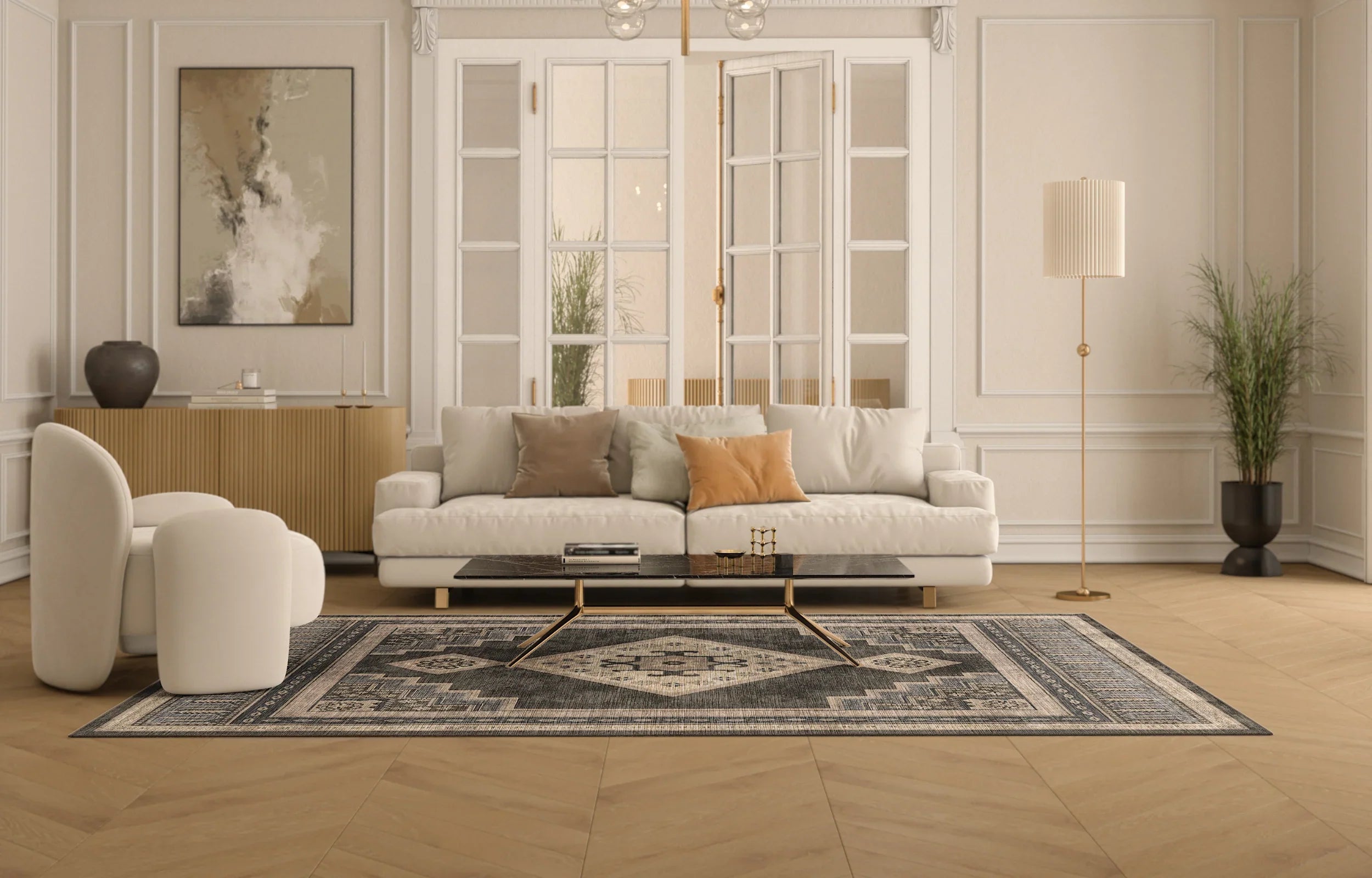
Opt for rugs that fit all furniture legs comfortably on the rug.
-
Sizes like 8x10 or 9x12 feet are common for expansive layouts.
-
Ensure the rug defines the seating area clearly, especially in open-plan homes.
A properly sized rug helps break down large spaces into functional zones.

Master Bedrooms and Open Layouts
In large bedrooms:
-
Use a rug that extends beyond the bed on all sides, typically 8x10 or 9x12 feet.
-
Leave visible flooring around the rug perimeter for a balanced look.
-
Center the rug with the bed to maintain symmetry.
This creates a structured and comfortable sleeping area.
Dining Rooms with Ample Space
For large dining rooms:
-
Choose a rug that allows generous clearance around the table.
-
An 8x10 feet rug suits six-seater tables, while larger tables may require 9x12 feet rugs.
-
Maintain consistent spacing between rug edges and walls.
This setup supports easy movement and keeps the dining area visually organized.
Rug Size Recommendations for Open Floor Plans
Open floor plans require rugs to define zones without breaking visual continuity.
-
Use larger rugs to anchor seating areas.
-
Match rug sizes across adjacent zones for consistency.
-
Avoid mixing very small rugs in expansive layouts.
This approach ensures flow while maintaining functional separation.
Common Rug Sizing Mistakes to Avoid
Even with clear guidelines, certain mistakes are common:
-
Choosing rugs that are too small for the furniture arrangement.
-
Ignoring clearance space for dining chairs.
-
Placing rugs without considering door swing and walkways.
Avoiding these issues ensures a practical and visually appealing result.
How to Measure Before Buying a Rug
Before purchasing:
-
Measure the room and furniture layout accurately.
-
Use masking tape on the floor to outline rug dimensions.
-
Check walking paths and door clearance.
These steps reduce sizing errors and help you select the most suitable rug.
Final Thoughts on Rug Size Selection
Following proper Rug Size Recommendations for Small & Large Rooms helps create harmony, comfort, and structure in any interior. By aligning rug dimensions with room size and furniture placement, you can improve both appearance and usability. Whether furnishing a compact apartment or a spacious home, thoughtful rug sizing remains a key element of interior planning.