

How to Choose the Perfect Rug Size for Every Room in Your Home
Choosing the right rug size can change the way a room looks and feels. A rug is not only a decorative piece; it helps define the space, adds comfort, and brings balance to the room layout. However, selecting the wrong size can make a room look smaller, unfinished, or poorly arranged.
Many homeowners focus on rug color, texture, and pattern but overlook size. Rug size is one of the most important factors in interior styling because it affects furniture placement, walking space, and overall room proportion. Whether you are decorating a living room, bedroom, dining area, entryway, or hallway, the rug should support the layout instead of looking like an afterthought.
Why Rug Size Matters in Home Decor
The right rug size helps connect furniture pieces and creates a defined area within a room. In open layouts, rugs are especially useful because they visually separate the living, dining, and sitting spaces without adding walls or partitions.
A rug that is too small can make furniture look disconnected. For example, a small rug placed only under a coffee table may make the living room look incomplete. On the other hand, a rug that is too large may overpower the room or leave too little visible flooring.
A well-sized rug should create balance. It should fit the room layout, support furniture placement, and leave enough space around the edges for a clean look.

General Rules for Choosing the Right Rug Size
Before selecting a rug, measure the room and consider how the furniture is arranged. Do not rely only on visual estimation because rug sizes can look different in stores or online images.
Measure the Room First
Use a measuring tape to check the length and width of the room. Also measure the furniture area where the rug will be placed. This gives you a clear idea of the maximum and minimum rug size that can work.
Leave Space Around the Rug
In most rooms, it is better to leave some visible floor space around the rug. A gap of 12 to 24 inches from the wall usually creates a balanced look. In smaller rooms, a gap of 8 to 12 inches may be enough.
Match Rug Size with Furniture Placement
The rug should relate to the furniture. In seating areas, at least the front legs of sofas and chairs should sit on the rug. In dining areas, the rug should be large enough for chairs to remain on the rug even when pulled out.
Rug Size for Living Rooms
The living room is one of the most important areas for rug placement. Since it usually has multiple furniture pieces, the rug should bring the seating arrangement together.
Large Living Room Rug Placement
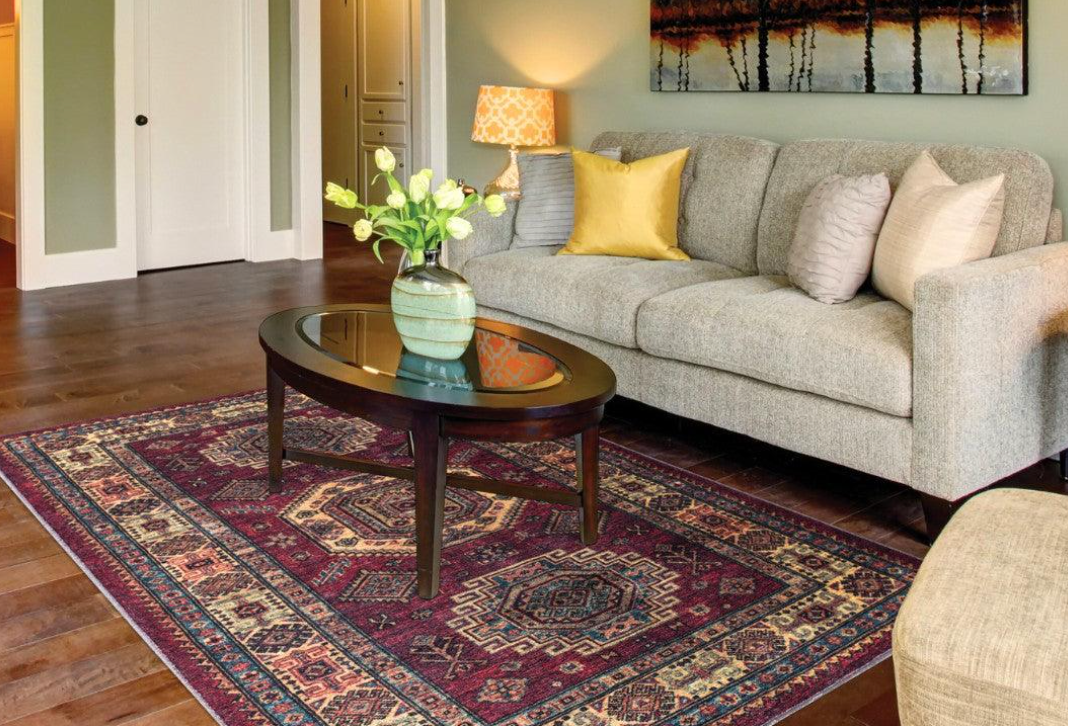
For a large living room, choose a rug big enough to fit all the main furniture pieces. Ideally, the sofa, chairs, coffee table, and side tables should sit fully on the rug. This creates a complete and well-connected seating area.
Common rug sizes for large living rooms include 9x12 feet or 10x14 feet, depending on the room size.
Medium Living Room Rug Placement
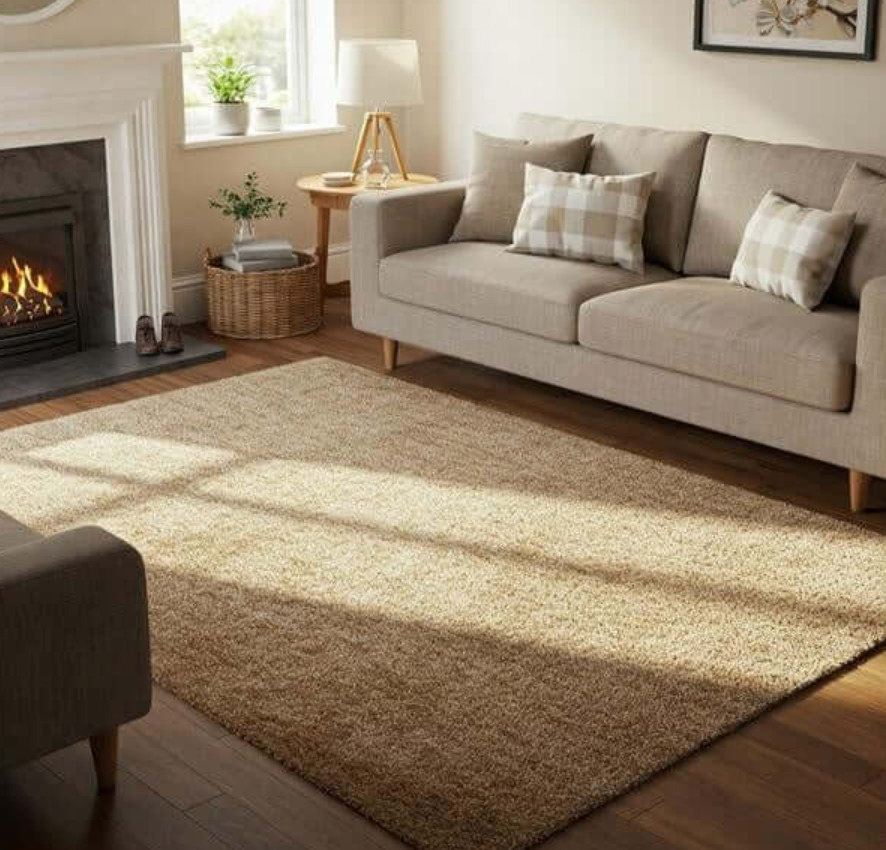
For a medium-sized living room, the rug should go under the front legs of the sofa and chairs. This is one of the most common layouts because it gives the room a connected look without requiring an oversized rug.
An 8x10 feet rug often works well for medium living rooms.
Small Living Room Rug Placement
In a small living room, avoid choosing a rug that is too tiny. A rug should be large enough to sit under the coffee table and at least touch the front legs of the sofa. This helps the room feel more spacious and organized.
A 5x8 feet or 6x9 feet rug may work for compact living spaces.
Rug Size for Bedrooms
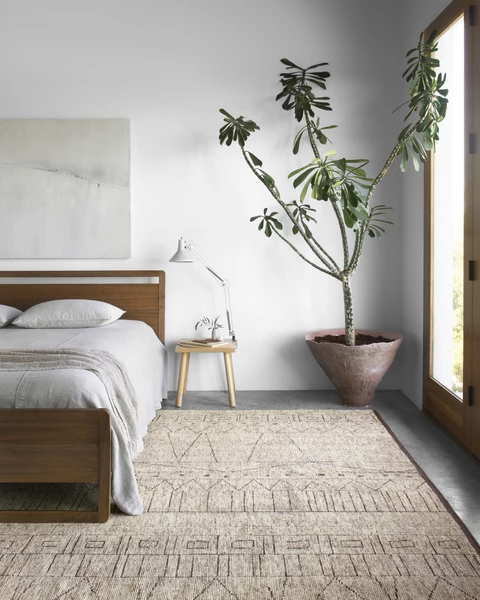
A bedroom rug should add comfort and warmth while supporting the bed placement. The rug should extend beyond the sides and foot of the bed so that there is a soft surface when stepping down.
Rug Size for King Beds
For a king-size bed, a 9x12 feet rug is often a good choice. It should extend beyond both sides of the bed and the foot area. This creates a balanced and luxurious look without overcrowding the room.
Rug Size for Queen Beds
For a queen-size bed, an 8x10 feet rug usually works well. Place the rug under the lower two-thirds of the bed, leaving the nightstands off the rug if needed. This gives enough coverage while keeping the layout practical.
Rug Size for Small Bedrooms
For smaller bedrooms, runners can be placed on both sides of the bed. This is a practical option when a large rug does not fit. Another option is to place a 5x8 feet rug under the lower part of the bed.
Rug Size for Dining Rooms
Dining room rugs should be chosen carefully because chairs need enough space to move in and out. A rug that is too small can cause chair legs to catch on the rug edge, making the space uncomfortable.
Choose a Rug Larger Than the Table
The rug should extend at least 24 inches beyond all sides of the dining table. This allows chairs to stay on the rug even when pulled out.
For a six-seater dining table, an 8x10 feet rug is often suitable. For larger dining tables, a 9x12 feet rug may be a better option.
Match the Rug Shape with the Table
A rectangular rug works well with a rectangular table, while a round rug can suit a round dining table. The goal is to keep the shape balanced with the furniture layout.
Rug Size for Hallways and Entryways
Hallways and entryways need rugs that are practical and proportional. Since these areas receive regular foot traffic, choose a rug that fits the walkway without blocking doors.
Hallway Runner Size
For hallways, runners are the best option. Leave a few inches of visible floor on both sides of the runner. The rug should not touch the walls, as this can make the hallway feel narrow.
Entryway Rug Size
For entryways, choose a rug that fits the available space and allows the door to open easily. A small rectangular rug, round rug, or runner can work depending on the shape of the entrance.
Common Rug Size Mistakes to Avoid
One common mistake is choosing a rug that is too small for the room. Small rugs often make furniture look disconnected and reduce the visual impact of the space.
Another mistake is ignoring furniture placement. A rug should not float alone in the centre of the room unless it is being used as a decorative accent. It should connect with the main furniture pieces.
Choosing a rug without measuring the room is also a mistake. Always measure before buying, especially when shopping online.
Final Thoughts
The right rug size can improve the look, comfort, and function of every room. It helps define spaces, connect furniture, and create a more polished layout. Whether you are decorating a living room, bedroom, dining room, hallway, or entryway, the rug should match the room size and furniture arrangement.
Understanding How to Choose the Perfect Rug Size for Every Room in Your Home can help you avoid common design mistakes and select rugs that suit each space. With proper measuring and thoughtful placement, a rug can make your home feel more balanced, comfortable, and complete.