

Kids’ Room Rugs: Safe, Durable Picks That Actually Hold Up
A rug in a child’s room does more than add colour or pattern. It creates a softer surface for playing, reading, sitting, and moving around the room. Since children spend plenty of time on the floor, the rug needs to suit everyday activity while being practical for parents to maintain.
Choosing the right rug means considering material, construction, pile height, backing, size, and cleaning requirements. Kids’ Room Rugs Safe, Durable Picks That Actually Hold Up focuses on these practical factors so you can select a rug that works with the room and handles regular use.
Why Does the Right Kids’ Room Rug Matter?
Children’s rooms are active spaces. Toys are moved across the floor, drinks may spill, craft materials can leave marks, and furniture may be rearranged as children grow.
A suitable rug provides a comfortable layer between the child and a hard floor while also helping define areas within the room. For example, a rug can separate a play corner from the sleeping or study area.
The key is choosing a rug based on everyday use rather than appearance alone.
Choose Materials Suitable for Everyday Use
Material affects how a rug feels, wears, and responds to cleaning. Before choosing one, consider how frequently the room is used and how much maintenance you are prepared to handle.
Wool Rugs
Wool has a naturally soft texture and can work well in bedrooms where comfort is a priority. It is commonly chosen for its resilience and ability to handle regular foot traffic.
However, care requirements can vary depending on the construction and manufacturer. Check cleaning instructions before placing a wool rug in an area where frequent spills are likely.
Cotton Rugs
Cotton rugs are often lighter and easier to move than heavier alternatives. Some smaller cotton rugs may also be washable, depending on their construction.
This can make cotton useful in rooms where stains, crumbs, and everyday messes are common. Always check the care label rather than assuming a rug can be machine washed.
Synthetic Rugs
Synthetic materials are another practical option for children’s spaces. Depending on the fibre and construction, they can provide stain resistance and straightforward maintenance.
When comparing synthetic rugs, review the product information for care requirements, backing materials, and intended indoor use.

Look for a Practical Pile Height
Pile height refers to the length and density of the rug fibres.
Thick, high-pile rugs may feel soft, but small toys, food crumbs, and dust can become trapped between the fibres. They can also be more difficult to vacuum thoroughly.
Low-pile and medium-pile rugs are often easier to maintain in busy children’s rooms. Their flatter surface also makes it easier to move toy cars, building blocks, chairs, and storage containers across the floor.
Consider How Your Child Uses the Floor
If the room is mainly used for floor-based play, look for a surface that provides comfort without making toys difficult to use.
A child who frequently plays with building sets, puzzles, or wheeled toys may benefit from a flatter rug surface. For a reading area, a slightly softer texture may be preferred.
Check the Rug’s Stability
A rug that moves across the floor can create an unnecessary tripping or slipping concern.
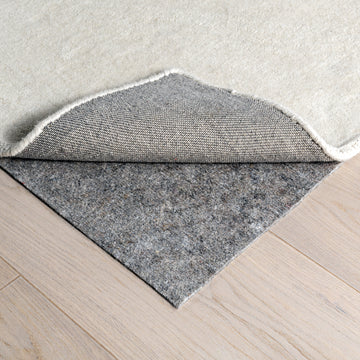
Depending on the rug and flooring type, a suitable non-slip rug pad can help keep it in position. It can also provide additional cushioning and reduce movement caused by everyday activity.
Make sure the rug pad is appropriately sized so that it remains underneath the rug and does not extend beyond the edges.
Select the Right Rug Size
Rug size can affect both the appearance and function of a child’s room.
A rug that is too small may appear disconnected from the furniture, while an oversized rug can make cleaning and rearranging the room more difficult.
Measure Before Choosing a Rug
Start by measuring the available floor space and noting the positions of the bed, wardrobe, desk, and other furniture.
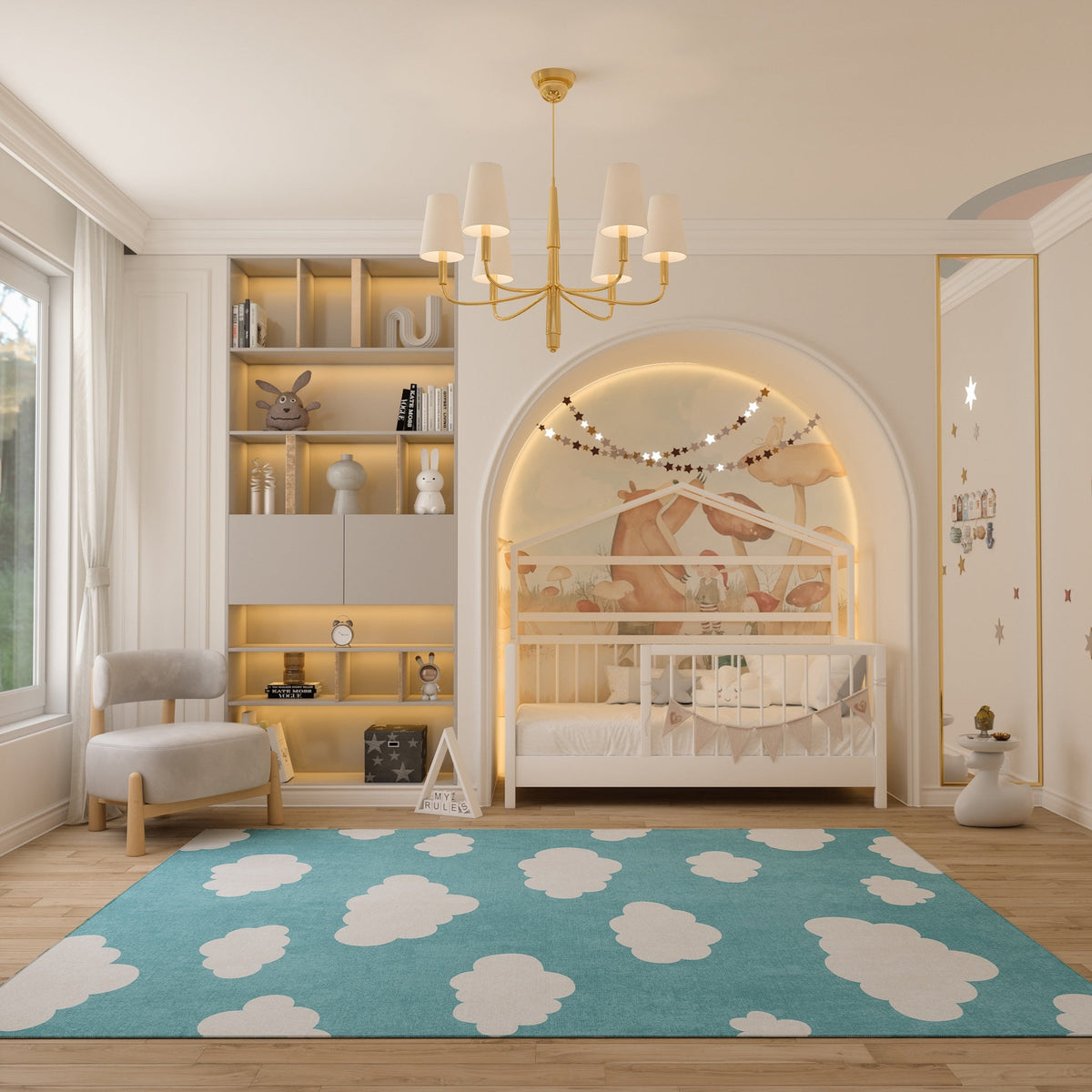
For a larger rug, you may position part of the bed and nearby furniture over it to create a connected layout. For a dedicated play area, a smaller rug can visually separate that section from the rest of the room.
Leave enough clearance around doors and storage units so that they can open without catching on the rug.
Choose Colours and Patterns With Practicality in Mind
Children’s rooms often include colourful bedding, toys, wall art, and storage pieces. The rug does not need to compete with all of these elements.
Neutral or lightly patterned rugs can work with rooms that already contain several colours. Alternatively, a patterned rug can become a visual feature in a room with simple furniture and walls.
Patterns can also make minor marks or everyday wear less noticeable than very light, solid-coloured surfaces.
Prioritise Easy Cleaning and Maintenance
Cleaning requirements should be considered before purchasing rather than after the first spill.
Check whether the rug can be vacuumed regularly and whether spot cleaning is recommended. If the rug is washable, confirm the washing and drying instructions.
Deal With Spills Promptly
When a spill occurs, follow the manufacturer’s cleaning directions. In many cases, blotting rather than rubbing can help prevent the spill from spreading further into the fibres.
Regular vacuuming can also reduce the accumulation of crumbs, dust, and other debris associated with everyday use.
Think Beyond the Early Years
Children’s preferences can change quickly. A rug featuring a very specific theme may suit the room today but become less relevant as the child grows.
Colours, geometric patterns, stripes, simple illustrations, or understated designs may adapt more easily as bedding, furniture, and wall décor change.
Choosing a versatile rug can reduce the need to replace it whenever the room is updated.
Final Thoughts
Selecting Kids’ Room Rugs Safe, durable picks that actually hold up requires a balance of comfort, maintenance, stability, and design. Material and pile height influence how the rug performs, while the correct size and placement can make the room more functional.
Measure the room carefully, review cleaning instructions, consider a suitable rug pad, and think about how the child actually uses the floor. A practical rug should support everyday activities while remaining manageable to clean and easy to coordinate with the room as it changes over time.