

Best Kitchen Rugs and Runners: Sizes and Buying Tips
Kitchen floors handle constant foot traffic, spills, dropped utensils, and regular cleaning. Adding a well-chosen rug can make the space more comfortable underfoot while introducing colour, texture, and definition. However, choosing a kitchen rug requires more consideration than simply finding a design that matches the cabinets.
This guide to the best kitchen rugs and runners: sizes and buying tips explains how to select suitable dimensions, materials, placement, and construction for different kitchen layouts. From compact galley kitchens to large open-plan spaces, the right rug should fit naturally without interfering with doors, appliances, or everyday movement.
Why Use a Rug in the Kitchen?
A kitchen rug can serve both practical and decorative purposes. It provides a softer surface in areas where you may spend long periods standing, such as in front of the sink or food preparation counter.
Rugs can also help define specific areas in open kitchens. A runner may visually connect a long kitchen aisle, while a small rectangular rug can establish a distinct washing or preparation zone.
From a design perspective, rugs introduce pattern and texture into kitchens that often contain many hard surfaces, including stone, tile, wood, metal, and glass.
How to Choose the Right Kitchen Rug Size
Size is one of the first factors to consider. A rug that is too large may interfere with cabinets and appliances, while one that is too small can look disconnected from the surrounding layout.
Measure the intended area before shopping and consider how much visible flooring you want around the rug.
Small Kitchen Rugs
Small rugs work well in focused areas such as in front of the sink, stove, or kitchen island.
Common dimensions include approximately 2 x 3 feet and 3 x 5 feet. These sizes provide coverage where it is needed without occupying a large portion of the floor.
Before choosing one, check that cabinet doors, dishwashers, and other appliances can open without catching on the rug.
Kitchen Runners
Runners are particularly useful in narrow or elongated kitchens.
Typical runner widths range from around 2 to 3 feet, while lengths may range from 6 to 12 feet or more. The appropriate length depends on the available floor space and kitchen layout.
Leave some flooring visible at both ends of the runner instead of extending it tightly from wall to wall. This usually creates a more balanced appearance.

Rugs for Large Kitchens
Large kitchens may have enough space for a wider area rug, particularly near an island or between the cooking and dining areas.
A 4 x 6-foot or 5 x 7-foot rug may work depending on the room dimensions. Always measure around fixed cabinetry and islands rather than relying only on the total room size.
Where Should You Place a Kitchen Rug?
Placement should reflect how you use the kitchen.
High-use locations often include the sink, preparation counter, cooking area, and the main walkway between appliances. A rug placed in one of these areas can provide additional comfort while helping define the space.
In Front of the Sink
The sink is one of the most common locations for a kitchen rug because people often spend several minutes standing there while washing dishes or preparing food.
Choose a rug that fits comfortably within the width of the sink cabinet and does not obstruct nearby doors or drawers.
Between Kitchen Counters
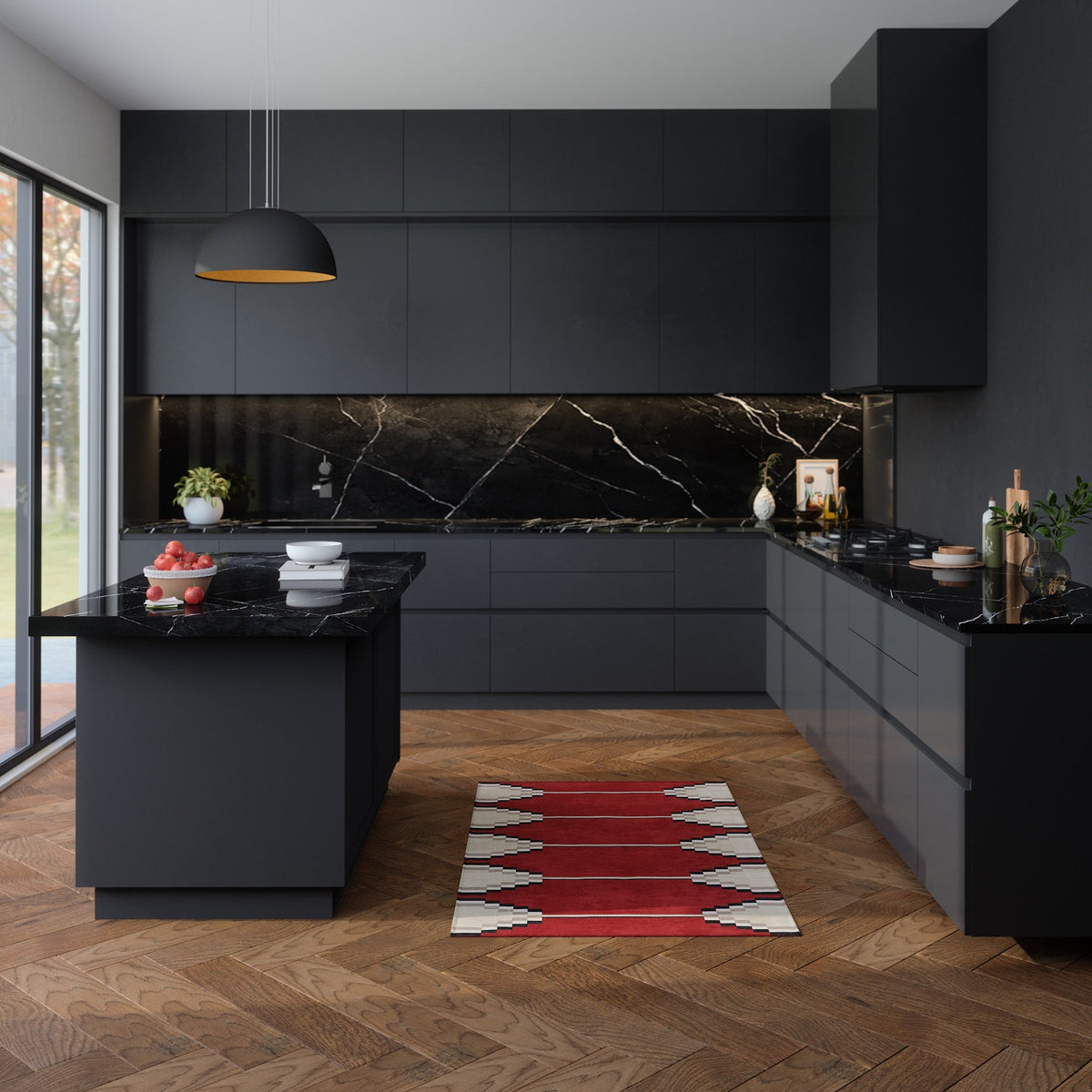
In a galley kitchen, a runner can fit neatly between two parallel counters. Centre it within the walkway and make sure its edges do not extend into areas where they could become a tripping hazard.
Along a Kitchen Island
A runner positioned alongside a long island can complement its proportions and provide a softer walking surface. Measure the island and surrounding walkway before deciding on the runner length.
Which Materials Work Well for Kitchen Rugs?
Kitchen rugs need to handle more frequent cleaning than rugs used in many other rooms.
The material should therefore be considered alongside appearance.
Cotton
Cotton rugs are generally lightweight and may be suitable for kitchens because many can be cleaned relatively easily. However, care instructions vary, so always check the manufacturer's recommendations.
Synthetic Fibres
Synthetic materials can be practical for busy kitchens because many are designed to resist everyday wear and are relatively straightforward to maintain.
They may be particularly useful in households where spills are common.
Wool
Wool provides a soft, substantial feel and can work well in kitchens where appearance and comfort are priorities. However, wool rugs may require more specific cleaning methods than some synthetic alternatives.
Look for a Low-Pile Construction
Pile height is particularly important in kitchens.
A low-pile or flatwoven rug generally sits closer to the floor, making it easier to position near cabinets and appliances. It is also less likely to interfere with doors.
Thicker rugs can provide additional cushioning but may collect more crumbs and debris, which can make routine maintenance more demanding.
Consider Slip Resistance
Kitchen floors can become slippery when water or cooking liquids are spilled.
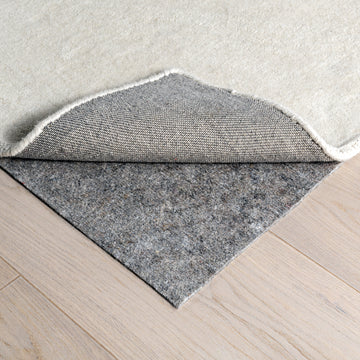
If the rug does not have a non-slip backing, consider using a suitable rug pad underneath. The pad should be correctly sized so that it does not extend beyond the rug edges.
A secure rug is especially important in high-traffic areas and near the sink.
Choose Colours and Patterns Carefully
Kitchen rugs provide an opportunity to introduce colour into a functional space.
Neutral rugs can complement kitchens with detailed cabinetry or patterned surfaces, while a patterned rug can add visual interest to a simple kitchen.
Consider existing cabinet colours, countertops, flooring, backsplash tiles, and wall finishes when selecting a design. The rug does not need to match every element, but its colours should relate naturally to the overall palette.
Check Cleaning Requirements Before Buying
Spills are unavoidable in most kitchens, so maintenance should influence your decision.
Read the care label before purchasing. Some rugs are machine washable, while others require spot cleaning or professional care.
Also consider how easily the rug can be moved. A lightweight runner may be easier to clean regularly than a large, heavy rug.
Final Thoughts
Choosing the Best Kitchen Rugs and Runners: Sizes and Buying Tips involves more than selecting an attractive pattern. Size, placement, material, pile height, slip resistance, and cleaning requirements all affect how well a rug works in a kitchen.
Measure the available floor space carefully and think about where you spend the most time standing or walking. A properly sized rug or runner can add comfort and visual structure while fitting naturally into the practical demands of an everyday kitchen.