

Best Rug Sizes for Open Floor Plans & Connected Rooms
Open floor plans and connected rooms have become a preferred choice in modern homes. They create a sense of space, improve natural light flow, and make interiors feel more open and adaptable. However, furnishing these layouts requires careful planning, especially when it comes to rugs. Choosing the Best Rug Sizes for Open Floor Plans & Connected Rooms is essential to define areas clearly while maintaining visual balance.explains how to select the right rug sizes for open layouts, covering living areas, dining zones, and transitional spaces.
Why Rug Size Matters in Open Floor Plans
In open layouts, walls no longer separate functions like living, dining, and lounging. Rugs take on the role of visual boundaries. An incorrectly sized rug can make the space feel disjointed or unfinished, while the right size brings structure and flow.
Key reasons rug size is important:
-
Helps define individual zones without physical partitions
-
Creates proportional balance between furniture and floor space
-
Improves comfort and acoustics in large, open areas

Understanding Zones in Connected Rooms
Before choosing a rug size, identify how the open space is used. Most open floor plans include multiple functional zones.
Common Zones in Open Layouts
-
Living area with sofas and seating
-
Dining area with table and chairs
-
Reading or workspace corners
-
Transitional walkways between rooms
Each zone may need a separate rug, or in some cases, a single large rug that visually connects spaces.
Best Rug Sizes for Open Living Areas
The living area is often the largest and most prominent section in an open plan.
Large Living Room Rugs
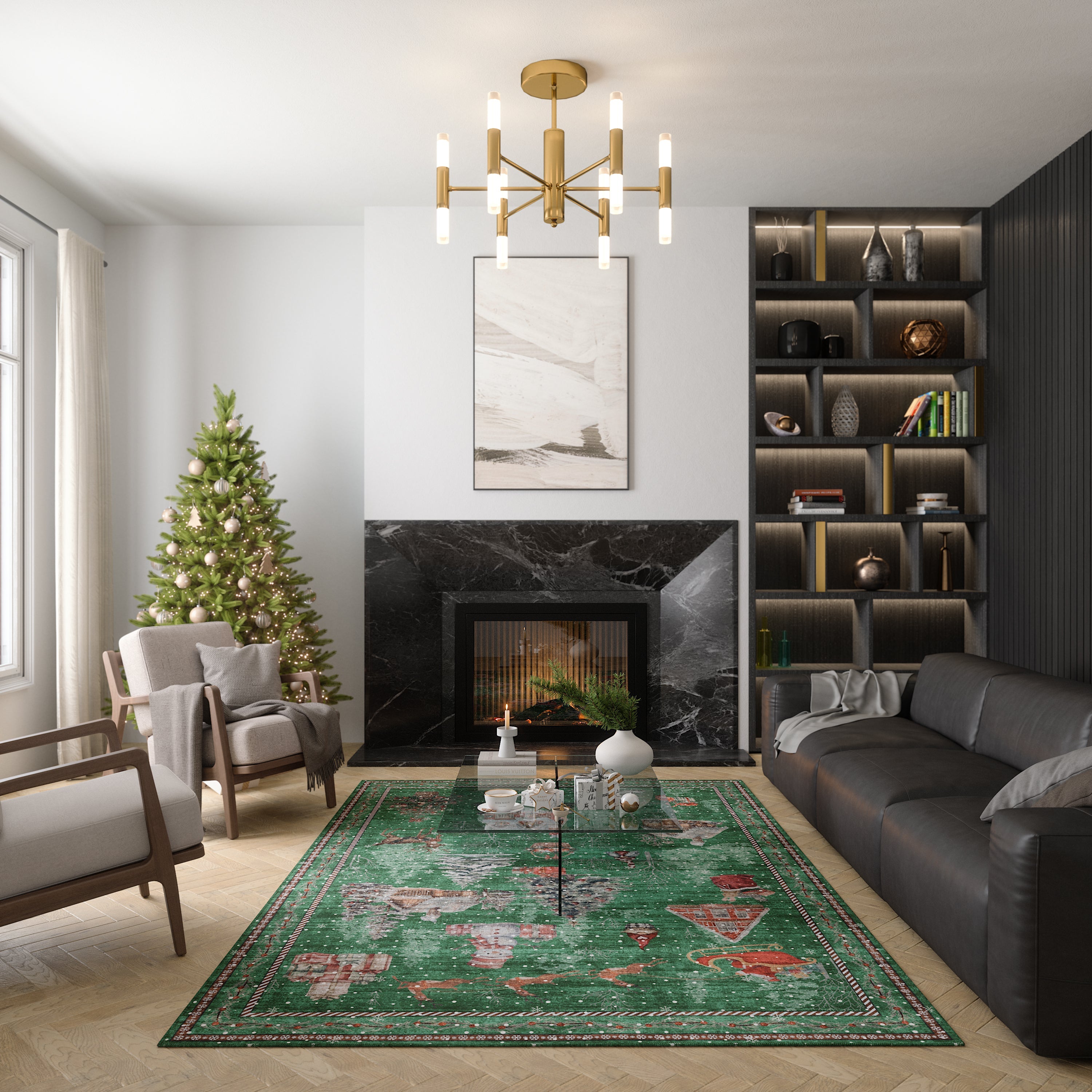
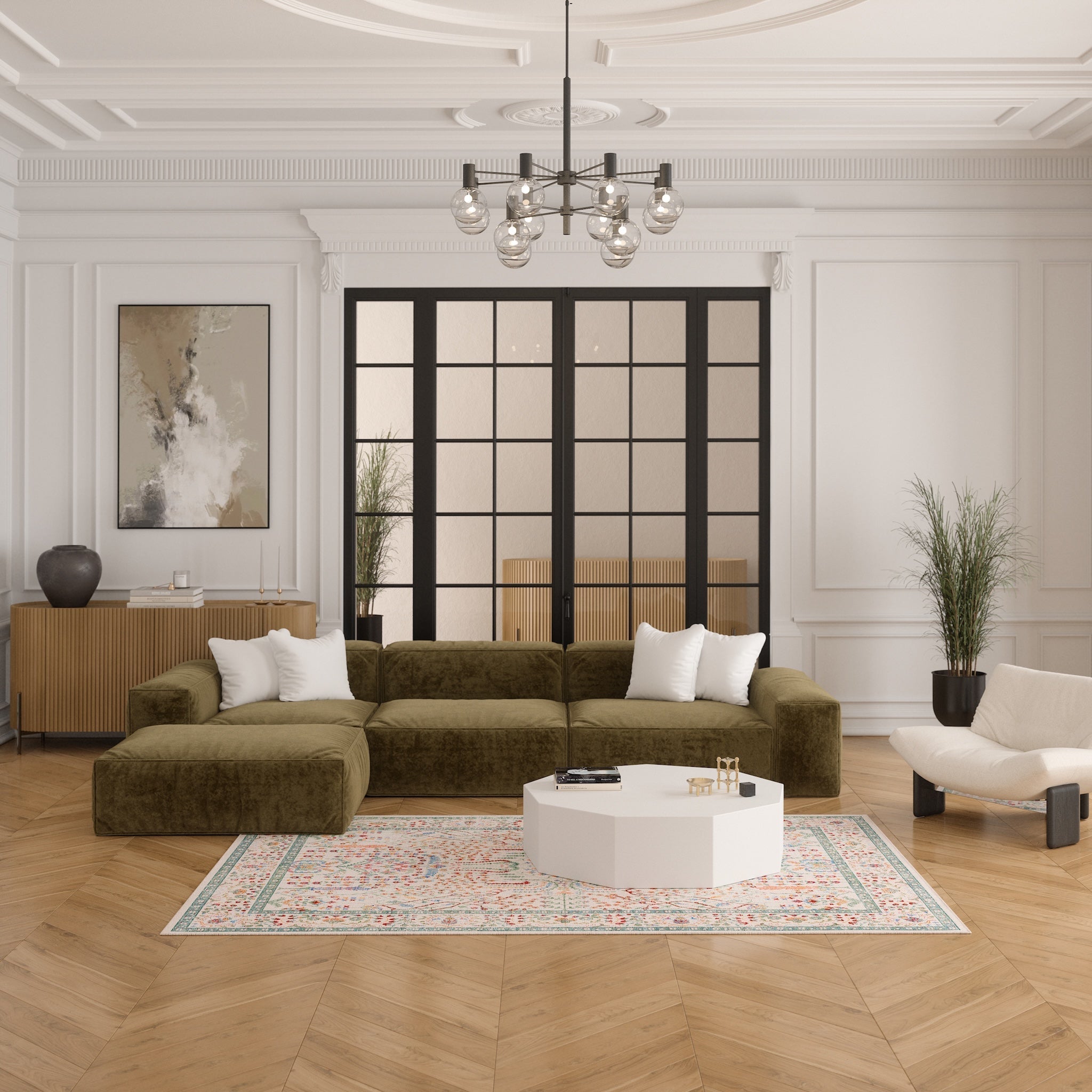
For most open living areas, a 9x12 ft or 10x14 ft rug works well. These sizes allow all main furniture pieces, including sofas and chairs, to sit fully on the rug. This creates a unified seating arrangement and prevents the area from looking scattered.
Medium Living Room Rugs
If space is slightly limited, an 8x10 ft rug is a practical option. In this setup, the front legs of sofas and chairs should rest on the rug, while the back legs remain off. This still visually anchors the seating zone without overwhelming the layout.

Rug Sizes for Dining Areas in Open Floor Plans
Dining areas in connected rooms require careful rug sizing to ensure functionality.
Standard Dining Rug Rule
The rug should extend at least 24 inches beyond the table on all sides. This ensures chairs remain on the rug even when pulled out.
Recommended Dining Rug Sizes
-
6-seater dining table: 8x10 ft rug
-
8-seater dining table: 9x12 ft rug
A rug that is too small can catch chair legs and disrupt movement, making correct sizing especially important in open layouts.
Using Rugs to Connect Multiple Spaces
In some open floor plans, homeowners prefer continuity rather than strict separation.
Single Large Rug Approach
Using one oversized rug, such as 12x15 ft, can visually connect the living and dining areas. This works best when furniture placement clearly defines each zone, even though they share a rug.
Coordinated Multiple Rugs
Another option is using multiple rugs with similar colors or patterns but different sizes. This approach maintains cohesion while still defining individual areas.
Rug Placement Tips for Connected Rooms
Correct placement is just as important as size.
Align Rugs with Furniture
Always align the rug with major furniture pieces rather than walls. This keeps the layout visually balanced, especially in asymmetrical spaces.
Leave Consistent Borders
Aim to leave 8–12 inches of bare floor between the rug edge and walls. This helps the rug feel intentionally placed rather than overcrowded.
Avoid Undersized Rugs
Small rugs tend to float in open spaces and break visual flow. When in doubt, choose a larger size to maintain continuity.

Choosing Rug Sizes for Transitional Areas
Hallways and walkways often connect different zones in open floor plans.
Runner Rugs
For long walkways, runner rugs measuring 2.5x8 ft or 3x10 ft are suitable. They guide movement while maintaining visual consistency with larger rugs nearby.
Entry-to-Living Transitions
If the entry opens directly into a living area, ensure the entry rug complements the main area rug in both size and design.
Final Thoughts
Choosing the Best Rug Sizes for Open Floor Plans & Connected Rooms requires planning, accurate measurements, and an understanding of how each space functions. Rugs act as visual anchors in open layouts, defining zones while maintaining harmony across connected rooms. By selecting appropriate sizes for living, dining, and transitional areas, you can create a cohesive interior that feels structured without sacrificing openness.
A well-sized rug does more than cover the floor it brings clarity, balance, and purpose to modern open-plan living.